
Sodium-Ion Batteries Go Mainstream in 2026: How Na-Ion Compares With LFP and NMC
Keywords: sodium ion battery, sodium-ion vs LFP, Naxtra sodium battery, battery chemistry selection, energy storage cell comparison, cold weather battery performance
Meta Description: Sodium-ion cells reached mass production in 2026. How Na-ion, LFP, and NMC compare on energy density, cycle life, cold performance, safety, and cost.
Sodium-ion batteries spent a decade as the promising alternative chemistry that never quite shipped. That changed: the world's first mass-production passenger vehicle with sodium-ion cells launched for a mid-2026 market arrival, the largest sodium-ion energy storage contract in history was signed at 60 GWh, and the leading cell maker describes lithium and sodium as the twin foundations of future energy storage. For engineers and procurement teams selecting cells in 2026, sodium-ion has moved from "watch this space" to a real line item, and the selection question is now concrete: where does Na-ion actually beat LFP, where does it lose, and what does designing with it change?
Why Sodium-Ion, Why Now
The driver is supply-chain arithmetic. Sodium is more than a thousand times more abundant than lithium and widely distributed across continents, which makes sodium-ion cells structurally immune to the lithium carbonate price volatility that has whipsawed battery economics for years. Cell makers position the technology as supply diversification first: the launch messaging around the first mass-production sodium vehicle explicitly framed it as the beginning of a dual-chemistry ecosystem, with sodium and lithium complementing each other rather than competing head-on.
The market is scaling accordingly. Industry projections cited at the sodium vehicle launch expect the global sodium-ion battery market to grow from about 1.4 billion US dollars in 2025 to roughly 6.8 billion by 2034, and the leading manufacturer has already commissioned tens of gigawatt-hours of dedicated sodium production capacity, with more announced. In 2025, average sodium-ion cell prices reportedly ran significantly below lithium-ion equivalents, the direct consequence of cheap raw materials meeting newly scaled production.
The Chemistry Comparison: LFP, NMC, and Na-Ion
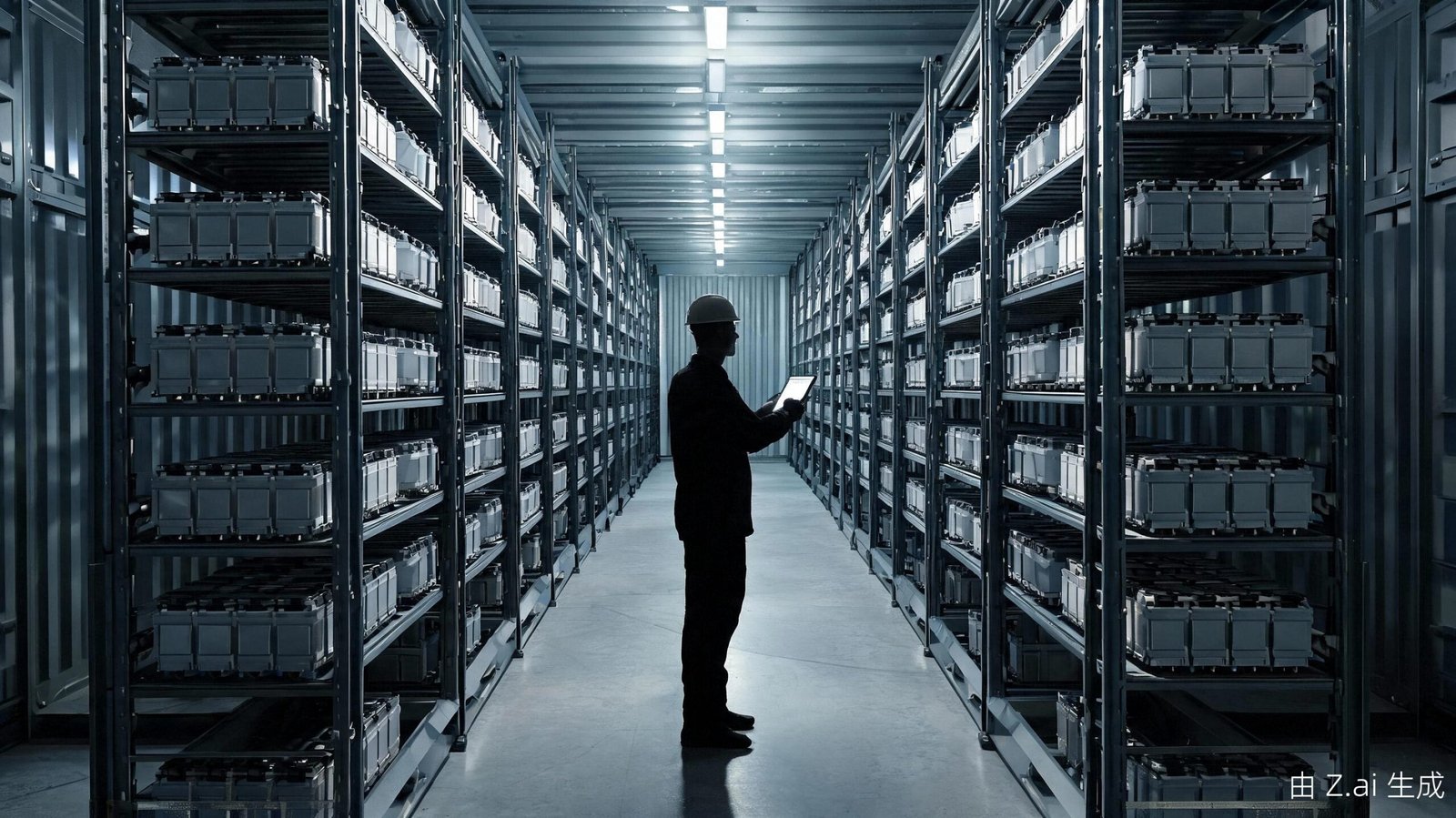
The three chemistries that matter for most designs in 2026 are lithium iron phosphate (LFP), nickel manganese cobalt (NMC), and sodium-ion. The numbers below consolidate manufacturer data and independent chemistry references.
| Metric | LFP | Sodium-ion | NMC |
|---|---|---|---|
| Energy density (Wh/kg) | 160 to 200 | 110 to 175 (current production edge) | 200 to 300 |
| Nominal voltage | 3.2 to 3.3 V | About 3.0 to 3.2 V | 3.6 to 3.7 V |
| Cycle life to 80 percent | 6,000+ (8,000+ premium cells) | 3,000 to 5,000 (manufacturer-claimed) | 1,500 to 3,000 |
| Cold capacity retention at minus 20 C | 60 to 80 percent | 85 to 90 percent | 50 to 65 percent |
| Thermal runaway onset | 270 to 300 C | Above 250 C | 150 to 210 C |
| Cobalt content | None | None | Yes |
| Oxygen release on failure | No | No | Yes |
Two rows deserve emphasis. Energy density is sodium-ion's structural weakness: current mass-production sodium cells top out around 175 Wh/kg, benchmark-setting for the chemistry but still below mainstream LFP, and the gap widens at pack level because sodium's volumetric penalty is generally larger than its gravimetric one. For any product where energy per liter or per kilogram is the binding constraint, LFP and NMC keep the crown.
Cold performance is sodium-ion's structural strength, and the production data is striking. The flagship Naxtra cell delivers nearly triple the discharge power of equivalent LFP cells at minus 30 degrees Celsius, maintains over 90 percent capacity retention at minus 40 degrees, and delivers stable power down to minus 50 degrees, across a rated operating window of minus 40 to plus 70 degrees. No lithium chemistry approaches that envelope, which is why the first volume applications cluster in cold regions and heavy trucks.
Safety chemistry also differs. Like LFP, sodium-ion does not release oxygen on failure and passes crush, drilling, and sawing abuse tests with smoke-free, fire-free results, and its overcharge state-of-charge tolerance runs about 20 percent higher than lithium-ion, giving the battery management system additional safety margin.
What Mass Production Looks Like in 2026
The passenger vehicle milestone: in February 2026, the first mass-production passenger car equipped with sodium-ion batteries was unveiled, to reach the market by mid-2026, with the cell supplier's Naxtra brand named exclusive sodium strategic partner across a multi-brand portfolio. The 175 Wh/kg Naxtra cell with cell-to-pack integration delivers a pure-electric range above 400 kilometers, and the manufacturer projects 500 to 600 kilometers for next-generation sodium cells, which would cover more than half of new-energy-vehicle range requirements. Sodium cells also became the first of the chemistry to pass China's newest national traction battery safety standard, GB 38031-2025, ahead of its mid-2026 effect date. Beyond passenger cars, the same product line includes 24-volt integrated battery solutions for heavy trucks, where cold starting and vibration tolerance matter more than range.
The energy storage milestone: the world's first field-validated sodium-ion grid storage platform debuted in June 2026, delivering more than 30 MWh of rated capacity on a modular architecture with flexible storage durations from 1 to 8 hours. Its maker signed the largest sodium-ion commercial contract on record, a three-year 60 GWh energy storage order, expects cumulative sodium storage shipments of 1 GWh by the end of 2026, and scheduled international deliveries from June 2027. The platform's engineering choices are instructive for system designers: because sodium's voltage curve slopes continuously rather than holding flat like LFP's, the vendor built dedicated voltage regulation that boosts the low-voltage range for the power conversion system, improving round-trip efficiency by nearly 2 percent, and a purpose-built battery management system that exploits the sloping curve for more accurate state-of-charge estimation.
Inside the First Grid-Scale Sodium Platform
The engineering choices in the first field-validated sodium storage platform preview what sodium system design looks like at scale. Each module weighs about 42 tonnes, and a 1 GWh site needs only 34 of them, a modular count that simplifies deployment and allows faulty modules to be isolated and replaced independently. Energy and power blocks are decoupled, so the same hardware supports storage durations of 1, 2, 4, 6, or 8 hours depending on project economics. The station-level platform adds purpose-built engineering: a top-discharge airflow design that eliminates thermal islands and cuts system heat generation by nearly 30 percent, liquid cooling that reduces auxiliary power consumption from the industry's typical 2 percent to 1 percent, and noise output of just 65 decibels, low enough to site stations closer to load centers.
The platform is deliberately chemistry-agnostic in its packaging: the same footprint and enclosures accommodate either sodium-ion or LFP racks without redesign or recertification, which lets operators treat sodium as an option to exercise when lithium pricing or supply arguments favor it. An upgrade path to 2000-volt high-voltage architectures is reserved for future grids.
Manufacturing depth backs the hardware. The lead vendor reports nearly 1.2 billion euros invested in sodium research over a decade, more than 1,600 patent families, end-to-end manufacturing from materials to cells, tens of thousands of tonnes of annual cathode and anode material capability, 40 GWh of new sodium production capacity commissioned at one base, and 160 GWh more planned at another. Battery swap infrastructure compounds the deployment story: over 3,000 swap stations across 140 cities planned by 2026, with more than 600 located in colder northern regions where sodium's advantages are strongest.
Where Sodium-Ion Wins and Where It Does Not
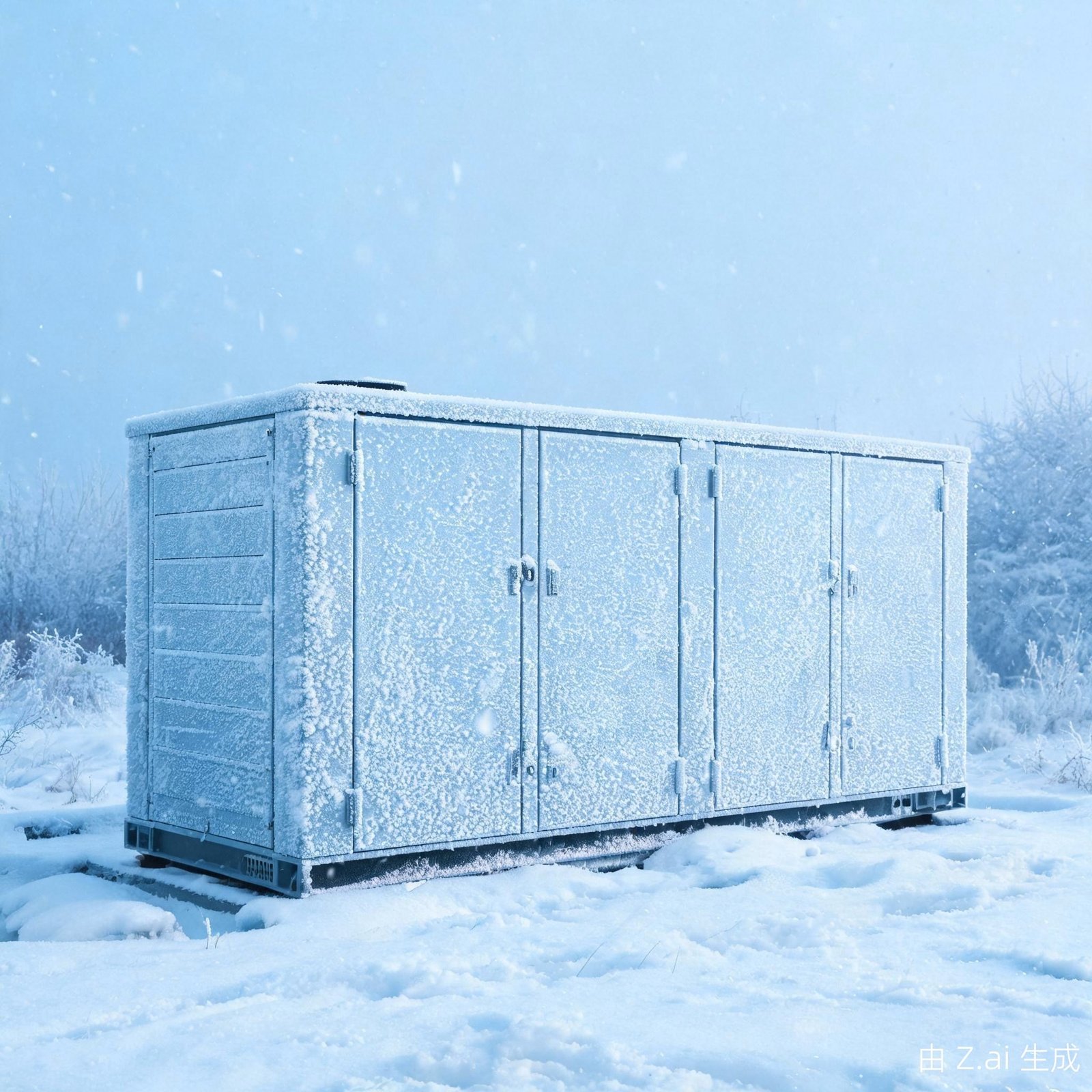
Sodium-ion's commercial wins in 2026 share a pattern: applications where cold performance, cost per kilowatt-hour, or supply-chain insurance outweigh absolute energy density. Grid-scale storage qualifies, especially in cold climates and especially as a hedge against lithium price volatility, and vendors now ship platforms physically interchangeable with LFP equivalents so operators can switch chemistry per project. Cold-climate vehicles and equipment qualify, from northern-region passenger cars to heavy trucks, where a lithium pack needs heating hardware and still underperforms. Stationary backup in cold regions, telecom outside plants, and off-grid industrial equipment all fit.
Where it does not win yet: energy-density-limited designs. Consumer devices, drones, high-range passenger vehicles chasing 600-plus kilometers on current pack architectures, and any application already optimized around LFP's mature cost and cycle-life record have little reason to switch in 2026. Sodium's cycle-life claims of 3,000 to 5,000 cycles are respectable but remain manufacturer-claimed with less field verification than LFP's decade of 6,000-plus-cycle deployment. The honest 2026 position: sodium-ion complements lithium, and dual-chemistry procurement is the strategy the industry itself has adopted.
Design and Procurement Implications

Designing with sodium-ion changes several specifics. The BMS comes first: sodium's continuously sloping discharge curve means coulomb-counting-plus-voltage-correction state-of-charge estimation behaves differently than on LFP's flat curve, and the vendors' purpose-built BMS exploits the slope for accuracy; teams reusing an LFP-tuned fuel-gauge approach will need recalibration and should verify SOC accuracy across temperature. The wide cell voltage window also pressures the DC bus design, since a pack that sags lower than an LFP equivalent needs either wider-input power conversion or the vendor's voltage-boost architecture to keep downstream converters in their efficient range. Cold-weather derating curves, the selling point, need verification against the actual discharge profiles rather than datasheet highlights. On procurement, qualify the chemistry per safety standard explicitly, because certification frameworks were written around lithium, and confirm second sources: sodium capacity is concentrated in a small number of large manufacturers, The volumetric gap has a practical footprint consequence too: for equivalent usable capacity, a sodium system can be expected to occupy roughly 10 to 30 percent more volume than an LFP equivalent, which matters in space-constrained retrofits even when floor-loading is fine.
with international deliveries staged from 2027.
Frequently Asked Questions
What is a sodium-ion battery?
A rechargeable battery that shuttles sodium ions instead of lithium ions between electrodes. It uses abundant, inexpensive raw materials, delivers lower energy density than lithium-ion but better cold-weather performance, comparable safety chemistry to LFP with no oxygen release on failure, and about 20 percent higher overcharge tolerance. Mass-production sodium cells reached 175 Wh/kg in 2026.
Is sodium-ion better than LFP?
It depends on the constraint. Sodium-ion wins decisively on cold performance, delivering nearly triple the discharge power of LFP at minus 30 degrees and retaining over 90 percent capacity at minus 40, and on raw-material supply security. LFP wins on energy density, proven cycle life (6,000-plus cycles versus manufacturer-claimed 3,000 to 5,000 for sodium), deployment history, and certification maturity. The industry strategy in 2026 is dual-chemistry, not replacement.
What energy density do sodium-ion batteries reach?
The current mass-production benchmark is 175 Wh/kg at cell level, set by the Naxtra production cells, with independent chemistry references placing the technology broadly in the 110 to 175 Wh/kg range. Next-generation sodium cells are projected to support 500 to 600 kilometers of vehicle range. The volumetric energy density gap versus LFP is generally larger than the gravimetric one.
Why do sodium-ion batteries perform so well in cold weather?
Sodium-ion chemistry maintains lower internal resistance and better ion mobility at low temperature than lithium systems, so it delivers high discharge power without the capacity collapse lithium cells suffer. Production data shows about 85 to 90 percent capacity retention at minus 20 degrees Celsius where LFP retains 60 to 80 percent, stable power delivery down to minus 50 degrees, and a rated operating range of minus 40 to plus 70 degrees.
Are sodium-ion batteries safer than lithium-ion?
Sodium-ion's safety profile is comparable to LFP and better than NMC: no oxygen release on failure, thermal runaway onset above 250 degrees Celsius, abuse testing under crushing, drilling, and sawing with smoke-free and fire-free results, and about 20 percent more overcharge state-of-charge tolerance than lithium-ion, which widens the battery management system's safety margin.
What is sodium-ion best used for in 2026?
Grid-scale energy storage, especially where lithium price hedging or cold climates matter; cold-region vehicles and heavy trucks; stationary backup in low-temperature environments; and any application where cost per kilowatt-hour and supply security outweigh maximum energy density. Energy-density-limited designs such as consumer devices and long-range passenger platforms stay on LFP or NMC for now.
Sources and Further Reading
- CATL, "CATL and CHANGAN Launch World's First Mass-Production Sodium-Ion Passenger Vehicle" (Naxtra 175 Wh/kg, cold performance data, market projections): https://www.catl.com/en/news/6720.html
- CATL, "CATL Debuts World's First Field-Validated Sodium-Ion BESS" (TENER Sodium platform, 60 GWh contract, BMS and voltage regulation engineering): https://www.catl.com/en/news/6861.html
- CarNewsChina, "CATL confirms 2026 large-scale sodium-ion battery deployment in multiple sectors" (Naxtra launch timeline, GB 38031-2025 certification, pricing trends): https://carnewschina.com/2025/12/28/catl-confirms-2026-large-scale-sodium-ion-battery-deployment-in-multiple-sectors
- Kora Power, "LFP vs. Sodium-Ion Home Batteries" (chemistry comparison tables on density, cycle life, cold retention, thermal runaway): https://www.korapower.com/blogs/education/lfp-vs-sodium-ion-home-battery-2026-homeowners-guide
- Battery University, "BU-205: Types of Lithium-ion" (LFP and NMC reference specifications): http://www.batteryuniversity.com/article/bu-205-types-of-lithium-ion
