
Keywords: battery management IC selection, BMS analog front end, fuel gauge IC, cell monitoring protection, impedance track gauging, lithium battery safety IC
Meta Description: AFEs, fuel gauges, pack managers, and protectors: how BMS ICs divide the work, what accuracy numbers matter, and how to select the right architecture.
Every lithium-powered product carries a small silent guardian between the cells and the outside world: the battery management IC. Its decisions decide whether a battery pack is a reliable energy source or a fire incident, and its architecture, analog front end, fuel gauge, pack manager, or integrated combination, shapes the cost, safety certification path, and firmware effort of the whole product.
This guide explains how BMS ICs divide their work, what the datasheet accuracy numbers actually mean, how gauging algorithms differ, and the selection logic for products ranging from single-cell wearables to 16-series e-mobility packs.
The Four Roles in a BMS Silicon Stack

Battery management is not one chip's job; it is a stack of four roles that vendors combine in different ways depending on the market.
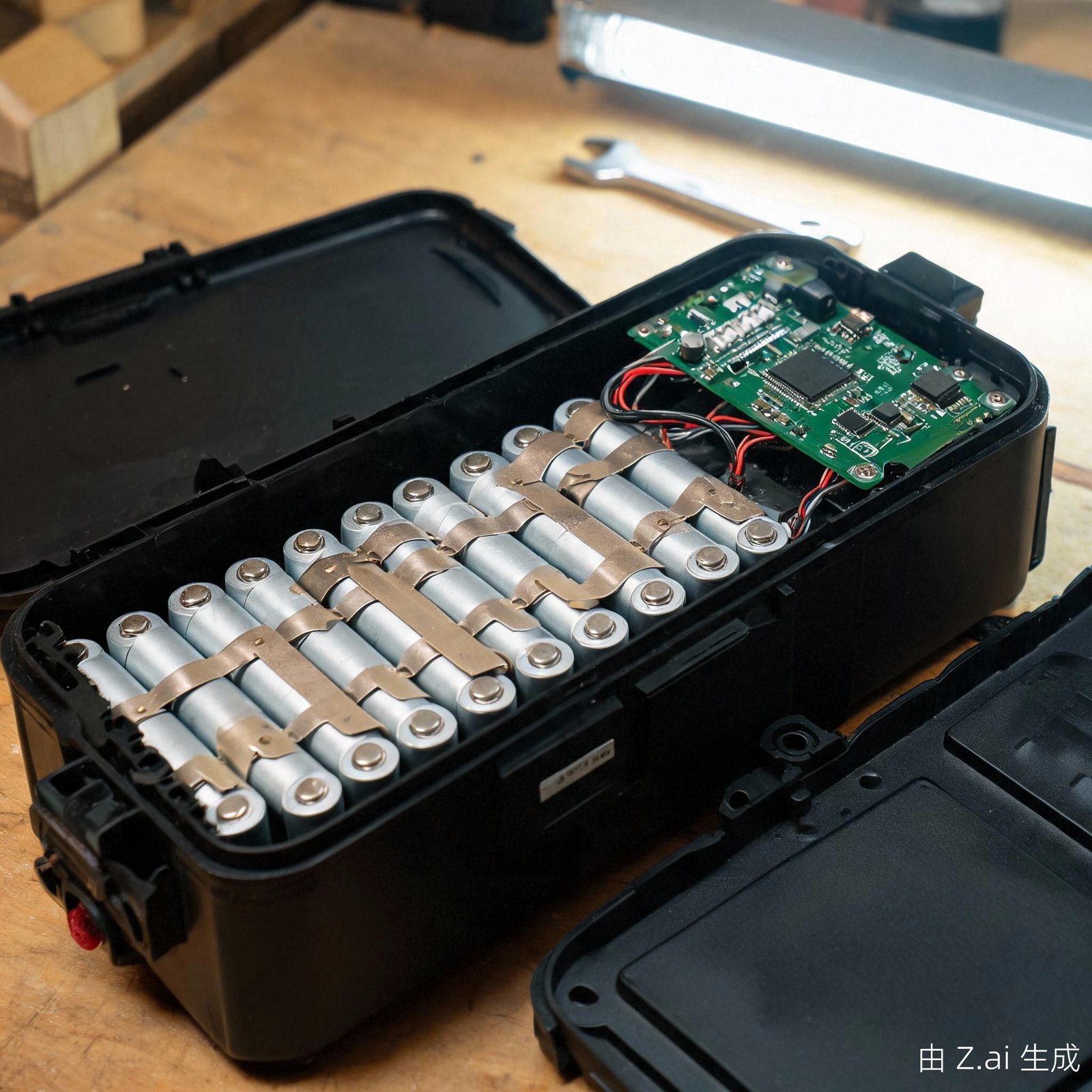
The analog front end (AFE) sits closest to the cells. It measures each series cell's voltage, pack current through a sense element, and temperatures via NTC inputs, and it executes protection in hardware: overvoltage, undervoltage, overcurrent in charge and discharge, short circuit, and over-temperature events open the protection MOSFETs without waiting for firmware. A representative modern AFE for 7 to 16-cell packs integrates dual ADCs delivering cell voltage measurement to within 5 millivolts and current measurement to 0.5 percent error, four NTC temperature channels on a 15-bit converter, integrated balancing FETs, and a high-side driver capable of driving multiple parallel N-channel protection MOSFETs, all in a single TQFP-48 package.
The fuel gauge computes state of charge and state of health, the numbers users actually see. Gauging quality separates good products from great ones, and the dominant algorithm families differ fundamentally: voltage-correlation lookup is cheap but inaccurate under load; coulomb counting integrates current but drifts; compensated end-of-discharge voltage (CEDV) corrects for rate and temperature; and model-based approaches such as Impedance Track measure cell impedance dynamically and track capacity fade, which is what makes state-of-health reporting possible at all. Vendors ship dedicated gauges for every segment, from single-cell system-side parts with pre-programmed chemistry profiles to pack-side 15-series devices, including flavors for primary (non-rechargeable) lithium cells with end-of-service monitoring.
The pack manager adds the controller layer: it runs the gauging or protection firmware, drives the protection FETs, manages cell balancing, authenticates the pack, and logs lifetime data. Integrated devices fold the gauge, protector, and MCU into one package, and vendors increasingly offer fixed-firmware variants that remove the firmware expertise requirement entirely, trading configurability for time-to-market.
The protector stands alone in cost-driven products: hardware-only protection ICs with thresholds set at manufacture, common in e-bikes, power tools, and replacement packs where a certified, unconfigurable safety layer is a feature rather than a limitation.
| Role | Core function | Typical products | Firmware effort |
|---|---|---|---|
| AFE / monitor | Cell measurement + hardware protection | 7-16S pack monitors with dual ADCs | Low (thresholds locked) |
| Fuel gauge | State of charge and health | 1S system-side to 15S pack-side, primary-cell variants | Medium (chemistry config) |
| Pack manager | Control FETs, balancing, authentication, logging | 1-4S managers to 15S controllers | High (full firmware) |
| Standalone protector | Hardware-only cutoff | 3S+ consumer protectors | None |
The Accuracy Numbers That Matter
BMS datasheets quote impressive ADC resolution, but the numbers that decide product quality are different.
Cell voltage accuracy in the millivolts matters because lithium cell state of charge curves are flat: a few millivolts of error translates to a large state-of-charge error on the plateau of a discharge curve, and cell balancing decisions key off voltage differences between series cells. Modern AFEs specify on the order of 5 millivolts or better across temperature. Current accuracy in the fraction-of-a-percent range matters for coulomb counting and for overload detection thresholds, and offset error matters even more than gain error because small standby currents integrate over long storage periods. Temperature accuracy protects against the charge-inhibition windows lithium chemistry requires, which is why AFEs dedicate multiple NTC channels rather than relying on the die's own temperature.
Gauging accuracy is specified as state-of-charge error, typically a few percent, and it depends on the algorithm as much as the ADC. Model-based gauging with chemistry-specific configuration and learning updates tracks capacity fade over the pack's life; uncorrected coulomb counting does not. The practical selection test: ask how state of charge behaves after six months of real charge-discharge cycling, not on the first bench run.
Protection timing is the third axis. Short-circuit protection responds in microseconds in hardware; overcurrent thresholds respond in milliseconds with programmable duration; and firmware-layer warnings arrive later still. The defense-in-depth pattern, hardware cutoff with locked thresholds, firmware warnings with configurability, and host-side analytics on top, is what safety reviews look for, and it is why dual-protection architectures, hardware thresholds locked in one-time-programmable memory plus software monitoring with CRC-protected communication, have become standard in mobility products.

Balancing, Authentication, and the Details That Bite
Three secondary features determine field success more than headline accuracy.
Cell balancing is required once packs exceed a few series cells, because cell-to-cell capacity and leakage differences drift the series string out of alignment over cycles. AFEs with integrated balancing FETs simplify the BOM, with balancing currents on the order of tens of milliamperes suiting most consumer and light-mobility packs; larger packs specify external balancing FETs and the AFE's drive capability. Choose between automatic balancing (continuous, no firmware involvement) and manual balancing (host-scheduled, useful during charge) based on the product's firmware maturity.
Authentication protects the business as much as the battery: challenge-response ICs prevent third-party packs from being accepted by the host, which matters for safety, warranty, and revenue in every market from e-mobility to power tools. Newer gauges integrate authentication with ECC-based schemes and combine it with protection and gauging in single parts.
The small features bite hardest in production: plug-in detection for charger and load events, dead-battery flags that allow charging from fully discharged packs, standby current that respects shelf-life requirements, random cell-connection tolerance that survives manufacturing miswiring, and lockable protection thresholds that prevent field tampering. None of these appear in the accuracy table, and every one of them shows up as a support ticket when missing.
Fixed Firmware or Custom Firmware: The Build-vs-Configure Question
One choice dominates BMS project schedules more than any component parameter: whether the pack's firmware is custom-written on a programmable manager or licensed as fixed firmware on a pre-validated controller.
Custom firmware offers full control: proprietary gauging blends, custom protection policies, product-specific logging, and optimization for the exact cells in the pack. It also demands firmware engineers with battery-domain experience, safety review of that firmware, regression testing across cell lots, and a maintenance obligation for the product's lifetime, a real cost that shows up in the schedule long after the IC is chosen.
Fixed-firmware battery management systems invert the model: the vendor ships a controller with pre-validated firmware, a GUI-driven configuration layer for the parameters that genuinely differ per product, and an evaluation kit that takes a team from unboxing to a measuring pack without writing a line of code. Vendors position these specifically for teams without firmware expertise, and for products where the certification path, with the firmware already reviewed, is worth more than customization. The trade is configurability: if the product's gauging or protection policy genuinely differs from what the fixed firmware assumes, the team is back to custom development.
A pragmatic middle path exists for multi-product companies: build the firmware competency once on a programmable manager, then reuse the validated stack across products, reserving fixed-firmware parts for the projects with compressed schedules or thin firmware resources. The decision, like most BMS decisions, is about the team and the timeline as much as the silicon.
Selection Logic by Product Class
Single-cell products, wearables, small IoT, earbuds: a system-side fuel gauge with pre-programmed chemistry profiles, or a gauge with integrated linear charger, protection, and authentication in one part. Firmware effort minimal; accuracy from model-based gauging with chemistry profiles.
Multi-cell portable products, laptops, power tools, vacuums: pack-side managers covering 1 to 4 series cells with integrated protection, gauging, and balancing, or split AFE-plus-gauge where the gauge lives system-side. Algorithms matter here because user-visible run time is the product feature.
E-mobility and light electric vehicles, e-bikes, scooters: 7 to 16-series AFEs with hardware dual protection, integrated high-side drive, and balancing, plus pack managers or fixed-firmware solutions where firmware expertise is unavailable. Safety certification dominates the decision, so the AFE's hardware protection completeness and the vendor's certification support carry more weight than gauging nuance.
Energy storage and stationary systems: higher series counts, daisy-chained AFE communication, and system-level controllers, with monitoring accuracy and long-term drift as the primary differentiators.
One class deserves its own note: products running on primary, non-rechargeable lithium cells, such as smoke alarms, meters, and asset trackers, need gauging that works without charge-discharge cycling to learn from. Dedicated gauges for primary cells track capacity depletion differently, estimating remaining service life from voltage and load history under the specific discharge profile, and their end-of-service feature tells the product when to retire gracefully rather than fail silently. If the product's battery is replaced rather than recharged, the gauging algorithm question changes entirely, and so does the part list.
Across every class, the selection sequence holds: define the series count and chemistry, pick the protection completeness the safety review demands, choose the gauging architecture that meets the user-visible accuracy target with the firmware effort the team can actually fund, and only then optimize cost across the qualified vendor list.
Frequently Asked Questions
What is the difference between a BMS analog front end and a fuel gauge?
The analog front end measures cell voltages, pack current, and temperatures and executes hardware protection, opening the protection MOSFETs on fault events without firmware involvement. The fuel gauge computes state of charge and state of health from that data using a gauging algorithm. Many products split the roles across two ICs; integrated devices combine gauge, protector, and MCU in one package.
What is Impedance Track gauging and why does it matter?
Impedance Track is a model-based gauging approach that measures cell impedance dynamically and tracks capacity fade, enabling accurate state-of-charge and state-of-health reporting across the pack's life. It outperforms voltage-lookup and pure coulomb counting, which drift with load and age, and it is the algorithm behind modern pack-side gauges supporting up to 15 series cells and multiple chemistries.
Why do BMS ICs include hardware protection if firmware already monitors the pack?
Defense in depth. Hardware protection responds in microseconds to short circuits and overcurrent with thresholds locked in one-time-programmable memory, so it works even if firmware crashes or is misconfigured. Firmware adds configurable warnings, logging, and analytics on top. Safety-certified products, especially e-mobility, require the dual-protection pattern with CRC-protected communication between layers.
What gauging accuracy should my product target?
Modern gauges achieve single-digit percent state-of-charge error and millivolt-class cell voltage measurement. Target accuracy against real cycling, not first-run bench tests: state-of-charge error grows with algorithm quality over the pack's life, so model-based gauging with learning updates is the practical choice for products users depend on daily.
Do I need cell balancing for my pack?
Series packs above a few cells generally require it, because cell-to-cell differences drift the string out of balance over cycles, and individual cells can drift into overcharge or undercharge even while pack voltage looks correct. AFEs with integrated balancing MOSFETs handle most consumer and light-mobility packs; large packs specify external FETs driven by the AFE.
What is pack authentication and why integrate it into the gauge?
Authentication lets the host verify that the battery pack is genuine, typically through a challenge-response exchange. It protects users from uncertified third-party packs with missing safety features, protects the brand's warranty, and prevents revenue loss in battery-replacement markets. Newer gauges integrate authentication, protection, and gauging in single parts to save board space and BOM cost.
Sources and Further Reading
- Monolithic Power Systems, "MP2797 BMS use case: lithium battery e-bikes" (AFE architecture, dual ADC accuracy, protection and balancing integration): https://www.monolithicpower.com/en/mp2797-bms-use-case-lithium-battery-e-bikes
- Texas Instruments, battery fuel gauges product family (Impedance Track gauging, algorithm comparison, chemistries and reference designs): https://www.ti.com/en-us/product-category/battery-management-ics/battery-fuel-gauges
- Renesas, battery fuel gauges and battery management controllers (single-package MCU plus AFE, fixed-firmware R-BMS F): https://www.renesas.com/en/products/power-management/battery-management/battery-fuel-gauges
- Illuminious, "2026 Component Shortage Reality: DRAM Prices Surge as MCU Lead Times Stretch to 40 Weeks" (semiconductor supply context): https://www.illuminious.com/news/2026-component-shortage-dram-mcu
- NVIDIA Technical Blog, "Building the 800 VDC Ecosystem for Efficient, Scalable AI Factories" (energy storage and battery context for AI infrastructure): https://developer.nvidia.com/blog/building-the-800-vdc-ecosystem-for-efficient-scalable-ai-factories/
