
When a BOM lands on our desk with a 20-week lead time on a critical IC, the first thing we do is not panic. It is to call you back within the hour with a clear, two-option plan. BOM shortage mitigation is not about magic inventory. It is about making the purchasing decision process transparent enough that you can act before the line stops.
We are Informic, a European PCBA coordination team. We do not run a single massive factory that pushes standard boards. Instead, we coordinate turnkey assembly across a vetted network of manufacturing partners. Our daily work is translating your procurement goals into a factory schedule that survives component reality. Here is how we make that clearer for your team.
The first question is not price. It is continuity.
Most buyers send us a BOM and ask for a quote. We send back a spreadsheet with columns for price, lead time, and risk. The risk column is where the real work happens. Before we quote a single line item, we ask three operational questions:
Technical reference: For related engineering context, see IPC standards and industry resources.
- Which components on this BOM are single-sourced, and what is the manufacturer’s current allocation policy?
- What is the actual date you need the finished boards, not the date procurement hopes for?
- Which parts can we substitute with an approved alternative without re-qualifying the entire board?
These questions are not bureaucratic. They determine whether we can offer a firm fixed price or a provisional quote tied to a specific purchasing window. When we say firm, we mean we have already secured the material or have a contractual commitment from a distributor. When we say provisional, we mean the price is valid for five days and depends on market movement. We tell you which is which before you sign.
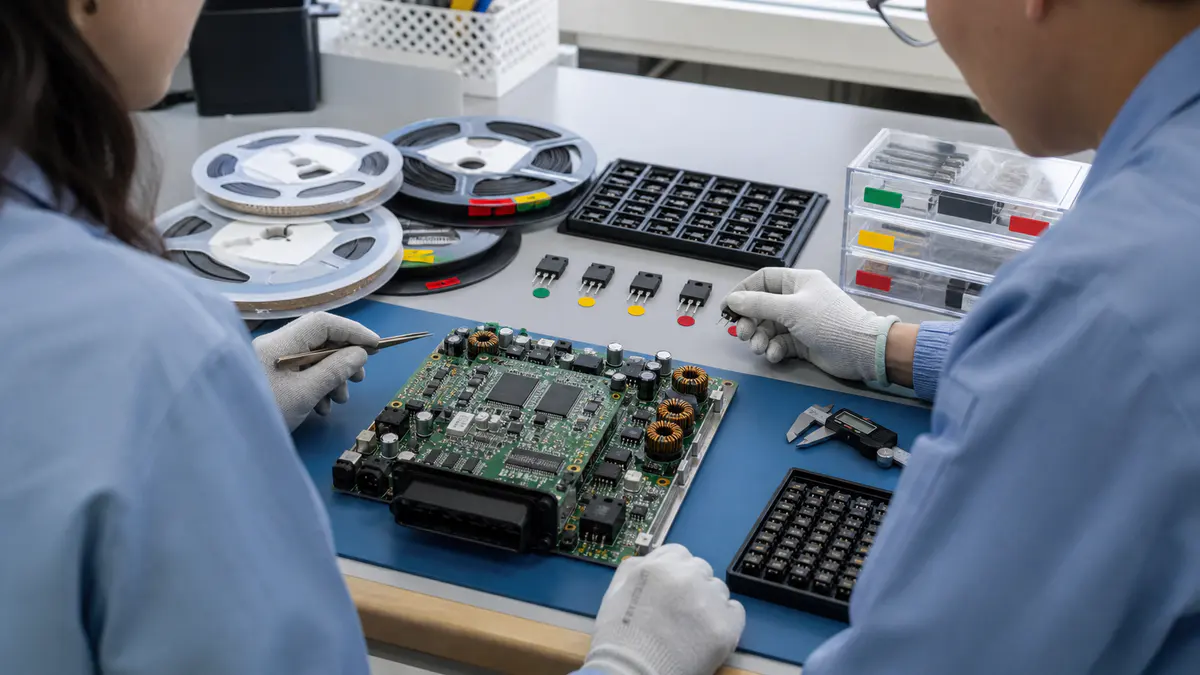
How we structure a shortage-resilient quotation
A quotation is a promise. We structure ours to show you exactly where the risk sits. The table below is a simplified version of what we send for every new project. It is not a marketing brochure; it is a working document.
| BOM Line | Component Status | Lead Time | Price Basis | Action Required |
|---|---|---|---|---|
| U1 (MCU) | Allocated | 18 weeks | Fixed for 7 days | Confirm PO immediately |
| C1-C10 (MLCC) | Alternative approved | 6 weeks | Fixed | Approve substitution list |
| J1 (Connector) | Single source | 12 weeks | Market index | Review buy option |
| R1-R20 (Resistors) | Standard stock | 2 weeks | Fixed | None |
Notice the Action Required column. We do not send a quote and wait. We send a quote with a recommended next step. That step is usually a decision, not a research project. For the MCU, you need to issue a PO within the week. For the connector, you need to approve a budget buffer. For the MLCCs, you need to sign off on the alternative part numbers we have already vetted.
DFM is a purchasing tool, not only an engineering review
Design for Manufacturability (DFM) is often seen as an engineering checklist. We treat it as a procurement lever. When we review your Gerbers and BOM together, we are looking for parts that will cause a shortage six months from now. The classic example is a 1% tolerance resistor where a 5% part would work fine. The 1% part is often on allocation; the 5% part is on the shelf.
During our DFM review, we flag these opportunities. We do not change your design without approval. We present a substitution matrix with the exact electrical specifications, the manufacturer part numbers, and the reliability data we have on file. You make the call. This process is faster than waiting for a shortage to force a last-minute swap.
We also review the PCB stack-up and footprint for sourcing implications. A board that uses a non-standard via size might require a specific drilling process that only one of our partner factories handles. That limits our ability to move production to a second site if the first one faces a capacity issue. By aligning the pcbManufacturing process with the component sourcing plan, we reduce the risk of a bottleneck that has nothing to do with parts.

Turnkey PCBA coordination: where the clarity actually happens
Turnkey means we buy the parts. But the value is not in the purchasing transaction; it is in the coordination. We run a daily material status review for every active project. That review is a simple spreadsheet that answers three questions for each line item: What did we order? When does it arrive? What is the risk of delay?
If a distributor misses a ship date, we know within hours, not weeks. We then have a set of predefined actions. First, we check our internal buffer stock at the assembly partner. Second, we check the open market through our vetted brokers. Third, we call you with a recommendation. That recommendation might be to wait three days, to pay a premium for expedited shipping, or to authorize a substitute part we have already qualified.
This is the part of our service that is hard to see in a price quote. It is the reason we ask for your real production schedule, not only the first order. If you tell us you need 100 prototypes in four weeks and 5,000 units in twelve weeks, we buy the long-lead parts for the 5,000-unit run on day one. We do not wait for the prototype to pass testing. That is a risk, but it is a calculated one that we discuss openly. If the prototype fails, you are responsible for the cost of the long-lead material. We put that in writing. That is clarity.
Practical RFQ steps that reduce shortage pain
We cannot control the global component market, but we can control how we respond to it. Here are the steps we recommend every buyer take before sending an RFQ. These are our own operational rules, not industry standards.
- Send the full BOM with manufacturer part numbers (MPN) and alternates. If you only have a distributor part number, we have to reverse-engineer the MPN, which costs a day. Include the quantity per board and the annual volume.
- State the required delivery date and the acceptable delivery window. A date is a commitment. We plan our purchasing around your date, not a general sense of urgency.
- List any approved vendor lists (AVL) restrictions. If we cannot buy from a specific broker, tell us upfront. We will not waste time quoting a part we cannot source.
- Specify the testing and inspection requirements. A simple AOI pass is different from a full functional test with a test fixture. The test fixture itself has a lead time. We need to know that before we quote the assembly.
- Ask for the risk report, not only the price. A good quote includes a risk column. If it does not, ask for one. A supplier that cannot articulate the risk on a single IC is not managing the risk.
We use these steps to build a procurement plan that is specific to your board. The plan is not a generic document. It lists the exact purchase orders we will place, the distributors we will use, and the trigger points for escalation. You get a copy. You can hold us to it.
When to use a broker: our honest policy
Brokers are a part of the market. We use them selectively and only with your explicit approval. Our policy is simple. We first exhaust authorized distributors. If a part is unavailable, we look for a factory-authorized alternative. If that fails, we present a broker option with a clear price premium and a clear risk statement. We do not hide broker parts in a standard quote.
The risk with brokers is counterfeit material. We mitigate that by using only a short list of brokers we have audited, and we require a coating removal test or X-ray inspection for any part that is not from an authorized channel. This adds a few days to the schedule, but it protects the pcba reliability. You pay for that inspection in the price, and we tell you the cost line item.
We also use brokers for obsolete components. If a part is end-of-life, the broker market is often the only source. In that case, we recommend a last-time buy or a lifetime buy, and we can help you calculate the right quantity based on your forecast. That is a purchasing decision, not a technical one, but it requires data from the factory on yield and test coverage.
Why European buyers need a local coordinator
Time zones matter. When a shortage hits, it usually hits in Asia during our night. A coordinator in Europe can be awake when the factory opens, checking the morning report and making the first call to the distributor. That is an operational advantage, not a sentimental one.
We also understand European compliance requirements. We do not give legal advice, but we know that certain substances and documentation are required for EU markets. We flag these requirements during the DFM and RFQ phase, so there are no surprises at delivery. We ask about your final product market early. If you are shipping to Germany, we ask about the specific documentation your customer expects. If you are shipping to the US, we ask about UL requirements. This is part of the components sourcing strategy, because the documentation is tied to the component lot.
Finally, we keep a buffer stock of common passive components at our partner factories in Europe. This is not a huge warehouse operation. It is a few hundred reels of the most common resistors, capacitors, and diodes. It is enough to keep a line running for a few days while we source a missing part. We do not charge for this buffer, but we do reserve the right to use it for any customer. It is a shared resource.

FAQ: BOM shortage mitigation and quoting
How do you guarantee a price if component costs are volatile?
We do not guarantee prices for volatile parts. We guarantee a process. For standard parts, we offer a fixed price for a defined period, usually seven to fourteen days. For allocated or volatile parts, we offer a market-based price with a clear index. We commit to updating you every week on the price movement, and we commit to locking the price the moment you issue a PO. We also offer a buy-ahead option where you pay for the parts in advance to secure the price, even if the assembly is scheduled later.
What is the fastest way to get a reliable quote from your team?
Send a complete BOM with MPNs, quantities, and your target delivery date. Include the IPC class (2 or 3) and the testing requirements. If you have a preferred distributor, list them. If you have approved alternates, list them. The fastest way to slow down a quote is to send a partial BOM or a vague delivery date. We typically return a preliminary risk assessment within one business day and a full quotation within three business days, depending on the number of line items.
Can you help us find replacement parts for an obsolete component?
Yes. We start by checking the original manufacturer for a last-time buy or a recommended replacement. If that is not possible, we search our broker network for verified stock. If we find a part, we recommend an inspection plan. If we cannot find a direct replacement, we work with the design engineer to identify a functionally equivalent part and run a small test batch. This is a separate project with its own timeline and cost estimate. We do not include this work in a standard assembly quote without your approval.
If you have a BOM that is causing you sleepless nights, send it to us through our quote page. We will respond with a risk assessment and a clear list of decisions you need to make. That is our promise.
FAQ
What do we review first for bom shortage mitigation?
We begin with the functional requirement, the current revision-controlled data package, critical components, expected volume, quality requirements, and delivery deadline.
How do we make purchasing risk easier to compare?
We compare date code, traceability, lead time, MOQ, substitute status, quality checks, and the supplier assumptions behind each quotation instead of comparing only a unit price.
What do we need for an accurate quotation?
We need the correct document revision and, where relevant, the BOM, Gerber or ODB++ files, centroid data, target quantity, application, test expectation, quality requirement, and requested delivery date.
