
What if the most reliable way to source parts today isn’t through a local supplier but through a screen? As brick-and-mortar stores decline across the U.S., professionals like you face a critical challenge: how do you maintain access to authentic materials while adapting to digital-first procurement?
Gone are the days when local shops stocked every resistor or integrated circuit. Global platforms like DigiKey and Amazon now dominate, alongside specialized retailers such as SparkFun. But with endless options comes risk—counterfeit products, delayed shipments, and inconsistent quality can derail projects.
We understand the stakes. Whether you’re prototyping or scaling production, securing genuine parts on time is non-negotiable. That’s why we’ve distilled decades of industry expertise into actionable strategies. From verifying supplier credentials to decoding pricing models, this guide simplifies the process.
You’ll learn how to identify distributors that align with your needs—whether prioritizing bulk orders or niche parts. No more guesswork. Just clarity, confidence, and control over your supply chain.
Key Takeaways
- Traditional suppliers are fading, making digital platforms essential for sourcing parts reliably.
Authenticity and delivery timelines are top concerns when choosing online distributors.
Global retailers and niche-focused platforms cater to different project scales and requirements.
Evaluating supplier reputations and certifications minimizes risks like counterfeit products.
Cost comparisons and shipping flexibility are critical for staying within budget and deadlines.
The Evolving Landscape of Electronic Components
https://www.youtube.com/watch?v=CgG__-FvOoA
Physical storefronts once defined how engineers sourced parts. Today, empty shelves in local shops tell a different story. The shift to digital-first procurement isn’t just convenient—it’s essential for staying competitive.
Understanding the Modern Marketplace
We’ve seen traditional retailers vanish from major U.S. cities. This creates a fragmented supply chain where 87% of parts now come through web platforms. You’re no longer comparing physical samples but evaluating virtual catalogs and real-time stock updates.
Global distributors dominate, yet niche suppliers thrive by catering to specific needs. Prototype designers need different support than mass producers. We help you match your project scale with vendors specializing in small batches or bulk orders.
Key Considerations for Component Selection
Technical specs matter, but supplier trust determines success. Always verify certifications like ISO 9001 or AS9120. These guard against counterfeit risks that could halt production lines.
Lead times and minimum order quantities impact timelines. One aerospace manufacturer reduced delays by 40% using dual sourcing for critical resistors. We recommend this approach for high-priority parts.
Documentation quality separates reliable partners from the rest. Detailed datasheets and RoHS compliance reports should be instantly accessible. If a supplier hesitates to share these, consider it a red flag.
Essential Guide: Buy Electronic Components Online
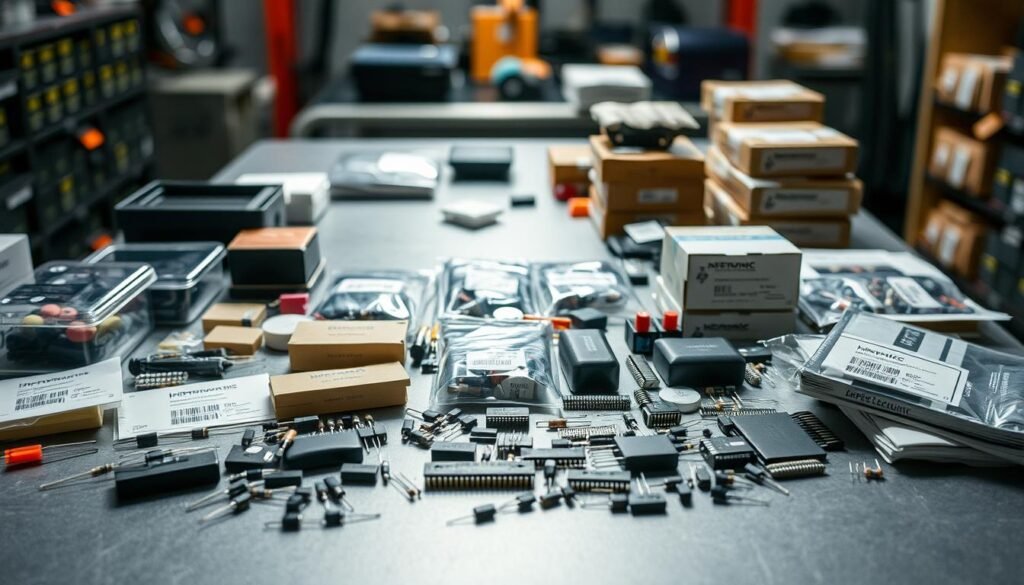
Navigating the digital marketplace for hardware requires a strategy tailored to your skill level. For newcomers, massive inventories can feel like mazes without clear exits. We simplify this journey by breaking it into actionable phases.
Step-by-Step Process for Ordering Components
Start with platforms designed for learners. Hobby-focused suppliers like SparkFun offer curated selections with project guides. These sites help you identify common resistors or capacitors through visual examples and beginner-friendly descriptions.
Once you’ve found a part, record its exact model number. This lets you cross-reference pricing and availability across global distributors. Tools like BOM managers automate this process, saving hours of manual research.
Create accounts with 3-4 trusted vendors. Compare lead times and shipping costs before finalizing orders. One robotics team cut costs by 22% using this method for their sensor modules.
Tips for First-Time Buyers and Hobbyists
Small test orders reveal more than reviews. Purchase 5-10 units to assess quality and delivery speed. This approach minimizes risk while building your trusted supplier list.
Always verify certifications like ISO 9001 during checkout. A Midwest maker community avoided counterfeit ICs by adding this 30-second check. Documentation matters—reliable partners provide datasheets upfront.
Need help? Many educational platforms offer live chat for part recommendations. Your first search should prioritize clarity over quantity—specialized shops filter out irrelevant options automatically.
Exploring Top Electronic Component Distributors

Selecting the right distributor shapes project outcomes more than any single component choice. We've analyzed market leaders to help you match suppliers with your technical and operational needs.
Digi-Key and Farnell: Quality, Pricing, and Service
Digi-Key dominates with over 11 million parts available—ideal when you need obscure resistors or last-minute replacements. Their same-day shipping covers 99% of U.S. locations. However, technical documentation varies across product lines.
Farnell shines in complex scenarios requiring design support. Their engineers provide schematic reviews and thermal analysis—services that helped one IoT startup reduce prototype errors by 35%. Expect higher costs for this white-glove treatment.
| Distributor | Key Strength | Best For | Considerations |
|---|---|---|---|
| Digi-Key | Inventory depth | Urgent orders | Limited application notes |
| Farnell | Technical support | Design validation | 15-20% price premium |
| SparkFun | Educational resources | Hobbyist modules | Niche-focused stock |
| Seeed Studio | PCB services | Full project builds | Longer lead times |
SparkFun and Seeed Studio: Innovation for Hobbyists
SparkFun's detailed tutorials transform beginners into confident builders. Their pre-assembled sensor modules eliminate guesswork—perfect for Arduino-based projects. You'll pay more than commodity prices, but gain time-saving resources.
Seeed Studio adds manufacturing capabilities to the mix. We've seen clients prototype circuits in the morning and have assembled PCBs shipped by week's end. Their Fusion service integrates component sourcing with board production.
Brick-and-Mortar Alternatives vs. Online Availability
While some regional suppliers like Jameco maintain physical stores, online platforms now provide broader access to specialized parts. A recent analysis of top electronic component distributors shows web-based vendors stock 8x more resistor types than traditional stores.
For common modules and circuits, local pickup can save shipping costs. But when designing advanced electronics, global suppliers deliver components most shops can't source. We recommend blending both channels based on project urgency and part complexity.
Conclusion
The shift to digital procurement isn’t just inevitable—it’s transformative. We’ve moved beyond local shelves to global networks where strategic supplier relationships determine project success. By understanding distributor specialties—whether rapid shipping or design support—you secure consistent access to critical parts.
Build redundancy into your supply chain. Maintain partnerships with multiple vendors to balance pricing and reliability. Tools like BOM management systems streamline this process, letting you track lead times and quality metrics across platforms.
Newcomers often find value in curated guides like our comprehensive resource for matching needs with trusted platforms. Meanwhile, experienced teams benefit from niche suppliers listed in the top 10 global marketplaces.
Your advantage? Flexibility. Blend bulk orders for common resistors with specialty purchases for custom ICs. Record supplier performance diligently—this data becomes your roadmap for optimizing costs and timelines.
With these strategies, you’re equipped to turn digital complexity into operational clarity. Resilient supply chains start here.
FAQ
How do I verify supplier reliability when sourcing materials?
We recommend checking certifications like ISO 9001 and AS9120B, reviewing client testimonials, and confirming traceability documentation. Established distributors like Digi-Key and Mouser provide detailed component histories for quality assurance.
What advantages do online platforms offer over physical stores?
Digital marketplaces like Farnell and Seeed Studio provide real-time inventory updates, bulk order discounts, and instant datasheet access. However, local suppliers in Shenzhen often offer same-day pickup for urgent PCB assembly projects.
Can I request samples before large purchases?
Yes, most reputable distributors including SparkFun and LCSC provide sample kits for resistors, capacitors, and IC chips. We facilitate sample requests through our partnered suppliers to ensure component compatibility.
How do I handle obsolete part numbers?
Our cross-referencing tools match discontinued transistors, diodes, and memory chips with active equivalents. For legacy industrial systems, we collaborate with Rochester Electronics and other authorized aftermarket specialists.
What payment terms support prototype development?
We offer flexible solutions for startups and engineers – including 30-day net terms for first-time orders under 0 and MOQ exemptions for GPU/CPU testing batches. Major credit cards and PayPal are accepted.
How long does international shipping typically take?
Standard delivery to North America/Europe takes 5-7 business days via DHL/FedEx. For critical relay or connector shortages, ask about our emergency air freight options from Shenzhen with 72-hour delivery guarantees.
