
Getting a clear electronics contract manufacturing quote for new-energy equipment can feel like trying to read a spec sheet in a dark room. You know the information is there, but you cannot make it out clearly. We understand that frustration. Our goal is to strip away the ambiguity and give you numbers you can actually use for budgeting and board-level decisions.
Here is our direct answer: a clear quote starts with a complete data package, not a simple email asking for a price. When you send us a full bill of materials (BOM), target quantities, and your testing expectations, we can return a detailed quotation that breaks down component costs, assembly labor, and testing fees. This approach turns a vague estimate into a firm, actionable number for your procurement team.
Why new-energy projects need more than a basic price per unit
New-energy equipment, whether it is for solar inverters, battery management systems, or EV charging stations, operates under different stress conditions than standard consumer electronics. Thermal management, high-voltage isolation, and long-term reliability are not optional extras. They are core requirements that affect how we build your boards.
Technical reference: For related engineering context, see IPC standards and industry resources.
When we review a request for quotation (RFQ), we look for specific operating parameters. What is the ambient temperature range? Does the board need conformal coating for humidity resistance? Are you using high-current traces that require heavier copper weights? These details change the manufacturing process and, consequently, the price. A quote without these details is just a guess, and we prefer not to guess with your budget.
We also pay close attention to the component supply chain. New-energy applications often rely on specialized parts like IGBTs, high-voltage capacitors, or specific connector types. These components can have longer lead times or price fluctuations. Our quotation process includes a check on current availability so you are not surprised by a price increase six weeks from now. We give you a realistic picture of what parts cost today and flag any that might cause delays tomorrow.
The anatomy of a transparent quotation
We structure our quotes to mirror the way you evaluate a project. You should not have to dig through line items to find where your money is going. Here is the breakdown you can expect from us:
| Quote Section | What It Covers | Why It Matters to You |
|---|---|---|
| Component Costs | Price of all parts in your BOM, including freight and handling | Shows where the bulk of your spend sits and highlights any high-cost or long-lead items |
| PCB Fabrication | Cost of the bare board, layer count, material, and finish | Confirms the board meets your electrical and thermal specs without overpaying for unnecessary features |
| Assembly & Labor | Machine setup, placement, soldering, and manual work | Reflects the complexity of your design, like the number of through-hole parts or fine-pitch components |
| Testing & Quality | AOI, functional test, burn-in, or custom test fixtures | Ensures the boards work in your application, not only on paper |
| Logistics & Handling | Packaging, export documentation, and shipping to your region | Gives you a landed cost estimate, not only an ex-works price |
This structure lets you compare apples to apples when you are evaluating multiple suppliers. You can see if a lower quote is missing testing coverage or using cheaper components. We want you to make an informed choice, even if that choice is not always us.
How to get a sharper quote from us
You can help us help you. A little preparation on your side goes a long way in speeding up the quotation process. Here are three concrete steps you can take before you send that RFQ:
1. Send a complete BOM with manufacturer part numbers
Do not only send a list of component values like "100k resistor" or "10uF capacitor." We need manufacturer part numbers (MPNs) to check availability and pricing. If you have preferred brands or approved vendor lists, include that information. We can source alternate parts if needed, but we will always ask before making a substitution. A complete BOM also reduces the back-and-forth emails that slow down the process.
2. Share your design files for a design for manufacturability (DFM) review
Our engineers will run a DFM check on your Gerber files and pick-and-place data. This review catches issues like insufficient solder mask clearance, missing fiducials, or components placed too close to the board edge. Fixing these issues before production saves you money and time. We do this as part of our standard pre-quote process, and we will share the findings with you even if you decide not to move forward with us. That is just good engineering practice.
If you are sourcing the pcbManufacturing separately, we can still review the files. We will tell you if the board design is compatible with our assembly processes. Sometimes a board that looks fine on screen has subtle issues that cause problems on the line. We would rather flag those before you commit to a batch of boards that are difficult to assemble.
3. Define your testing requirements clearly
Do you need 100% functional testing or just standard AOI? Are you planning a burn-in test for a certain number of hours? Do you have a custom test fixture or do you need us to design one? Testing is a significant cost driver, so clarity here prevents budget surprises. We can recommend a test strategy based on your application, but we need to know your quality targets first. For critical new-energy equipment, we often suggest a more thorough test plan than for consumer goods.
What we do with your RFQ behind the scenes
When your RFQ lands in our inbox, it goes through a defined workflow. We do not only glance at the BOM and throw out a number. Our process is methodical because your project deserves that attention.
First, we verify the BOM against current component availability. We check our existing inventory and distributor pricing. If any parts are obsolete or have long lead times, we flag them immediately. This step alone can save you weeks of frustration later. Next, our engineering team reviews the design files for manufacturability. They look for potential soldering issues, test points, and panelization opportunities. A good panel layout can reduce your per-board cost significantly, and we will optimize that for you.
Finally, we consolidate everything into a formal quotation. This document includes the unit price, tooling costs if any, estimated lead time, and payment terms. We also provide a clear explanation of any assumptions we made. If we assumed a standard FR-4 board material because you did not specify otherwise, we tell you. If we included a specific test procedure, you will see it in the quote. No hidden fees, no vague line items.
We also keep an eye on your total cost of ownership, not only the initial unit price. For new-energy equipment, reliability is paramount. A board that fails in the field costs far more than a slightly higher-priced board that works for years. We build to a quality standard that minimizes field failures, which saves you money in the long run. We can discuss your specific reliability targets and how they affect the quote.
For projects that involve complex pcba work, we often schedule a brief call after sending the quote. This call is not a sales pitch. It is a technical review where we walk through the key cost drivers and answer your questions. You can ask about alternative components, different test strategies, or volume discounts. We find that this conversation often leads to a better final price because we can align on the exact scope of work.
Working with components in the Middle East market
We know that procurement teams in the Middle East face specific challenges. Logistics can be complex, and component sourcing sometimes takes longer than expected. Our quotation process accounts for these realities. We factor in shipping routes and customs requirements so you get a realistic landed cost. We also understand the importance of working with reliable components that can handle the demanding environments common in the region, from high ambient temperatures to dusty conditions.
Our experience with new-energy projects in the region has taught us to ask the right questions early. Is this installation outdoors or indoors? Will the equipment be exposed to direct sunlight or salt air? These environmental factors influence component selection and board protection. We bring this perspective to your quote, so you are not surprised by a recommendation for a higher-temperature-rated capacitor or a more robust conformal coating. We are not only quoting a board; we are helping you build equipment that survives and performs.
Frequently asked questions about our quoting process
How fast can we get a quote from you?
For a complete RFQ with a full BOM and design files, we typically return a detailed quote within three to five business days. If you have an urgent deadline, let us know, and we will do our best to prioritize your request. Incomplete information, like a BOM missing manufacturer part numbers, will extend the timeline because we have to ask for clarification.
Do you charge for a DFM review?
No. The design for manufacturability review is a free part of our quotation service. We believe it is essential for giving you an accurate price. If we find issues that need correction, we will detail them in a report. You are under no obligation to proceed with us after the review, but you will have valuable information to improve your design.
Can you help us reduce the cost of our current design?
Yes. During the quote process, we can suggest alternative components, board stack-ups, or assembly techniques that may lower your cost without sacrificing quality. We will always present these as options with clear explanations of any trade-offs. The final decision is yours. If you want a specific component or process, we will follow your specification.
If you are ready to get a clear, actionable quote for your new-energy project, contact us with your BOM and design files. We will take it from there and get back to you with numbers you can trust.
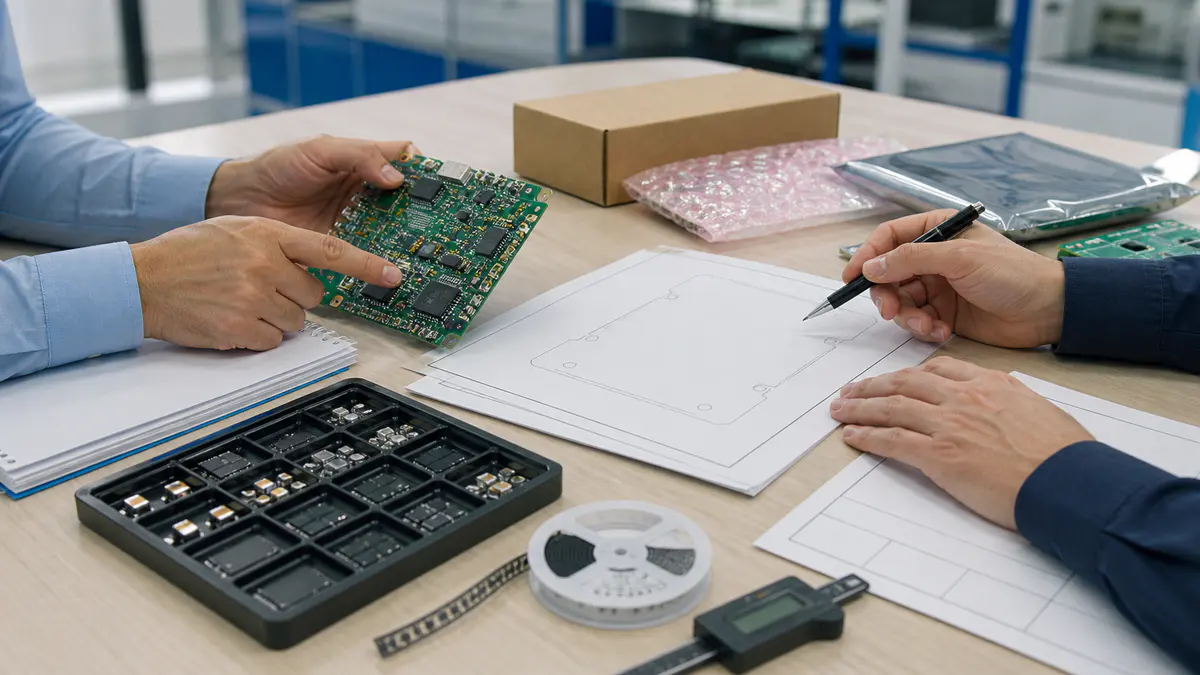
We have seen too many projects stall because of unclear pricing or surprise cost increases. That is why we are committed to making our quotes as transparent as possible. You deserve to know what you are paying for and why. Our process is designed to give you that clarity, whether you are building ten prototypes or ten thousand production units. Let us show you how straightforward an electronics manufacturing quote can be.

Our team is ready to review your project and provide the detailed information you need to make a confident purchasing decision. We are not only a supplier; we are a partner in your success. Send us your requirements, and we will respond with a quote that makes sense. Your time is valuable, and we respect that by giving you complete information upfront.

FAQ
What do we review first for electronics contract manufacturing quotes?
We begin with the functional requirement, the current revision-controlled data package, critical components, expected volume, quality requirements, and delivery deadline.
How do we make purchasing risk easier to compare?
We compare date code, traceability, lead time, MOQ, substitute status, quality checks, and the supplier assumptions behind each quotation instead of comparing only a unit price.
What do we need for an accurate quotation?
We need the correct document revision and, where relevant, the BOM, Gerber or ODB++ files, centroid data, target quantity, application, test expectation, quality requirement, and requested delivery date.
