
Keywords: supercapacitor, hybrid supercapacitor, EDLC, supercapacitor vs battery, AI data center backup power, peak shaving energy storage, supercapacitor selection
Meta Description: Supercapacitors deliver bursts of power batteries cannot. How EDLC and hybrid supercapacitors work, where they fit from AI data centers to industrial backup.
For decades the supercapacitor was a specialist's part: the component you reached for when a design needed a burst of power, a ride-through bridge, or a backup source for a realtime clock, and nowhere else. That era is ending. AI data centers, with power profiles that swing from idle to full tilt in milliseconds, have turned fast energy storage from a curiosity into strategic infrastructure, and market analysts now forecast more than 70 GW of cumulative supercapacitor power supply installed in data centers worldwide, with the market pivoting from validation to commercial deployment.
This guide explains how supercapacitors and their hybrid cousins actually work, where they beat batteries and where they do not, and the selection parameters that matter when a design needs energy delivered in seconds rather than hours.
What a Supercapacitor Is, and Why It Charges in Seconds

A supercapacitor, or electric double-layer capacitor (EDLC), stores energy electrostatically, in the electric field at the interface between high-area carbon electrodes and an electrolyte, rather than chemically like a battery. That single distinction drives every performance characteristic that matters.
Because there is no chemical reaction, charging and discharging are near-instantaneous and essentially reversible. Supercapacitors accept charge in seconds, deliver very high power density, survive hundreds of thousands to millions of charge-discharge cycles, tolerate deep discharge without damage, and operate across wide temperature ranges with far less degradation drama than lithium chemistry. The costs are energy density and voltage behavior: an EDLC stores roughly an order of magnitude less energy per kilogram than a lithium battery, its voltage falls linearly with state of charge rather than holding flat, and individual cells top out around 2.7 to 3 V, which means series strings need balancing.
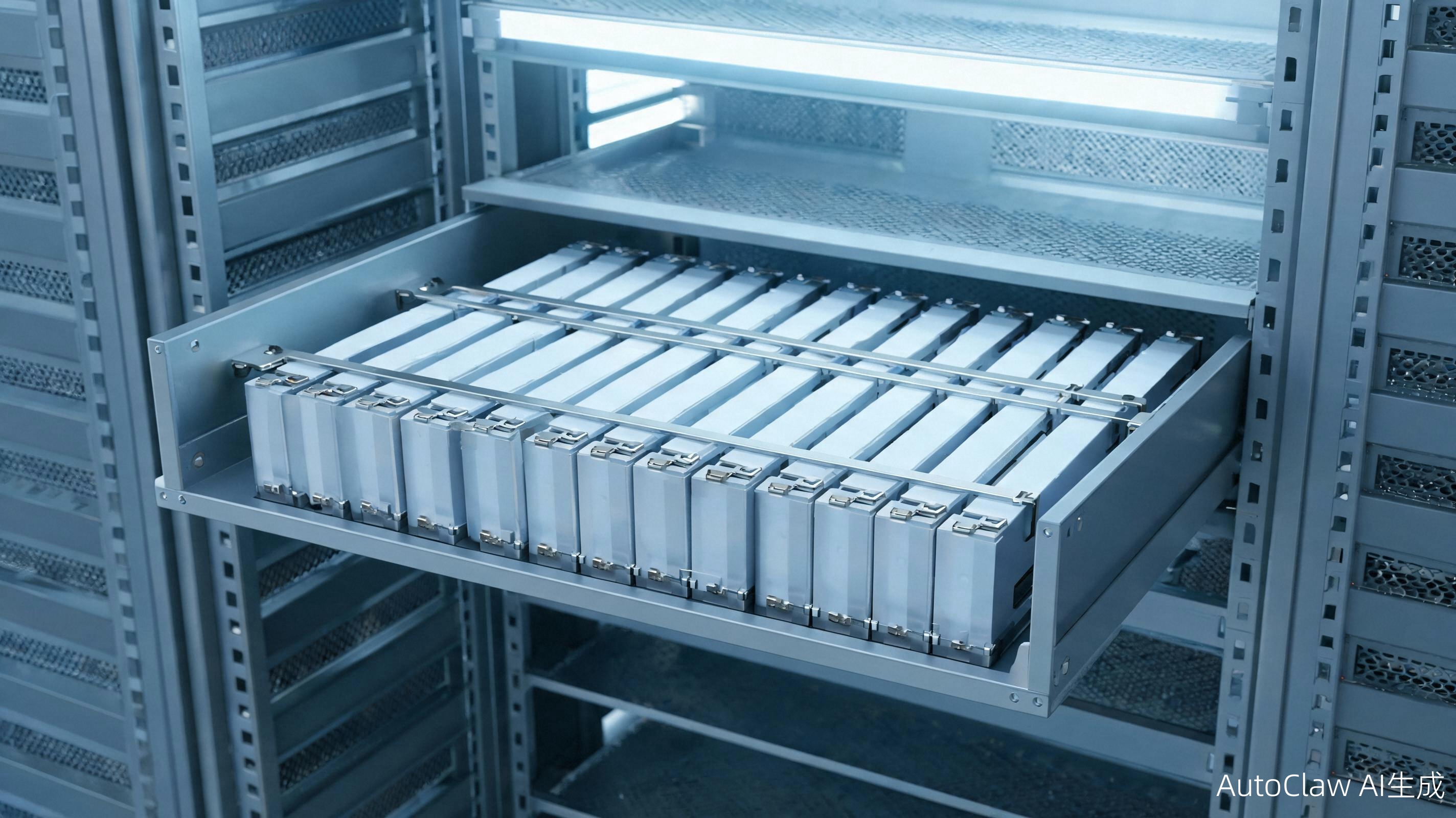
Hybrid supercapacitors split the difference by pairing a capacitor-style electrode with a battery-style one, typically lithium-ion hybrid chemistry. The result trades some cycle life and power density for substantially higher energy density, sitting between EDLCs and batteries on both axes. Developers of hybrid cells have been explicit about targeting AI data center workloads, where the energy-per-event requirement exceeds what pure EDLCs deliver economically but the power-per-event requirement is far beyond comfortable battery operation.
The table below positions the three storage families.
| Characteristic | EDLC supercapacitor | Hybrid supercapacitor | Lithium battery |
|---|---|---|---|
| Energy density | Low | Medium | High |
| Power density | Very high | High | Moderate |
| Cycle life | 500,000 to 1,000,000+ cycles | 10,000 to 100,000+ cycles | 1,000 to 5,000 cycles |
| Charge time | Seconds | Seconds to minutes | 30 minutes to hours |
| Voltage behavior | Linear discharge, ~2.7-3.0 V per cell | Partly linear, higher per-cell voltage | Flat plateau with management |
| Temperature tolerance | Wide, including -40 C cold charge | Moderate | Narrow without thermal management |
| Safety failure mode | Generally benign | Benign to moderate | Thermal runaway risk |
Where Supercapacitors Fit: The Jobs Batteries Do Badly
Supercapacitors shine in applications defined by short duration, high power, and high cycle count. Backup power for nonvolatile memory, real-time clocks, and controllers in industrial and metering equipment is the classic case, where a few farads bridge minutes of holdup. Peak shaving and load leveling smooth the current drawn by motors, transmitters, and power converters. Ride-through bridges keep critical systems alive through mains dips long enough for generators or UPS systems to engage. Regenerative energy capture in lifts, cranes, and logistics vehicles feeds braking energy back into bursts of acceleration. And cold-start assistance delivers cranking power at temperatures where batteries struggle.
The AI data center adds a new tier of application to that list. Synchronized GPU workloads create facility-scale power swings, and the industry's answer, articulated in NVIDIA's 800 VDC power architecture, is layered storage: supercapacitors placed close to the compute racks absorb millisecond-to-second spikes, while facility-level battery systems handle slower ramps. In that architecture the supercapacitor is not backup; it is an active power-conditioning component that runs continuously, decoupling the chaotic demand of accelerators from the grid's stability requirements.
Industry practitioners frame the shift memorably: batteries are very good at storing energy, while supercapacitors and hybrid supercapacitors are very good at managing power, and managing power is precisely the problem AI infrastructure needs solved. One hybrid supercapacitor system on the market today, a 400 kW platform built for exactly this duty, delivers roughly 33 seconds of discharge at 333 kW with paralleling for larger facilities, sized against the 10 to 20 seconds a generator typically needs to start and accept load. Its manufacturer specifies more than 100,000 cycles at 100 percent depth of discharge and a 15-year design life, performance figures that only matter because the storage now works every day rather than waiting for an outage.
Market analysis of the emerging deployment landscape identifies the product forms taking shape: capacitor-based battery backup units that slot into racks, container-scale supercapacitor systems, UPS modules with integrated supercapacitor energy storage, and even cable-form-factor capacitors aimed at retrofitting existing facilities. Power infrastructure developers have partnered with cell makers to deliver integrated energy storage trays explicitly targeted at AI facilities, and one major capacitor and power management company has published an 800 V data center reference architecture that includes supercapacitors alongside its UPS product lines. Industry forecasts expect the segment to move from validation to wider commercial deployment within the next one to two years, with 2026 marking the pivot point, and capacitor-based backup units entering production at major component makers from 2027.
Selection: The Parameters That Actually Matter
Choosing a supercapacitor is a different exercise from choosing a battery, and five parameters carry the decision.
Capacitance and working voltage set the energy budget, and because energy scales with the square of voltage, the usable window matters as much as the rating. A cell rated to 2.7 V operated down to 1.35 V delivers three-quarters of its stored energy; discharging to a quarter of the voltage captures more. Sizing the window against the converter's input range is the first calculation in any design.
Equivalent series resistance (ESR) governs both the power the cell can deliver and the heat it generates doing it. In high-power bursts, ESR times the current squared is the loss term, and low ESR is what separates genuine power parts from generic ones. ESR also grows with age and with cold, so it belongs in the derating analysis, not just the datasheet comparison.
Lifetime and aging follow voltage, temperature, and time rather than cycles alone. Supercapacitor datasheets specify endurance at rated voltage and temperature, with life roughly doubling for every 10 degrees C reduction and extending further at derated voltage. A part asked to hold float voltage at elevated temperature for ten years needs its voltage derated accordingly, an exercise analogous to electrolytic capacitor aging and just as often skipped.
Balancing and series strings: any application above the per-cell voltage limit stacks cells in series, and leakage current differences will drift the stack's voltage distribution over time. Passive resistive balancing is simple but wasteful; active balancing manages the drift efficiently. Either way, the balancing scheme is part of the design, not an accessory.
Safety and failure behavior round out the evaluation. EDLC failure modes are generally benign compared with lithium chemistry, which is one reason supercapacitors are welcome inside equipment that batteries make complicated. Hybrids occupy a middle ground, and their electrolyte systems deserve the same venting and thermal consideration any energy storage component receives.
Supercapacitor or Battery: The Sizing Question
The practical design question is rarely supercapacitor versus battery as a philosophy; it is which events each storage element should own. Batteries excel at energy: hours of delivery at moderate power, high density, mature supply chains. Supercapacitors excel at events: seconds of delivery at extreme power, unlimited cycling, and indifference to depth of discharge. Hybrid supercapacitors and modern battery chemistries keep narrowing the gap from both directions, which pushes the architect's decision toward the workload profile: count the events, measure their duration and peak power, and assign them to the storage technology whose weaknesses the profile never touches.
The AI data center case illustrates the pattern precisely. GPU power swings lasting seconds at megawatt scale would thrash a battery system with rapid cycling while stressing the grid connection; supercapacitors absorb them naturally and recharge between events. Generator start and long-duration outage ride-through remain battery territory. The layered answer, supercapacitors for transients, batteries for duration, neither doing the other's job, is why the two technologies are partners in modern power architecture rather than competitors, and why procurement teams evaluating energy storage for high-duty equipment should expect quotes that mix both.
From Backup Insurance to Active Power Infrastructure
The deepest change is architectural, not component-level. For decades, data center energy storage sat idle as insurance: batteries waited for a utility failure, carried the load while generators started, and returned to standby. AI inverts that model. Energy storage now cycles continuously as part of normal operation, buffering compute peaks, stabilizing electrical buses, and preventing fast-changing IT demand from propagating through the facility and out to the grid.
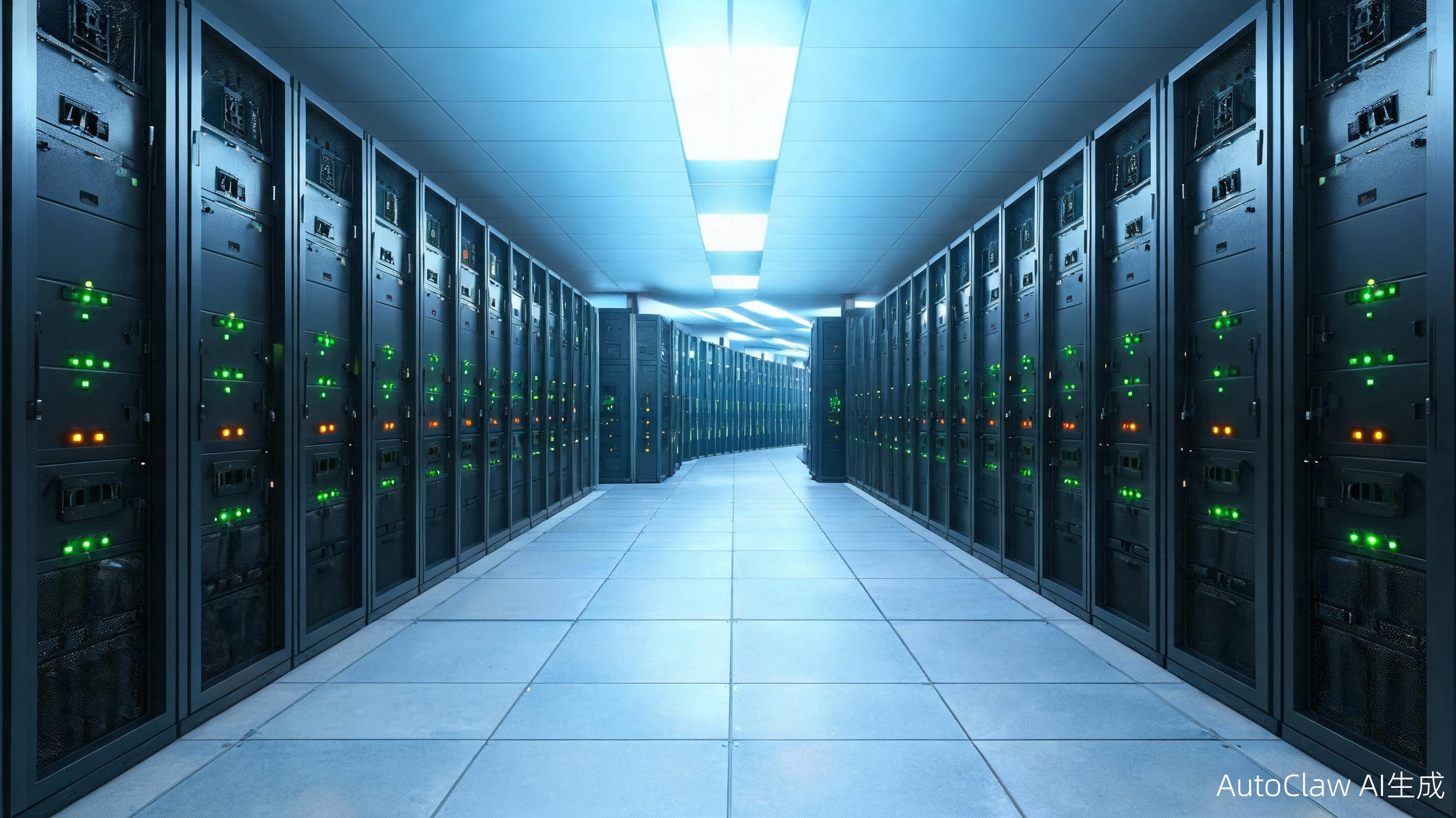
Placement has become a first-order design question, and practitioners report the biggest lesson learned is that where you manage the transient matters. A buffer placed near the processor or rack absorbs the rapid change before it travels through multiple conversion stages, distribution equipment, and the facility's power system. Cell and system developers are working with power-infrastructure partners to position capacitive storage close to server systems, and with solid-state power electronics ventures to coordinate loads and storage at a higher architectural level.
The economics follow the workload. Continuous capacity shortfalls still require real megawatts from the grid or onsite generation; storage cannot conjure them. But brief excursions above a secured power envelope are a fundamentally different problem, and a high-power buffer that supplies the excursion and recharges afterward lets operators extract more productive compute from capacity they have already secured, without throttling the accelerators they paid to install. Industry observers expect operators to talk less about a battery room and more about a layered energy storage architecture within three to five years, with different technologies solving different problems at different points in the power chain, and supercapacitors and hybrids owning the seconds-scale layer that nothing else serves economically.
Frequently Asked Questions
What is the difference between an EDLC and a hybrid supercapacitor?
An EDLC stores energy purely electrostatically at carbon-electrolyte interfaces, delivering maximum power density and cycle life but low energy density. A hybrid supercapacitor combines a capacitor electrode with a battery-type electrode, typically lithium-ion based, gaining two to four times the energy density at the cost of some cycle life and power capability. Hybrids are increasingly chosen where the energy per event exceeds economical EDLC sizing.
How long do supercapacitors last?
EDLC supercapacitors typically endure 500,000 to more than 1,000,000 charge-discharge cycles. Calendar life depends mainly on voltage and temperature: endurance roughly doubles for every 10 degrees C below rated temperature and extends substantially with voltage derating. A derated supercapacitor in a moderate climate can serve for well over a decade of float duty.
Can a supercapacitor replace a battery?
Only for workloads defined by short duration and high power. Supercapacitors store an order of magnitude less energy per kilogram than lithium batteries and discharge linearly, so for hours-long delivery they are uneconomical. They replace batteries where events last seconds, cycle counts are extreme, or cold-temperature and safety requirements disfavor lithium chemistry. Many systems use both, each covering the events it handles best.
Why are supercapacitors being deployed in AI data centers?
AI workloads swing power draw from idle to peak in milliseconds, synchronized across thousands of GPUs. Supercapacitors placed near the racks absorb these millisecond-to-second transients, protecting equipment and reducing grid instability, while facility batteries handle longer-duration backup. Analysts forecast more than 70 GW of cumulative supercapacitor power installed in data centers, with commercial deployment scaling from 2026.
Do supercapacitors need balancing in series strings?
Yes. Cells stack in series to reach working voltages, and leakage current differences will gradually redistribute the voltage across the string, pushing some cells past their rating. Passive resistive balancing is simple and common for low-power designs; active balancing manages drift efficiently for high-power strings. The balancing design is integral to the system, not optional.
What should I derate when selecting a supercapacitor?
Three things dominate: voltage, temperature, and ESR over life. Operating below rated voltage and temperature extends endurance dramatically, per the manufacturer's life curves. ESR rises with age and cold, so size the power budget against end-of-life ESR, not the fresh datasheet value. Also size the usable voltage window against your converter input range, since a supercapacitor's voltage falls linearly as it discharges.
Sources and Further Reading
- IDTechEx, "Supercapacitors for Data Centers: Case Studies, Plans & Partnerships" (players, partnerships, and >70 GW forecast): https://www.idtechex.com/en/research-article/supercapacitors-for-data-centers-case-studies-plans-and-partnerships/35485
- Eaton, "Supercapacitors in AI data centers" (manufacturer perspective on peak power and stable power management): https://www.eaton.com/us/en-us/products/electronic-components/infographics/supercaps-in-ai-datacenters.html
- NVIDIA Technical Blog, "Building the 800 VDC Ecosystem for Efficient, Scalable AI Factories" (multi-timescale energy storage architecture): https://developer.nvidia.com/blog/building-the-800-vdc-ecosystem-for-efficient-scalable-ai-factories/
- Data Center Frontier, "AI Is Turning Energy Storage Into Active Power Infrastructure" (hybrid supercapacitors for AI power fluctuations): https://www.datacenterfrontier.com/energy/podcast/55410029/ai-is-turning-energy-storage-into-active-power-infrastructure
- Musashi Energy Solutions, hybrid supercapacitor cell and energy storage system products: https://musashienergysolutions.com/
