
Keywords: Chinese component alternatives, domestic semiconductor substitution, GD32 STM32 alternative, SGMICRO cross reference, second source qualification, China IC suppliers
Meta Description: With MCUs, analog, and power parts on allocation, Chinese alternatives deserve a structured evaluation. How to qualify domestic equivalents properly.
With 32-bit MCUs running 22 to 34 weeks actual lead time, automotive power discretes stretched past 40 weeks, and advanced SoCs effectively unobtainable on the open market, 2026 has pushed a question that used to sit at the edge of sourcing strategy into the center of it: can a Chinese-manufactured alternative part fill the gap? For industrial, commercial, and increasingly automotive applications, the answer is often yes, but only when the substitution is treated as an engineering qualification project rather than a purchasing swap.
Chinese IC suppliers have spent a decade building genuine product lines: pin-compatible MCUs, analog parts with real datasheets and reliability data, automotive-qualified devices, and free cross-reference tools that map their parts to Western originals. This guide explains what the domestic alternative ecosystem actually offers, which categories are mature, and the qualification process that separates a successful second source from a field-failure factory.
Why Domestic Alternatives Moved From Plan C to Plan B
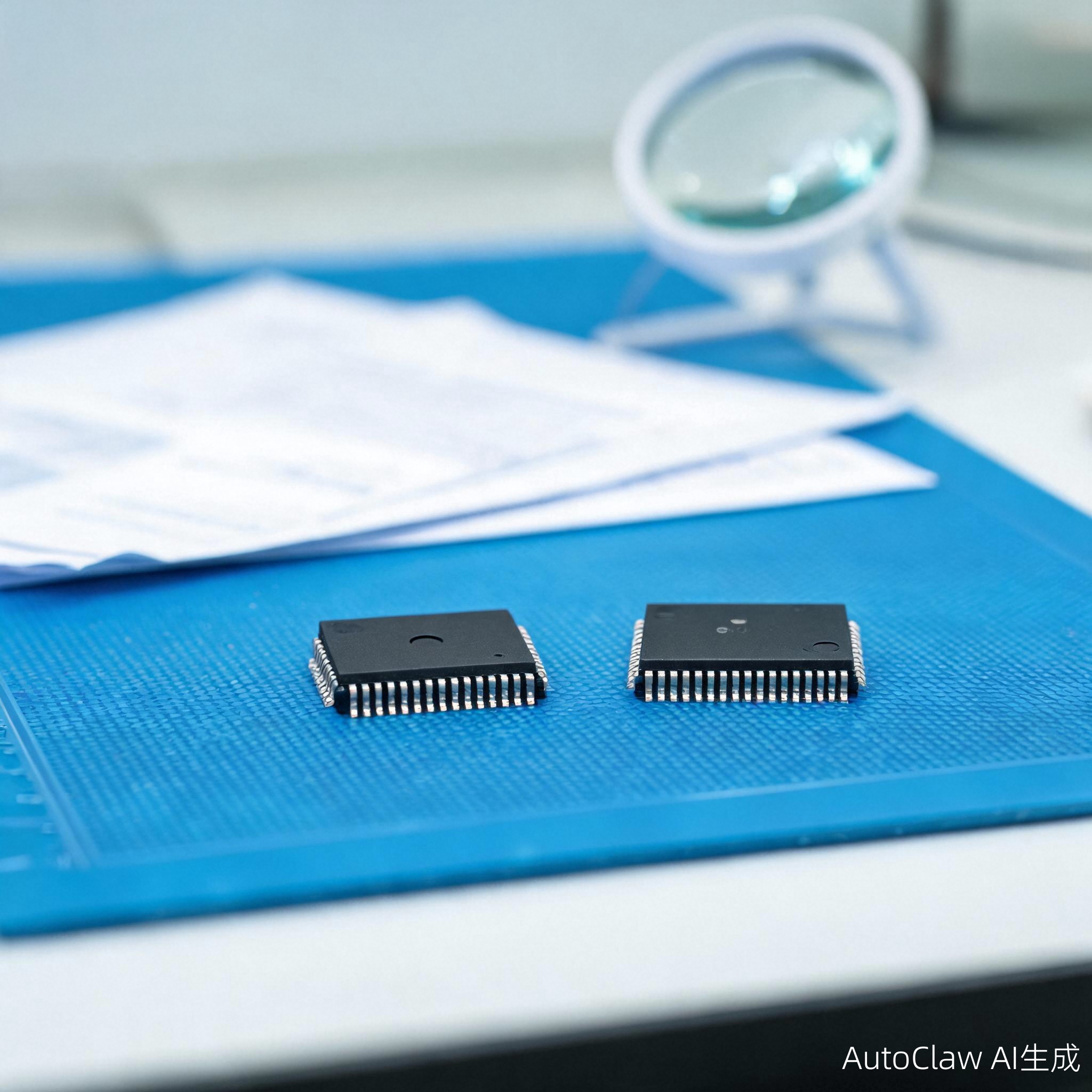
Three forces converged to change the calculus. First, allocation: when long-term-agreement customers consume most committed wafer starts for AURIX, S32K3, and RH850 families, new orders from non-LTA buyers queue behind them, and lead times for constrained Western parts have deteriorated faster than most BOM budgets can absorb. Second, mature-node capacity: the foundry capacity that produces workhorse MCUs and analog parts is more available in China, where SMIC and peers prioritize exactly the 28 nm to 180 nm processes those parts need, even raising mature-node prices roughly 10 percent while keeping allocation far looser than Western automotive fabs. The capacity story deserves emphasis because it is structural. While leading-edge fabs chase AI accelerators, the mature processes that produce everyday MCUs, interface parts, and power management ICs have become the quiet bottleneck of Western supply chains, and Chinese foundry investment has concentrated precisely there for a decade. Combined with domestic packaging and test capacity, this gives Chinese vendors a physical ability to supply mainstream parts that their Western competitors currently cannot match at comparable lead times, independent of price.
Third, supplier maturity: the leading Chinese vendors now ship parts with automotive grades, functional-safety roadmaps, and documentation quality that passes commercial audits, a genuine change from five years ago.
Industry supply-chain reporting on the 2026 shortage describes the pattern plainly: forced redesigns toward alternative parts are adding weeks to development cycles for teams that did not plan for them, while the companies that identified pre-qualified substitutes early are absorbing the same allocation shocks with minimal schedule damage. The lesson is not that everyone should redesign around Chinese parts; it is that a vetted alternate list, which increasingly includes domestic vendors, is now standard risk engineering.
What the Ecosystem Actually Offers Today
The strongest Chinese alternative suppliers are no longer clones in the pejorative sense; they are volume manufacturers with their own roadmaps. A few examples define the current state of the art.
In MCUs, GigaDevice's GD32 family spans high-performance, mainstream, entry-level, low-power, wireless, and automotive-grade 32-bit microcontrollers, many with pin-compatible ballouts to popular STM32 parts, supported by an official cross-reference search tool that maps GigaDevice parts against the Western originals they replace. The same portfolio extends into SPI NOR and NAND flash, where GigaDevice is a global volume leader, plus analog products, motor drivers, and system basis chips. In analog and power management, SGMICRO offers a broad catalog of amplifiers, data converters, LDOs, DC/DC converters, power switches, and automotive PMICs, publishes AEC-Q qualified parts such as automotive camera PMICs and three-phase motor drivers, and provides its own cross-reference search for mapping equivalents to competitor part numbers.
Beyond these flagships, the ecosystem includes dozens of specialized vendors across connectors, discretes, passives, and logic. The practical point for buyers: the question is no longer whether a Chinese alternative exists for a constrained part, but which candidate is credible and how to prove it works in your application.
| Component category | Domestic maturity in 2026 | Representative suppliers | Typical fit |
|---|---|---|---|
| General-purpose 32-bit MCUs | High; pin-compatible families mature | GigaDevice (GD32), MindMotion (MM32) | Industrial control, consumer, IoT, motor control |
| SPI NOR / NAND flash | Very high; global volume leadership | GigaDevice, Dosilicon, XTX | Code storage, displays, computing |
| Linear and switching regulators | High; broad catalogs with AEC-Q parts | SGMICRO, 3PEAK, Southchip | Power rails across all segments |
| Signal-chain analog (op-amps, ADCs, references) | Moderate to high; improving fast | SGMICRO, 3PEAK | Instrumentation, industrial, automotive adjacents |
| Automotive MCUs and SBCs | Emerging; qualification in progress | GigaDevice automotive lines, NXP-local peers | Body, BMS adjacents; validate per part |
| Power discretes and modules | High; mature-node capacity advantage | Yangjie, CR Micro, Silan | Consumer, industrial, EV support roles |
The Qualification Process That Actually Works
Treating an alternative as qualified because the datasheet parameters match is how field failures happen. A disciplined qualification follows five steps.
First, electrical equivalence with skepticism. Compare the candidate across the full parameter set, not just headline specs: absolute maximum ratings, DC accuracy over temperature, dynamic behavior, quiescent current, and especially the behaviors datasheets de-emphasize, such as power-up sequencing, ESD structure differences, and register map subtleties for configurable parts. Pin-compatible is not parameter-equivalent; the second source must meet your requirements, not the original part's datasheet.
Second, firmware and software validation. For MCUs, port the application and run the full test suite, including edge cases: clock configuration differences, flash wait-state behavior, peripheral timing quirks, and errata sheets on both sides. Vendors like GigaDevice provide migration guides and development tools specifically because this step is where substitutions succeed or fail.
Third, reliability and provenance review. Request the vendor's qualification reports: life test, ESD ratings, MSL, and for automotive or medical ambitions, AEC-Q or equivalent evidence. Authorized supply matters here more than anywhere else in the chain, because the secondary market for popular Western part numbers is where counterfeit parts concentrate, and an untraceable "alternative" of unknown origin is strictly worse than the allocation you are trying to escape.
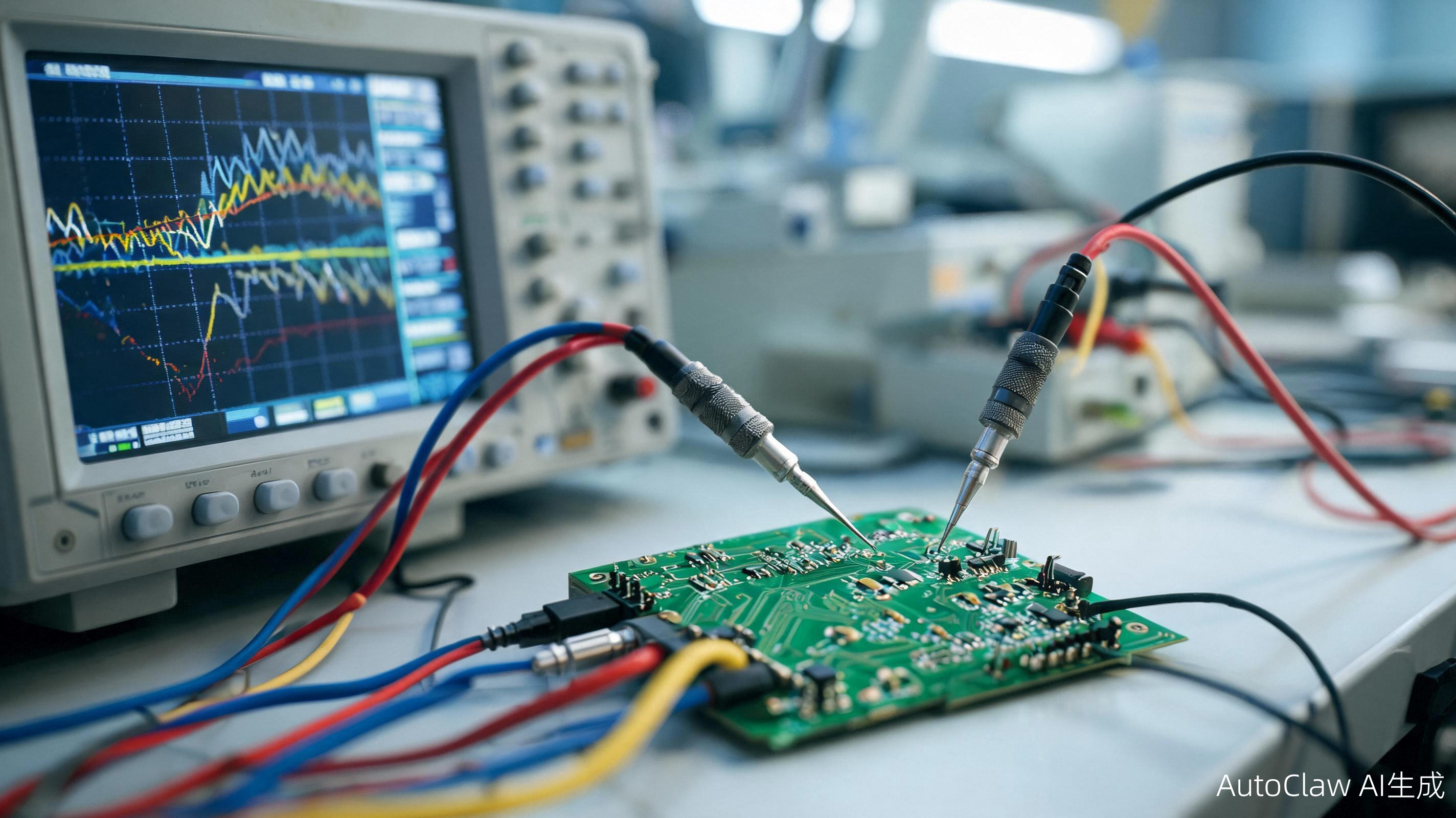
Fourth, pilot production. Build a real batch through your normal SMT line, including reflow profiling differences if the package plating differs, in-circuit test coverage, and functional test at temperature extremes. A substitution that passes the bench but fails on the production line has not been qualified.
Fifth, dual-source strategy rather than a swap. The strongest position is not replacing the original part but qualifying the alternative as a second source, with both parts released to manufacturing and purchasing authorized to consume whichever is available. This converts the qualification from a one-time emergency measure into permanent supply-chain insurance, which is exactly how experienced EMS providers structure their approved alternate lists.
A Realistic Qualification Timeline
Teams often ask how long a credible second-source qualification actually takes. The honest answer depends on the part category and the risk class of the product, but the table below reflects what well-run industrial programs typically experience when they start from a standing position with vendor samples in hand.
| Qualification stage | Commercial product | Industrial product | Safety-relevant product |
|---|---|---|---|
| Electrical equivalence review and simulation | 1 to 2 weeks | 1 to 2 weeks | 2 to 4 weeks |
| Firmware port, register and errata review | 2 to 4 weeks | 2 to 4 weeks | 4 to 8 weeks |
| Reliability and provenance document audit | 1 week | 1 to 2 weeks | 2 to 4 weeks |
| Pilot build through production SMT line | 1 to 2 weeks | 2 weeks | 2 to 4 weeks |
| Environmental and functional test at limits | 1 week | 2 to 4 weeks | 4 to 12 weeks |
| Documentation, sign-off, dual-source release | 1 week | 1 week | 2 to 4 weeks |
| Typical total | 4 to 8 weeks | 6 to 12 weeks | 3 to 9 months |
Two observations follow from these numbers. First, the total for commercial products is measured in weeks, which means the decision to defer qualification is itself a schedule decision: a month of postponement can become a month of waiting when allocation bites mid-quarter. Second, most of the effort is engineering labor that your team controls, not supplier lead time, so parallel workstreams, samples ordered on day one, reliability documents requested alongside electrical review, compress the calendar more than any negotiation does.
Where Substitution Makes Sense, and Where It Does Not
Honest boundaries keep the strategy credible. Domestic alternatives make the most sense for general-purpose MCUs in industrial and commercial products, power management and signal-chain analog with commercial or industrial temperature requirements, memory for code storage, and any category where allocation pressure is acute and the application is not safety-critical.
They deserve much more caution in functional-safety-critical automotive domains, medical devices under regulatory change control, and aerospace programs, where requalification costs are enormous and certification timelines run years. Even there, the direction of travel is clear: automotive-qualified parts from established Chinese vendors are entering tier-2 and tier-3 applications, and procurement analysts tracking the Nexperia aftermath noted that the migration to cross-qualified alternatives accelerates when a supply shock forces certifications through the pipeline. The right posture is to start qualification now on low-risk products, build organizational muscle, and expand coverage as evidence accumulates.
Working With Distributors and Sourcing Partners
Most small and mid-size OEMs do not have direct lines to Chinese IC vendors, and that is fine: the vendor ecosystems are built around distribution. Authorized regional distributors stock the major families, vendors publish cross-reference tools that accept a Western part number and return candidate equivalents, and sourcing partners with Shenzhen operations can verify authentic stock and manage supplier audits. When evaluating a partner, ask specifically about their alternate-part qualification methodology and their counterfeit screening, because the same shortage that makes alternatives attractive also fills open-market channels with problem stock.

For teams building their alternate lists this quarter, the practical sequence is: pull the BOM, flag every constrained or single-sourced line, run vendor cross-reference tools for candidates, order samples, and start the five-step qualification on the two or three lines where allocation risk is most acute. One more discipline completes the loop: re-verify the alternate list periodically. Vendor portfolios evolve quickly in this segment, with new families, updated errata, and expanding automotive grades arriving every quarter, and an alternate list reviewed annually stays current while one built during a crisis and never revisited quietly decays into false confidence.
The process is front-loaded work that pays back every subsequent quarter, because the next allocation cycle is a matter of when, not whether.
Frequently Asked Questions
Are Chinese alternative ICs just copies of Western parts?
The leading suppliers have moved well beyond that reputation. GigaDevice and SGMICRO ship their own product roadmaps, publish complete datasheets and reliability data, offer automotive-qualified parts, and provide official cross-reference tools. Pin-compatibility with Western originals is often a deliberate design feature for migration, but the parts carry their own qualification and errata, and must be validated on their own terms.
Which component categories have the most mature Chinese alternatives?
SPI NOR and NAND flash are the most mature, with GigaDevice holding global volume leadership. General-purpose 32-bit MCUs, linear regulators, switching converters, and common signal-chain analog are also strong. Functional-safety automotive MCUs and precision instrumentation analog are improving but demand the most careful qualification.
How long does a proper second-source qualification take?
For a straightforward analog or MCU substitution in a commercial product, plan four to eight weeks covering electrical comparison, firmware porting and test, reliability document review, and a pilot production run through your own line. Safety-critical or regulated applications add months to years of certification work, which is exactly why qualification should start before the shortage forces it.
Can I use Chinese alternatives in automotive products?
Selectively. AEC-Q100 qualified parts from vendors like SGMICRO and GigaDevice's automotive lines are entering body and peripheral applications, but each part needs application-level validation, and safety-critical domains carry requalification costs that dwarf the part price. Start with non-safety functions, document everything, and expand as field data accumulates.
How do I avoid counterfeit parts when sourcing alternatives?
Buy through authorized or franchised channels for the alternative itself, the same discipline you apply to the original. Require date code and lot traceability, use incoming inspection with X-ray and electrical testing for open-market purchases, and work with sourcing partners who can describe their counterfeit screening process concretely. An untraceable bargain on an alternative part is the worst of both worlds.
Should I replace my original part or add the alternative as a second source?
Add it as a qualified second source whenever possible. Releasing both parts to manufacturing lets purchasing consume whichever is actually available, removes the single point of failure permanently, and preserves leverage with the original vendor. A full replacement makes sense mainly when the original is end-of-life or the alternative is decisively better for your application.
Sources and Further Reading
- GigaDevice, 32-bit MCUs, memory, and analog products with official cross-reference search tools: https://www.gigadevice.com/
- SGMICRO (SG Micro Corp), high-performance analog ICs with cross-reference and AEC-Q qualified automotive parts: https://www.sg-micro.com/
- Illuminious, "2026 Component Shortage Reality: DRAM Prices Surge as MCU Lead Times Stretch to 40 Weeks" (allocation and mature-node context): https://www.illuminious.com/news/2026-component-shortage-dram-mcu
- Cosolvic, "Semiconductor Lead Times 2026: Quoted vs Actual" (MCU allocation and alternate-sourcing context): https://cosolvic.com/ru/blog/semiconductor-lead-time-reality-2026-quoted-vs-actual
- ProcurementPro, "Electronics market stabilises but memory pressure looms" (drop-in replacement qualification cycles after the Nexperia shock): https://procurementpro.com/electronics-market-stabilises-but-memory-pressure-looms
