
Keywords: RISC-V automotive, RISC-V MCU 2026, RISC-V production readiness, zonal controller, open ISA embedded, ASIL-D RISC-V
Meta Description: RISC-V shipments approach 2.5 billion cores a year, and automotive is the proving ground. What production readiness means for embedded design teams in 2026.
For a decade, RISC-V conversations in the embedded world were about promise: an open instruction set architecture, free of licensing lock-in, endlessly customizable, but always a few ecosystem milestones away from production credibility. In 2026 the conversation has changed. Industry estimates now put RISC-V shipments approaching 2.5 billion cores per year, commercial consumer products built on RISC-V cores have shipped in the millions of units, and the heavyweight automotive semiconductor vendors have committed their next-generation controller families to the open ISA. The question is no longer whether RISC-V is viable; it is where it should be designed in first.
This guide reviews the 2026 state of play: the production proof points, why automotive has become the benchmark market, what edge AI is doing to embedded processor requirements, and the practical considerations for teams weighing a RISC-V design-in this year.
Production Readiness: From Evaluation Boards to Shipping Products

The clearest sign of RISC-V's arrival is that the proof points are now consumer products rather than development kits. A RISC-V powered smart watch built on a production core has shipped over one million units globally, delivering extended battery life alongside GPS and biometric tracking, which makes the architecture a daily-dependence product rather than an experiment. At the silicon IP level, leading RISC-V core vendors report hundreds of licensees and billions of SoCs already deployed, with portfolios spanning ultra-low-power MCU-class cores to application-class designs, including ASIL-D compliant CPUs licensed to major automotive customers.
The vocabulary around the ecosystem has shifted accordingly. Where early trade-show demonstrations centered on architectural promise, 2026 events emphasize design-in, certification, qualification, and units shipped. Automotive reference platforms now demonstrate complete functional-safety stacks on RISC-V: a braking control reference system combining RISC-V processor IP, a functional-safety qualified toolchain, AUTOSAR Classic middleware, and validated debugging environments, assembled by Quintauris, the joint venture founded by Bosch, Infineon, NXP, and STMicroelectronics to align the ecosystem on production-grade foundations. When the companies that define automotive embedded software build their reference architectures on RISC-V, the production question is effectively answered.
Why Automotive Is the Benchmark Market
Automotive is where processor architectures face their hardest combined requirements: real-time determinism, functional safety up to ASIL-D, security, long lifecycle guarantees, and qualified toolchains, all at consumer-electronics cost pressure. If an architecture succeeds there, it succeeds nearly everywhere, which is exactly why the industry treats automotive as RISC-V's proving ground.

The technical backdrop is the transformation of vehicle electrical and electronic architecture. Cars are moving from domain controllers toward zonal control units and ultimately central car computers, consolidating body and comfort functions into zones that share wiring and cut harness weight and cost. Infineon, which has committed to RISC-V for its next-generation automotive microcontroller families, laid out the real-time demands at Hot Chips 2026: fast control loops such as electric motor control need deadlines under 10 milliseconds with interrupt latencies in the tens of nanoseconds, while strategic vehicle management tolerates seconds and millisecond latencies. Zone controllers must host real-time control, DSP and AI inference, low-power service layers, and audio processing on one part, which pushes the architecture toward heterogeneous compute: an MCU core cluster for deterministic control alongside an MPU island running a POSIX software stack for non-critical workloads.
The vendor's own argument for the open ISA is practical rather than ideological. A single open and scalable ISA avoids IP-level lock-in, eases knowledge sharing across automotive, industrial, and IoT product lines, and lets the silicon vendor concentrate differentiation where it actually happens: memory systems, connectivity, safety mechanisms such as lockstep cores and error tracking, and the microarchitectural optimizations that instruction latency and cache behavior depend on. Standardization efforts through RISC-V International's automotive special interest group are defining industry-grade profiles that cover safety and security needs, starting from compact base instruction sets and adding supervisor mode, floating point, vector, and hypervisor support as options.
The table below summarizes how the RISC-V value proposition maps to automotive requirements.
| Automotive requirement | What RISC-V offers | What still has to be proven |
|---|---|---|
| Functional safety up to ASIL-D | ASIL-D compliant cores already licensed; safety toolchains qualified | Per-product certification and audit track record |
| Real-time determinism | ISA specifies behavior; lockstep and error tracking are implementation options | Microarchitecture quality of each vendor's cores |
| Long lifecycle support | No vendor lock-in on the ISA itself; multiple IP sources | Vendor longevity and roadmaps for specific core families |
| Toolchain and software maturity | AUTOSAR Classic integration and safety compilers demonstrated | Cross-vendor interoperability at production depth |
| Cost and supply flexibility | Multiple licensees compete for the same ISA base | Consolidation of proven automotive-grade silicon supply |
Edge AI Is Reshaping Embedded Compute Requirements
The second force pulling RISC-V deeper into embedded designs is edge AI. The proliferation of on-device inference is dragging vector, SIMD, and neural processing units into microcontroller-class silicon, and the open ISA's extensibility is proving well suited to the job. New processor IP generations combine scalar, vector, and matrix compute in unified architectures, targeting everything from TinyML workloads on compact cores to demanding local language-model inference, and vendors demonstrate lightweight LLMs running on embedded-class RISC-V IP that was designed for deterministic control.
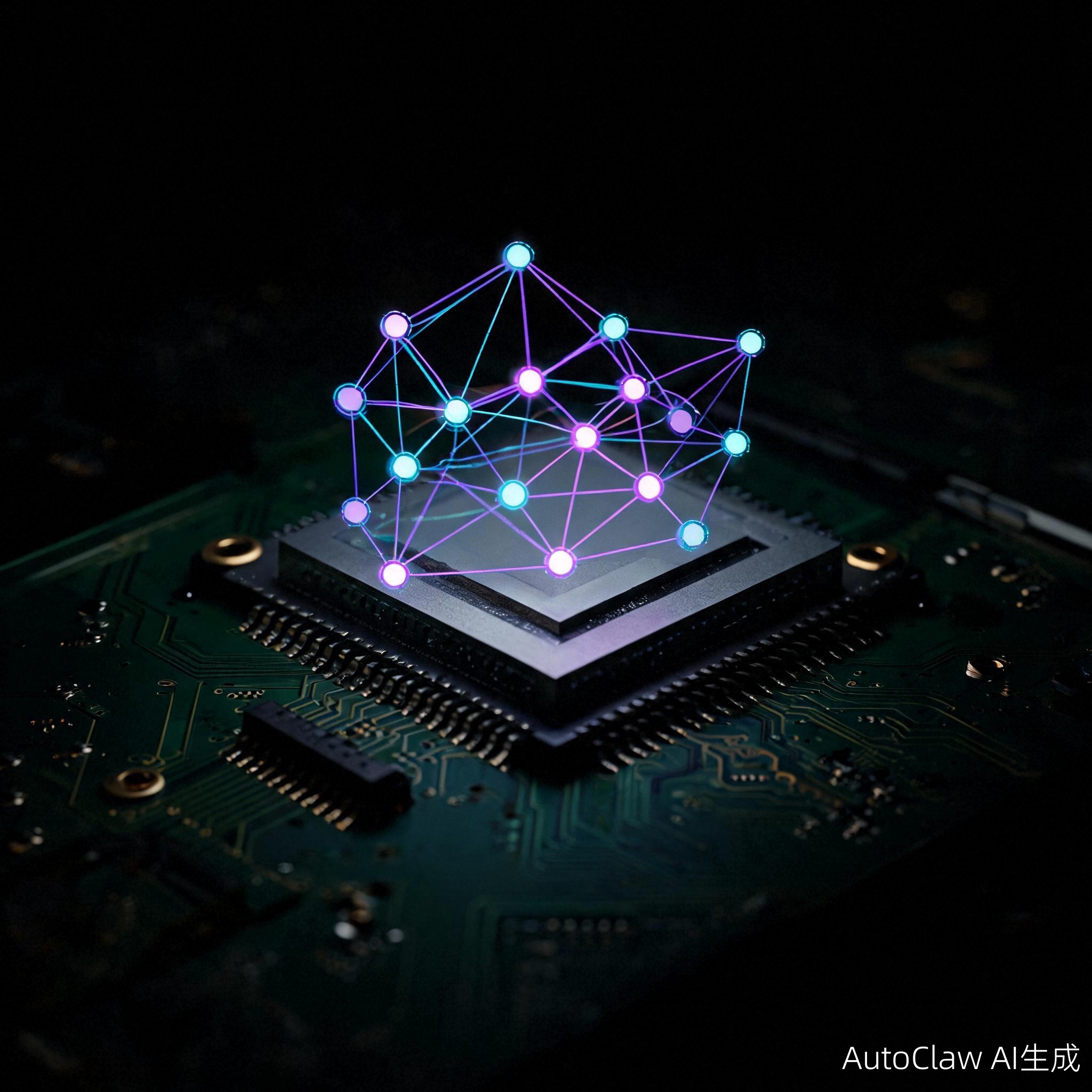
The strategic consequence is that the boundary between microcontrollers and AI accelerators is dissolving. Smartwatches, industrial nodes, robotics controllers, and automotive cockpit domains all want deterministic control and local inference on the same die, preserving the latency, reliability, and energy efficiency that embedded design demands. Ecosystem leaders now describe RISC-V as transitioning from an alternative to the default choice for embedded systems in 2026, driven precisely by this combination of open customization and AI-native extensibility.
For design teams, the practical effect is a wider menu of edge AI silicon with genuinely different trade-offs than the incumbent closed architectures, particularly where custom instructions for specific sensor processing or inference workloads can be built into the core.
Profiles, Fragmentation, and the Interoperability Question
The genuine risk in an open ISA is not technical failure; it is fragmentation. If every vendor's RISC-V core ships with a different set of extensions, memory models, and system software assumptions, the ecosystem recreates the fragmentation problem the open ISA was meant to solve. The industry's answer is standardization through profiles and reference architectures: defined baselines that specify which extensions, privilege modes, and system features a compliant implementation must support, with automotive and industrial grades layering safety and security requirements on top.
The work matters because embedded customers cannot afford ambiguity. A braking controller built on one vendor's core should be portable to another vendor's compliant core without rearchitecting the software stack, and that portability only exists if the ecosystem holds the line on what a profile actually guarantees. Observers of the automotive effort note that the distinction being drawn is less about automotive versus non-automotive silicon and more about defining industry-grade safety- and security-related products from a compact base instruction set, adding optionalities such as supervisor mode, floating point, vector support, and hypervisor capability in a controlled way.
For buyers evaluating RISC-V silicon, profile compliance is a concrete due-diligence item: ask which profile a candidate part implements, request the compliance documentation, and treat vendor-specific extensions as accelerators rather than dependencies, because code written against custom extensions is code that does not port. The healthiest sign in 2026 is that the major IP vendors are publicly competing on compliance and interoperability rather than on proprietary divergence, which is exactly the dynamic that made the open ISA attractive in the first place.
What Design Teams Should Weigh in 2026
RISC-V's production story is strong, and honest evaluation still comes down to a few engineering fundamentals.
Start with the software stack, not the ISA. Automotive and industrial adoption lives or dies on qualified toolchains, validated middleware, and debug infrastructure, and vendors themselves emphasize that automotive-qualified toolchain availability decides who succeeds. Evaluate the complete stack for your product class: compiler certification status, RTOS and AUTOSAR support, debugger quality, and long-term maintenance commitments.
Match the core vendor to the lifecycle promise. The ISA is open, but each core family is a specific vendor's product with its own roadmap, errata discipline, and support model. For long-lifecycle products, the vendor's automotive track record and change-notification practice matter more than architectural elegance.
Design for heterogeneity where it pays. The zone-controller pattern, deterministic MCU cores plus an application island, is emerging as the template for complex embedded products well beyond cars. RISC-V's configurability makes heterogeneous single-chip implementations practical, but only when the software architecture is planned for it from the start.
Concretely, a disciplined RISC-V evaluation this year looks like a checklist. Confirm the target core family has at least two qualified toolchains and an actively maintained debug stack. Verify middleware availability for your product class, whether that is AUTOSAR Classic modules, a certified RTOS, or a Linux distribution with long-term support. Review the vendor's security roadmap, because code signing and secure boot are product requirements, not options. Model the supply picture: multiple licensees of the same core family give you second-source leverage that closed architectures rarely offer, but only if the licensees' parts are genuinely compatible. And test the development experience on a real project slice, because toolchain ergonomics are discovered in use, not in briefings.
Keep a dual-ISA perspective for now. Mature teams are qualifying architectures in parallel, letting product requirements select the winner per project. The economics of the open ISA improve every quarter, but the incumbent ecosystems still carry the deepest validation history, and risk-weighted decisions beat architectural enthusiasm in safety-relevant products.
The Outlook: From Alternative to Default
The trajectory through the rest of the decade looks increasingly settled for embedded. Consumer products have proven volume production, safety-critical reference platforms exist with qualified toolchains, major automotive vendors have committed controller families, and edge AI is pulling the architecture into every new design conversation. None of this means incumbent ISAs disappear; it means the embedded market now has a genuine second default, with competition on toolchain quality, silicon supply, and price rather than on architectural access. For buyers and engineers, that is the real story of 2026: the year RISC-V stopped being a question of whether, and became a question of where first.
Frequently Asked Questions
Is RISC-V really production-ready in 2026?
Yes, with evidence at scale. A RISC-V based consumer smart watch has shipped over one million units, RISC-V IP vendors report hundreds of licensees and billions of deployed SoCs, and approximately 2.5 billion RISC-V cores ship annually across markets. Automotive reference platforms now run complete functional-safety stacks, including AUTOSAR Classic and qualified toolchains, on RISC-V cores.
Why is automotive considered the benchmark for RISC-V?
Automotive combines the hardest requirements in embedded: ASIL-D functional safety, hard real-time determinism with sub-10-millisecond control deadlines, security, long lifecycle support, and qualified toolchains, all under intense cost pressure. An architecture that passes automotive validation earns credibility for every other embedded market, which is why major vendors treat it as the proving ground.
Which major semiconductor vendors have committed to RISC-V for automotive?
Infineon has committed to RISC-V for its next-generation automotive microcontroller families and presented its zonal-controller architecture case at Hot Chips 2026. Quintauris, the joint venture founded by Bosch, Infineon, NXP, and STMicroelectronics, builds production-grade RISC-V reference platforms for automotive real-time computing, including a braking control demonstration with AUTOSAR Classic.
What do zonal controllers have to do with RISC-V?
Vehicles are moving from domain controllers to zonal architectures and central car computers, and zone controllers must host real-time control, DSP, AI inference, and low-power service functions together. Infineon argues RISC-V's open, scalable ISA with standardized profiles fits this heterogeneous compute pattern, avoiding IP lock-in while letting the vendor differentiate on memory, connectivity, and safety mechanisms.
How does edge AI affect RISC-V adoption in embedded?
Edge AI needs vector, SIMD, and neural processing in microcontroller-class silicon, and RISC-V's extensible ISA lets vendors integrate those capabilities directly into deterministic control cores. New processor IP generations combine scalar, vector, and matrix compute, running workloads from TinyML to lightweight LLM inference on embedded-class parts.
Should my team switch our next design to RISC-V?
Treat it as a per-project engineering decision. Evaluate the qualified toolchain, middleware support, vendor lifecycle commitment, and supply picture for your product class before switching. Mature teams are qualifying RISC-V in parallel with incumbent architectures and letting requirements pick the winner, especially in safety-relevant products where validation history matters as much as the architecture.
Sources and Further Reading
- RISC-V International, "Embedded World 2026" (production readiness, automotive benchmark, and edge AI themes): https://riscv.org/blog/embedded-world-2026
- ServeTheHome, "Infineon RISC-V for Automotive at Hot Chips 2026" (zonal architecture and RISC-V case): https://www.servethehome.com/infineon-risc-v-for-automotive-at-hot-chips-2026
- GigaDevice, 32-bit MCUs including RISC-V based families, memory, and analog products: https://www.gigadevice.com/
- Illuminious, "2026 Component Shortage Reality: DRAM Prices Surge as MCU Lead Times Stretch to 40 Weeks" (embedded silicon supply context): https://www.illuminious.com/news/2026-component-shortage-dram-mcu
- Computing, "Datacentre growth triggers global memory chip crunch" (AI demand reshaping silicon allocation): https://www.computing.co.uk/news/2026/datacentre/datacentre-growth-triggers-global-memory-chip-crunch
