
Keywords: NOR flash shortage 2026, SPI NOR flash lead time, W25Q128 alternative, GD25Q128 second source, execute in place XiP, firmware storage sourcing
Meta Description: Edge AI, ADAS, and AI servers tripled NOR flash demand on a supply base built for steady state. Why NOR is irreplaceable and how to second-source it.
Every electronics shortage cycle produces one unexpected character. In 2026, it is NOR flash: the quiet workhorse that stores firmware, boots the system, and gets forgotten. Demand was predictable, pricing was stable, and nobody wrote breathless articles about NOR supply. That era is over. Industry sourcing analysis now describes NOR flash, particularly the widely used 128 Mbit density class, as one of the most supply-constrained components in the market, with the leading vendor's capacity sold out through 2026 and 2027, and the squeeze looks structural rather than cyclical.
This guide explains why NOR flash has no technology-level substitute, how three independent demand surges collided with a supply base that never planned for growth, and the second-source strategy that keeps firmware storage off your critical path.
Why NOR Flash Cannot Simply Be Replaced
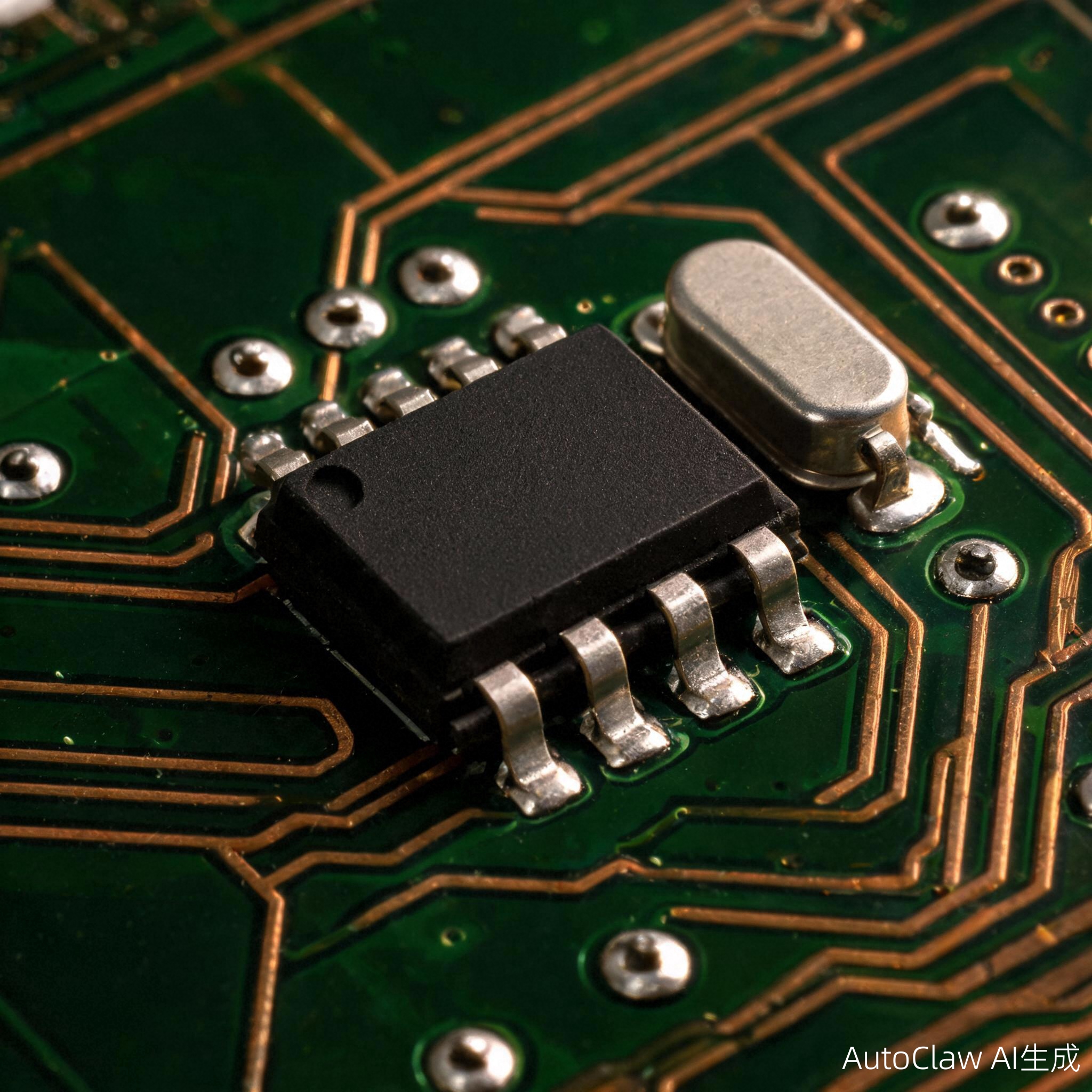
NOR flash's role rests on a property no other commercially available memory combines: execute-in-place (XiP). A processor can run code directly from NOR, so boot firmware starts executing within microseconds of power-on. SPI NOR random read latency sits around 70 to 120 nanoseconds, orders of magnitude faster than NAND flash, whose page reads take microseconds and require copying 2 to 4 KB pages into RAM before code can execute.
The alternatives fail for structural reasons. NAND boot requires DRAM to be initialized before the first instruction runs, a chicken-and-egg problem for the very firmware that initializes DRAM. DRAM itself is volatile, so it cannot hold firmware across power cycles. MRAM offers non-volatility and byte-level access, but at roughly 5 to 20 times the cost per bit and with commercial densities well below the mainstream capacity points, it remains a niche solution for industrial and aerospace designs. When NOR is short, there is no Plan B at the technology level; there are only alternative suppliers of the same technology, which is exactly why second-source qualification matters more here than almost anywhere else on the BOM.
Three Demand Surges Hitting One Sleepy Supply Base
The 2021-2022 shortage was broad demand meeting broad supply. The 2026 NOR squeeze is three specific, independent surges hitting a category with no spare capacity.
Edge AI multiplied the flash content per device. A basic IoT device in 2022 needed a single small NOR chip for firmware. An edge AI device in 2026 stores model weights that must be instantly accessible at power-on: a smart camera with on-device object recognition needs 128 Mbit or more, plus a second chip for fail-safe over-the-air updates; AR and VR designs may use several 256 Mbit parts; a voice assistant with local wake-word detection now carries 128 Mbit where it once used 32. Per-device NOR content has grown roughly 8 to 16 times in three years, across a device population that is itself growing.
Automotive went from 2 chips to 12. A vehicle five years ago used 2 to 3 NOR chips totaling around 128 Mbit for instrument cluster and radio boot code. A modern Level 2+ ADAS vehicle uses 8 to 12 NOR ICs exceeding 1 Gbit total: every camera module, every radar module, the domain controller, the instrument cluster, the telematics unit, and the V2X module each need fast-boot firmware storage. Critically, automotive NOR must be AEC-Q100 qualified, and qualifying new production lines takes 12 to 18 months, a structural supply ceiling that demand has now exceeded.
AI servers became the unexpected consumer. HBM, the stacked DRAM behind every AI accelerator, needs NOR flash to store initialization sequences that execute deterministically at power-on. A standard server uses 1 to 2 NOR chips; a GPU server with HBM uses 5 to 8; a full AI training rack can need 30 or more. Nobody planned NOR capacity for that use case, because nobody predicted AI training clusters would deploy at this scale this quickly.
Why Supply Cannot Catch Up Quickly
NOR flash is manufactured on mature process nodes, around 45 nm and 55 nm, the same nodes that produce display drivers, power management ICs, automotive MCUs, and analog chips. Mature-node wafer capacity is already fiercely contested, and NOR, with lower revenue per wafer than higher-margin products, tends to lose the allocation battle. Strategic investment over recent years flowed to advanced nodes for AI and to power semiconductor and automotive MCU capacity; NOR attracted little of it because nobody expected it to be a growth market.
The result is visible in vendor posture. The market leader, holding an estimated high-20s to mid-30s percent global share with particular strength in the automotive and industrial segment, confirmed that NOR capacity for both 2026 and 2027 is fully sold out and has reportedly refused contracts longer than three months. Relief requires either new 2D capacity, which is unlikely to attract investment ahead of the industry's 3D transition, or 3D NOR reaching volume production, expected no earlier than 2027 to 2028. Industry channel checks suggest the structural shortage persists through at least mid-2027, with spot pricing at a sustained premium to 2025 contract levels.
The Density That Hurts Most: 128 Mbit
The squeeze concentrates at one capacity node. The 128 Mbit (16 MB) class is large enough for edge AI firmware bundles, cost-effective for high-volume IoT, and the standard capacity for automotive camera modules, so consumer and automotive demand stack on exactly the same density. Smaller capacities in the 16 to 64 Mbit range and larger 512 Mbit and above parts have comparatively better availability, which makes capacity flexibility a genuine sourcing lever: a new design that specifies 256 Mbit minimum often dodges the worst queue, and a mature design that can tolerate a density change in either direction shortens its own lead time.
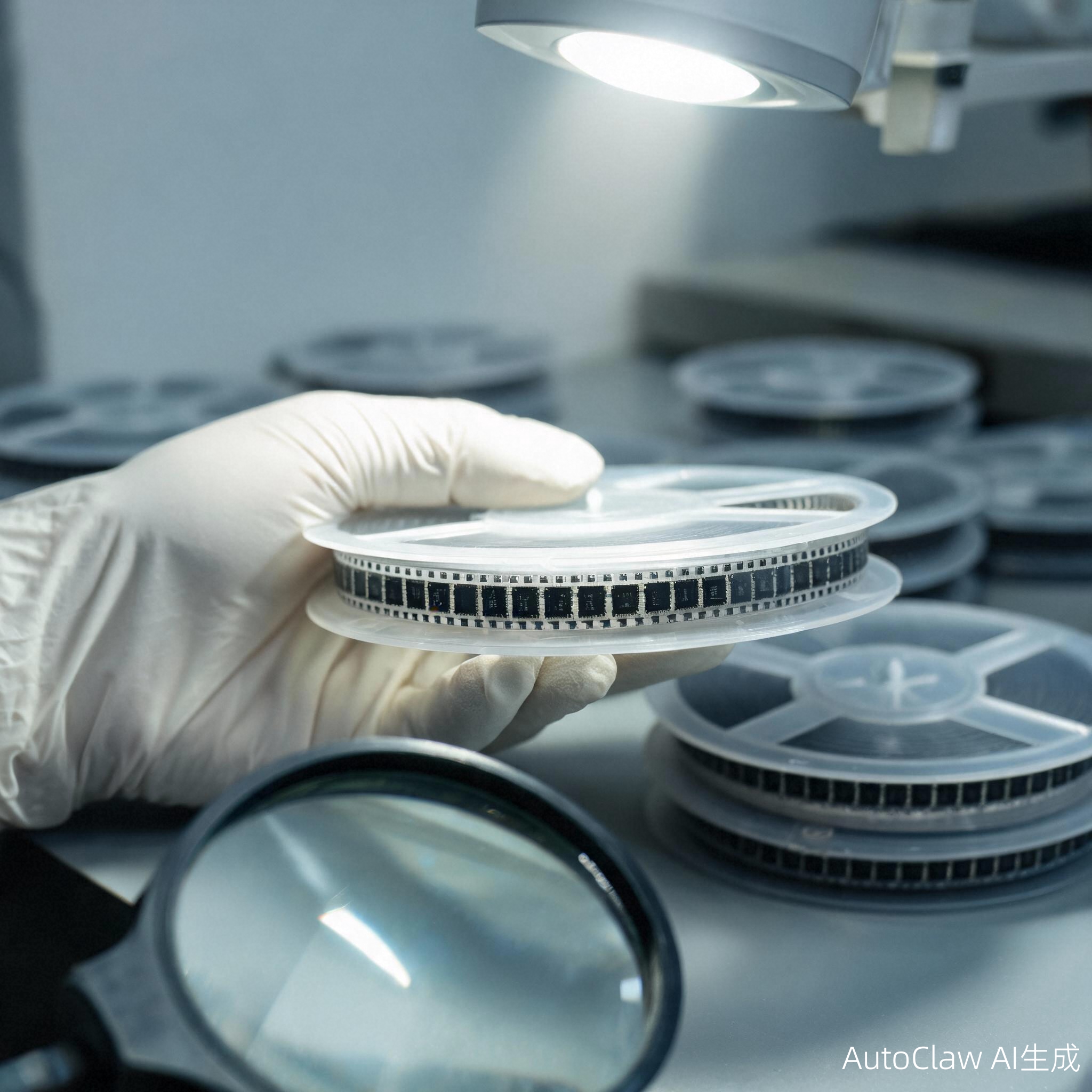
The counterfeit risk has risen with the shortage. Open-market channels have shown relabeled commercial parts marked as automotive and lower-density parts remarked as 128 Mbit. A practical incoming check reads the JEDEC ID and the SFDP parameter table from a known-good and a suspect part and compares them byte for byte, a test that catches most remarking in under a minute per reel and belongs in any open-market NOR purchase flow.
The Second-Source Playbook
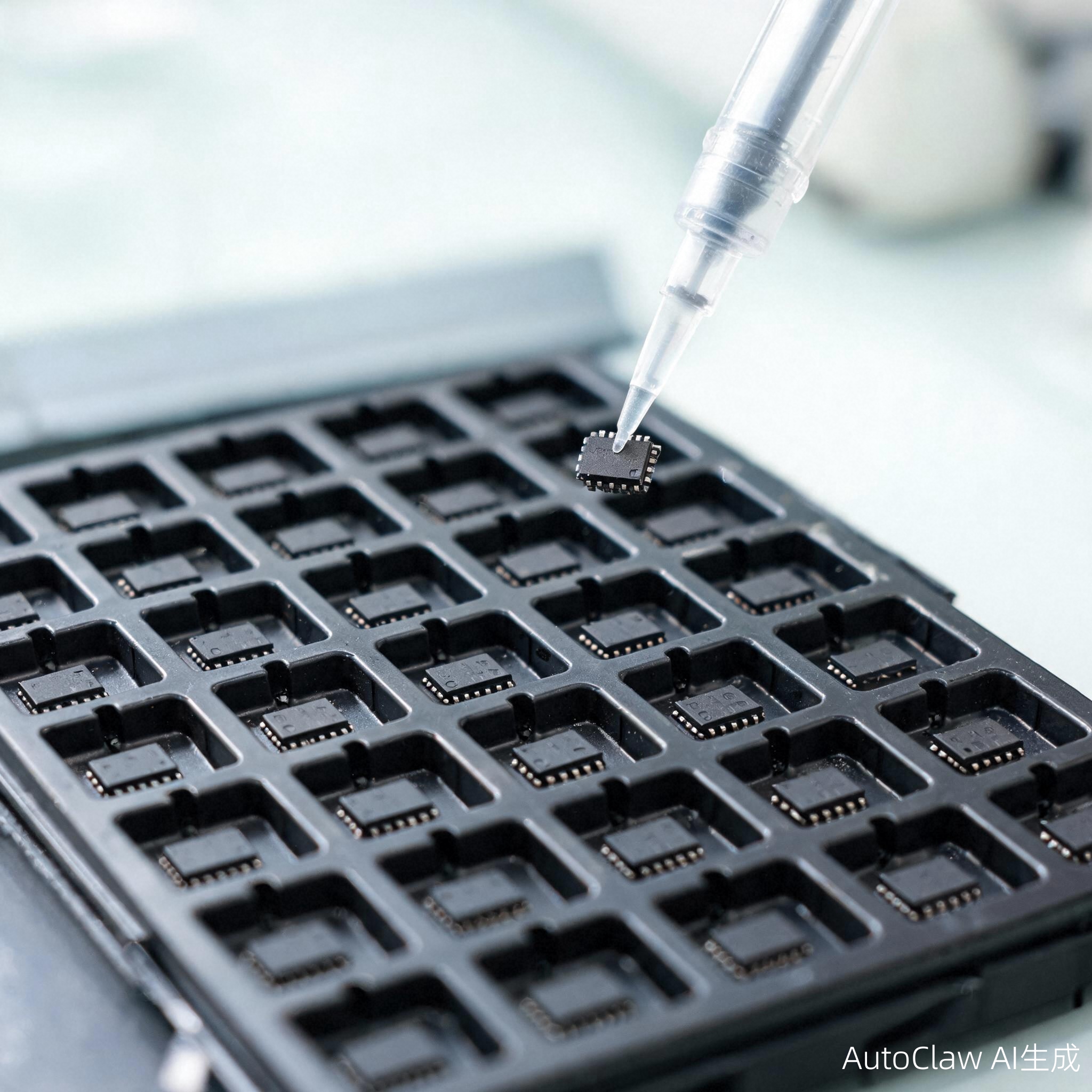
The single highest-value design decision is making the firmware-storage line vendor-flexible at the 128 Mbit, 3.0 V, SOIC-8 or WSON-8 footprint. Every major supplier ships into this slot, and the JEDEC JESD216 Serial Flash Discoverable Parameters (SFDP) standard is what makes swapping one flash for another without firmware changes actually possible: a bootloader that discovers device parameters through SFDP can configure and use parts from multiple vendors without code changes.
| Vendor | Representative 128 Mbit part | Typical positioning | Availability posture in 2026 |
|---|---|---|---|
| Winbond | W25Q128JV (3.0 V), W25Q128JW (1.8 V) | Reference default; automotive AEC-Q100 lines; AI server HBM init | Allocation only; 30-40+ weeks |
| GigaDevice | GD25Q128E (3.0 V), GD25LQ128E (1.8 V) | Cost-sensitive consumer, IoT, server BMC | Generally shorter; stocked options ship in days |
| Macronix | MX25L12873G (3.0 V), MX25U12832F (1.8 V) | Automotive AEC-Q100, networking, set-top | 20-30 weeks on auto grade; better on commercial |
| ISSI (Lumissil) | IS25LP128F (3.0 V), IS25WP128F (1.8 V) | Extended-temperature automotive and industrial | Steady; classic second source for AEC-Q100 designs |
| Puya | P25Q128H | Cost-floor consumer, smart home | Generally available; budget positioning |
Reading the table correctly matters as much as reading it at all. Pin compatibility is high but not universal: standard 8-pin SOIC parts share the JEDEC pinout, while WSON and USON variants have package-specific dimensions, so overlay the datasheets before locking the footprint. Voltage variants are not interchangeable, as a 3.0 V part will not boot in a 1.8 V slot and vice versa. And AEC-Q100 grades do not transfer: dropping a commercial-grade part into a slot qualified for an automotive-grade device requires requalification, as the qualification standard governs the product and process, not the footprint.
Timing matters as much as vendor selection. Qualification windows are closing opportunities: every quarter a single-source NOR line waits, the safety-stock requirement grows and the open-market premium compounds, while the qualification work itself, an SFDP-compliant driver, a footprint check across package options, and a firmware regression pass, takes a small team days rather than months. Teams that started their second-source qualification in the first half of the year are now routing purchases across two or three suppliers by lead time and price; teams that treated NOR as an undifferentiated commodity line are discovering that the cheapest available quote is for parts they cannot verify.
The migration path that works in practice: qualify a footprint-compatible second source first, where an SFDP-compliant bootloader makes the firmware delta small; add an automotive-qualified supplier for AEC-Q100 lines; reserve the budget suppliers for cost-dominated SKUs. For critical-path production, six to nine months of safety stock costs a few percent per month in carrying cost against the line-down alternative, and extending the planning horizon from the historical 8 to 12 weeks to 16 to 20 weeks is now the sane default for any NOR line that matters.
Frequently Asked Questions
Can NAND flash replace NOR flash for firmware boot?
Not directly. NAND reads entire 2 to 4 KB pages into RAM before code can execute, which requires DRAM to be initialized first, a chicken-and-egg problem for the boot firmware itself. Some SoCs use on-chip ROM to load a first-stage bootloader from NAND into SRAM, but that adds complexity and boot latency. For execute-in-place workloads, NOR remains the only practical option.
Why is the 128 Mbit density the most constrained?
Consumer edge AI products and automotive camera modules have converged on 128 Mbit (16 MB) as the volume point, so demand from both stacks onto the same density and the same supplier lines. Smaller 16 to 64 Mbit parts and larger 256 to 512 Mbit parts have more available supply, which makes capacity flexibility a real sourcing lever.
Is a competitor's 128 Mbit NOR a drop-in replacement for the market-leading part?
For most commercial and industrial applications, yes: the standard SOIC-8 and WSON-8 pinouts match, the SPI command sets align, and a JEDEC SFDP-compliant bootloader discovers and configures any compliant part without code changes. Confirm the voltage variant matches, verify the specific package dimensions, and requalify if the slot is automotive AEC-Q100, since commercial-grade parts cannot substitute there without requalification.
What is JEDEC SFDP and why does it matter for sourcing?
SFDP (Serial Flash Discoverable Parameters, standard JESD216) is a table inside the flash chip that describes its capabilities to the host. A bootloader that reads SFDP can configure timing, commands, and features for any compliant vendor's part automatically. Designing SFDP support into your firmware once converts your NOR line from a single-source dependency into a multi-vendor routing decision.
How long will the NOR flash shortage last?
Industry channel analysis suggests structural tightness persists through at least mid-2027, because meaningful relief requires either new 2D NOR capacity, which is unlikely ahead of the 3D transition, or 3D NOR reaching volume production in 2027 to 2028. Prices are expected to settle above pre-2025 levels even after rebalancing, since the demand drivers are permanent.
How do I spot counterfeit NOR flash from open-market suppliers?
Require date code and lot traceability, and inspect incoming reels by reading the JEDEC ID and SFDP table from a known-good part and a suspect part, comparing byte for byte. Remarketed commercial parts sold as automotive grade and lower-density parts sold as 128 Mbit are the two most common fakes in the current market, and both fail this test in under a minute per reel.
Sources and Further Reading
- Cosolvic, "NOR Flash Shortage 2026: Why Edge AI Is Creating a Structural Squeeze" (demand drivers, supplier matrix, and Winbond capacity posture): https://cosolvic.com/blog/nor-flash-shortage-2026-edge-ai-automotive-demand
- GigaDevice, SPI NOR flash product portfolio and cross-reference search tools: https://www.gigadevice.com/
- Tom's Hardware, "IDC expects average PC prices to jump by up to 8% in 2026 due to crushing memory shortages" (memory market context): https://www.tomshardware.com/tech-industry/idc-expects-average-pc-prices-to-jump-by-up-to-8-percent-in-2026-due-to-crushing-memory-shortages-some-vendors-already-selling-pre-builts-without-ram
- Computing, "Datacentre growth triggers global memory chip crunch" (AI infrastructure demand context): https://www.computing.co.uk/news/2026/datacentre/datacentre-growth-triggers-global-memory-chip-crunch
- Illuminious, "2026 Component Shortage Reality: DRAM Prices Surge as MCU Lead Times Stretch to 40 Weeks" (mature-node capacity and shortage context): https://www.illuminious.com/news/2026-component-shortage-dram-mcu
