
Keywords: MLCC shortage 2026, high capacitance MLCC lead time, MLCC price increase, AEC-Q200 capacitor, MLCC alternatives, ceramic capacitor sourcing
Meta Description: High-capacitance MLCC lead times now stretch to 40 weeks with prices up 60 percent. What is driving the 2026 squeeze and how buyers and designers fight back.
Six months ago the multilayer ceramic capacitor was the part nobody worried about. It sat at the bottom of the bill of materials, cost fractions of a cent, and shipped from stock the same week you ordered it. In 2026 that has changed. High-capacitance and AI-server-grade MLCCs now carry lead times of 26 to 40 weeks and price increases of 50 to 60 percent, while automotive-grade parts in X7R and X8R dielectrics stretch to 18 to 24 weeks. The squeeze is narrow, structural, and concentrated in exactly the grades that power delivery networks and automotive modules depend on.
This guide explains what is actually driving the 2026 MLCC shortage, quantifies the lead times and price movements by grade, and gives engineers and buyers concrete workarounds, from footprint flexibility to second-source qualification, that are keeping production lines running.
A Shortage With a Narrow Blast Radius
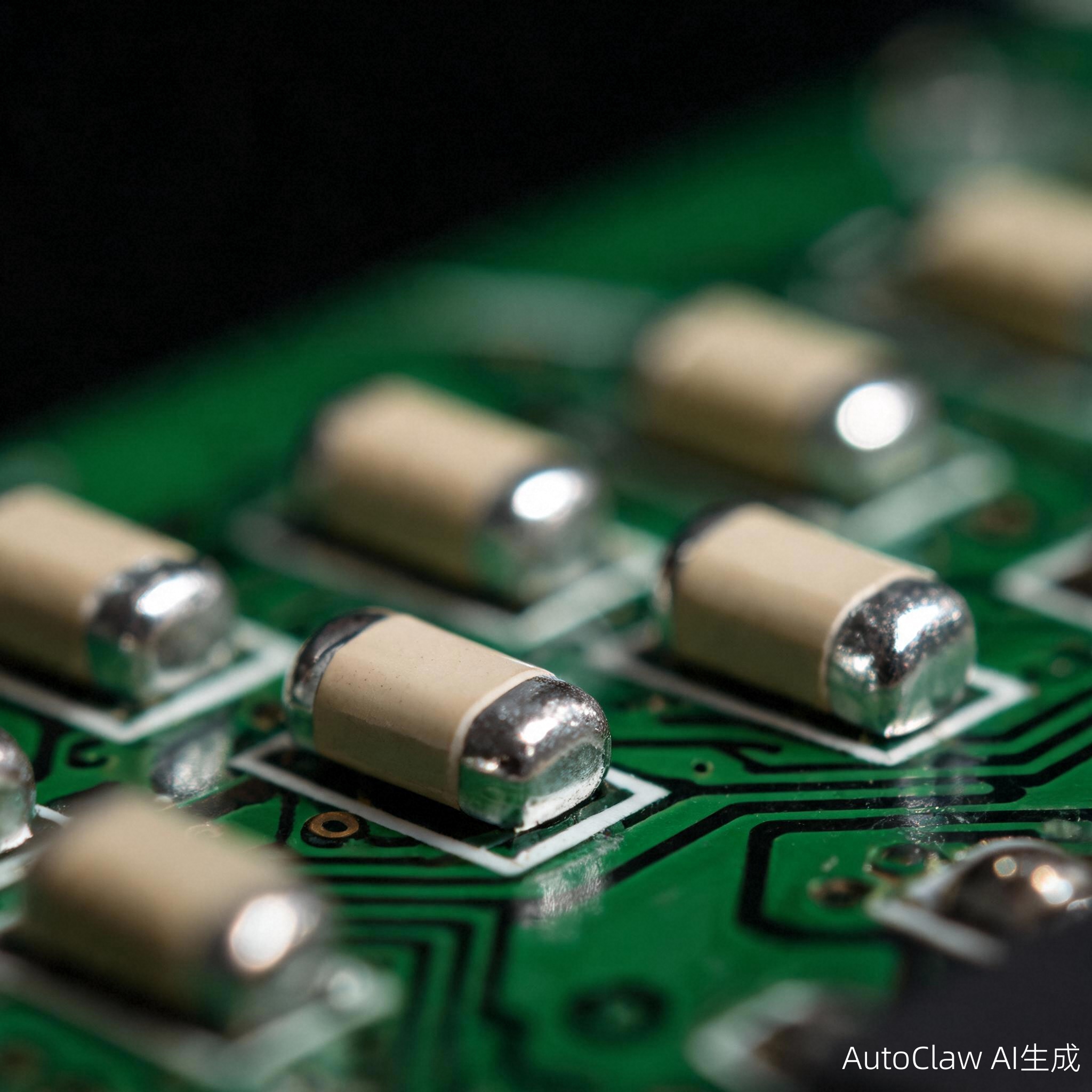
This is not a repeat of 2021, when nearly every component category went short at once. The 2026 MLCC situation is selective. Commodity-grade parts in common case sizes and standard capacitance values remain broadly available, with lead times of 8 to 12 weeks that are stretched from historical norms but nowhere near crisis levels.
The pain is concentrated in three overlapping grades. High-capacitance parts in larger case sizes, the workhorses of power delivery networks, now run 16 to 20 weeks or more. Ultra-high-capacitance and AI-server-grade parts run 26 to 40 weeks. Automotive-grade parts qualified to AEC-Q200 sit at 18 to 24 weeks. If your design uses a 22 uF part in an 0805 case for a power rail, you are in the queue. If your BOM is mostly 100 nF decoupling in 0402, you are largely unaffected, at least on availability.
That narrowness is deceptive, though. The cheapest line item on the bill of materials is once again the one most likely to stop production, because the constrained grades are precisely the ones that serious designs cannot ship without.
Who Controls the Capacity
Unlike semiconductors, where dozens of foundries compete, high-end MLCC capacity is concentrated in a handful of tier-one manufacturers. According to industry analysis published in mid-2026, Murata holds roughly 38 percent of global high-end MLCC capacity, Samsung Electro-Mechanics about 27 percent, Taiyo Yuden around 12 percent, and Kyocera (AVX) about 8 percent. Combined, the top three control roughly three-quarters of high-end output, and utilization on those lines is running at 90 to 95 percent, leaving no buffer for demand surprises.
New capacity is coming, but slowly. Murata's server-focused expansion is not expected to reach mass production until the fourth quarter of 2026, and Samsung Electro-Mechanics' high-end ramp has slipped to the first quarter of 2027. A high-grade MLCC fab takes roughly a year and a half to two years to build, plus another year or more for precision equipment delivery and yield optimization. Murata itself maintains a comprehensive MLCC product portfolio and technical resources on its official site, but catalog breadth does not equal wafer capacity, and even the largest manufacturer cannot conjure furnace time on demand.
Lead Times and Prices by Grade
The clearest way to see the market is to compare grades side by side. The figures below reflect mid-2026 industry reporting on parts priced since February 2026.
| MLCC category | Historical lead time | Mid-2026 lead time | Price change since Feb 2026 |
|---|---|---|---|
| Commodity-grade, common case sizes | 6 to 8 weeks | 8 to 12 weeks | Roughly flat; modest increases on select values |
| High-capacitance / larger case, standard voltage | 6 to 8 weeks | 16 to 20+ weeks | +15 to +20 percent |
| Ultra-high-cap / AI-server-grade | 6 to 8 weeks | 26 to 40 weeks | +50 to +60 percent |
| Automotive-grade (AEC-Q200, X7R/X8R) | 8 to 10 weeks | 18 to 24 weeks | +6 to +13 percent |
Channel inventory confirms the tightness. Distributor stock on the constrained grades is estimated at one to one and a half months of coverage, against a historical average closer to four and a half months. That thin buffer means a single large order can push lead times out further with little warning.
Manufacturer price actions followed the same pattern. Taiyo Yuden was among the first to move, raising prices on low-capacitance consumer and automotive MLCCs by 6 to 13 percent in April 2026. Murata initiated MLCC price increase protocols in early 2026 and has since run multiple rounds of adjustments on AI-grade high-end parts. Industry forecasts point to further increases in the second half of 2026, on the order of 20 to 30 percent for general high-capacitance grades and 30 to 50 percent for ultra-high-capacitance grades, tracking the ramp of next-generation AI server platforms.
Why AI Servers Changed the Math
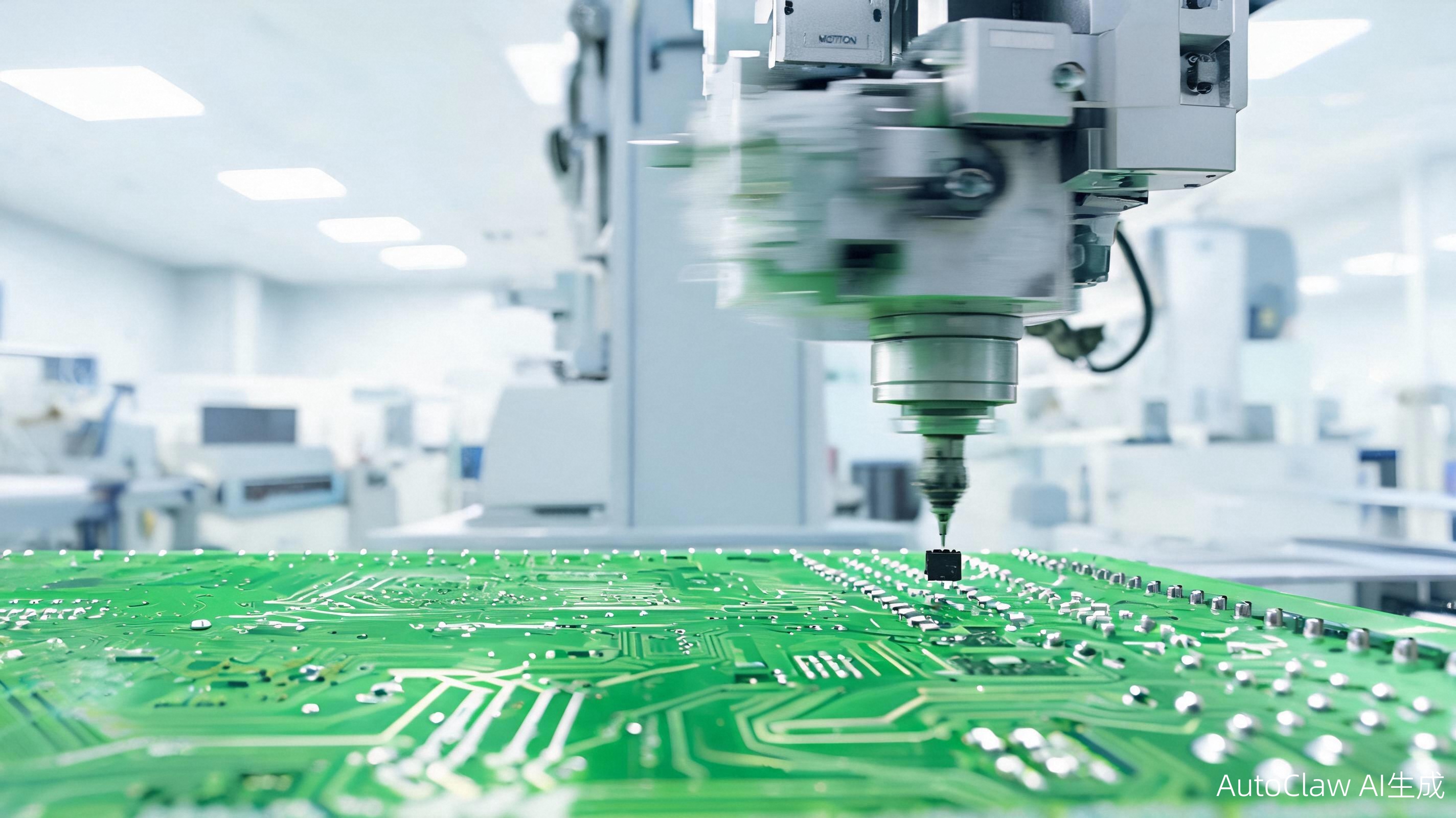
The demand story comes down to power delivery. A GPU board's power distribution network is capacitor-hungry by design, converting hundreds of amps at low voltage into stable rails with microsecond response requirements. One current-generation AI server design uses roughly 6,500 MLCCs. The next-generation platform arriving in the second half of 2026 is expected to need around 12,000 per unit, five to ten times the volume of a traditional server.
AI servers still account for only a small single-digit percentage of total MLCC unit volume, but they consume a disproportionate share of high-grade capacity, and hyperscaler order volumes can absorb a meaningful fraction of a supplier's spare capacity in a single purchase order. Layer automotive electrification on top, and the squeeze compounds. Once a production line is qualified to the AEC-Q200 automotive standard, manufacturers will not reallocate it back to commercial-grade output, because requalification is expensive and slow. That permanently removes capacity from the commercial pool even when commercial demand is strong.
The result is a structural imbalance that will not resolve in a quarter or two. Capacity expansion runs on a 12 to 24 month cycle, demand compounds every quarter, and the highest-margin business, which is AI-grade product, gets allocated first.
Design Workarounds That Open Second Sources
Engineering has more leverage over this shortage than purchasing does, and the highest-leverage changes are cheap if you make them before the next board spin.
Widen the parameter window. If a design specifies a tight-tolerance, large-case, high-capacitance part where a slightly different case size or voltage rating would work electrically, giving engineering that flexibility opens alternate sourcing paths immediately. A 10 uF, 25 volt, X5R part in one case size often has direct equivalents in adjacent case sizes from two or three additional manufacturers.
Add footprint flexibility. Designing pads that can accept two or three case sizes for the same net gives purchasing room to substitute without a respin when one grade goes unallocated. This costs nothing at layout time and pays for itself the first time a primary part slips.
Qualify second sources early. Waiting until a part goes end-of-life or unallocated to find an alternate is now too late; qualification needs to happen ahead of the shortage biting, not after. Manufacturers' own cross-reference and stock-check tools, such as those available through the Murata and TDK product portals, shorten the search, but the qualification testing still has to happen in your lab.
Requalify against a wider set of approved manufacturers. Many teams single-sourced to whichever supplier had the best price two years ago. Requalifying the design against a broader approved vendor list, particularly across Murata, Samsung Electro-Mechanics, Taiyo Yuden, TDK, and Yageo-class suppliers, converts a single point of failure into a routing decision.
Respect the dielectric. When substituting, match DC bias behavior and temperature characteristics, not just nominal capacitance. A substitute part with the same capacitance code but worse DC bias derating can deliver half the effective capacitance on a biased rail, turning a paper-equivalent swap into a power integrity problem.
Procurement Playbook for Passive Buyers
On the buying side, the tactics that work in an allocation market are consistent across the industry.
Prioritize by criticality, not unit cost. A five-cent capacitor with a 30-week lead time is a bigger schedule risk than a five-dollar IC with an eight-week lead time. Rank every MLCC line in the BOM by line-down consequence, and spend your negotiation capital where a stockout actually stops shipments.
Move away from pure just-in-time ordering on critical passives. Longer-term agreements and forward positions on the tight grades, rather than ordering to the immediate production schedule, are now standard practice among resilient buyers.
Verify availability weekly, not quarterly. With channel inventory this thin, a quote that was valid a month ago may no longer reflect real allocation. Teams checking live distributor stock weekly catch allocation changes before they become line-down events.
Lock pricing on commodity grades before increases land. Even parts not directly affected by the high-capacitance squeeze are seeing knock-on pressure as manufacturers rebalance product mix toward higher-margin lines.
For smaller buyers without direct allocation conversations with tier-one manufacturers, the practical route is a sourcing partner that tracks live stock across multiple authorized and open-market channels, plus design-phase qualification of alternates. That combination meaningfully reduces exposure even without hyperscaler purchasing leverage.
Outlook: What Eases When
The milestones that matter through the next twelve months, with expected effects, are summarized below.
| Milestone | Expected timing | Likely effect |
|---|---|---|
| Murata's new server-focused capacity reaches mass production | Q4 2026 | Marginal relief on ultra-high-cap grades, not full resolution |
| Next-generation AI accelerator platform mass shipments | Q3 to Q4 2026 | New demand peak likely to offset early capacity gains |
| Samsung Electro-Mechanics high-end capacity ramp | Q1 2027 | Additional incremental supply |
| Commodity-grade easing as non-optimized lines shift output | Late Q4 2026 | Some relief expected on standard-grade parts |
| Broader structural rebalancing | Not before mid-2027 | Full normalization on high-cap and automotive grades |
The realistic planning assumption: commodity-grade MLCCs should stay manageable, with some easing possible late in 2026. High-capacitance, AI-grade, and automotive-grade parts should be treated as constrained through at least the first half of 2027, with pricing likely to keep climbing before it stabilizes. This shortage rewards buyers who move early and design flexibly, and it penalizes anyone still treating MLCCs as a commodity line item to be ordered at the last minute.
Frequently Asked Questions
Is there really an MLCC shortage in 2026, or only for AI servers?
The shortage is narrow and structural. Commodity-grade MLCCs in common case sizes remain broadly available at 8 to 12 week lead times. The squeeze is concentrated in high-capacitance, ultra-high-capacitance, AI-server-grade, and automotive AEC-Q200 grades, where lead times run 16 to 40 weeks and prices have risen 6 to 60 percent depending on grade.
Which manufacturers control high-end MLCC supply?
A handful of tier-one suppliers dominate: Murata holds roughly 38 percent of global high-end capacity, Samsung Electro-Mechanics about 27 percent, Taiyo Yuden around 12 percent, and Kyocera (AVX) about 8 percent. The top three together control roughly three-quarters of high-end output, running at 90 to 95 percent utilization.
Can I substitute an X5R MLCC where the design specified X7R?
Sometimes, but carefully. X7R holds its capacitance across a wider temperature range (-55 to +125 degrees C) than X5R (-55 to +85 degrees C), so the swap is only safe if your operating temperature range and derating analysis allow it. Match DC bias behavior and voltage rating, and validate effective capacitance under real bias, not just the nominal code.
Why can manufacturers not just add MLCC capacity quickly?
A high-grade MLCC line requires cleanroom construction, specialized ceramic forming and firing equipment, and a lengthy yield optimization period, typically 12 to 24 months from capital decision to shipped product. Automotive-qualified lines are also rarely converted back to commercial grade because requalification is expensive, permanently removing capacity from the commercial pool.
How many MLCCs does an AI server use compared to a normal server?
Industry reporting puts a current-generation AI server design at roughly 6,500 MLCCs per unit, with the next-generation platform expected to need around 12,000 per unit in the second half of 2026, five to ten times the volume of a traditional enterprise server. That concentration on the highest grades is what starves other buyers of allocation.
What should a small OEM do without direct allocation with Murata?
Three things work. First, build design flexibility into the next board spin so two or three case sizes and manufacturers are acceptable. Second, qualify second sources before the primary part goes unallocated. Third, work with a distributor or sourcing partner that tracks live stock across multiple authorized and open-market channels and can verify provenance, since counterfeit risk rises in any shortage.
Sources and Further Reading
- Simplytronix, "The 2026 MLCC Shortage: Why Capacitors Are Suddenly Hard to Get": https://simplytronix.com/blog/2026-mlcc-shortage-lead-times-pricing-sourcing-guide
- Illuminious, "2026 Component Shortage Reality: DRAM Prices Surge as MCU Lead Times Stretch to 40 Weeks": https://www.illuminious.com/news/2026-component-shortage-dram-mcu
- Murata Manufacturing, MLCC product lineup and technical documentation: https://www.murata.com/en-global/products/capacitor/mlcc
- Computing, "Datacentre growth triggers global memory chip crunch" (datacenter demand context): https://www.computing.co.uk/news/2026/datacentre/datacentre-growth-triggers-global-memory-chip-crunch
- Tom's Hardware, "IDC expects average PC prices to jump by up to 8% in 2026 due to crushing memory shortages" (AI infrastructure demand context): https://www.tomshardware.com/tech-industry/idc-expects-average-pc-prices-to-jump-by-up-to-8-percent-in-2026-due-to-crushing-memory-shortages-some-vendors-already-selling-pre-builts-without-ram
