
Keywords: DRAM shortage 2026, NAND flash price increase, DDR4 DDR5 supply, memory procurement strategy, embedded memory sourcing, LPDDR5X allocation
Meta Description: DRAM and NAND prices keep climbing in 2026 as AI datacenters absorb wafer capacity. A practical sourcing playbook for embedded buyers facing allocation.
If you design or manufacture anything with a processor in it, 2026 has turned memory from a routine line item into the single biggest sourcing risk on your bill of materials. Conventional DRAM contract prices rose by as much as 98 percent in the first quarter of 2026, consumer SSDs have jumped more than 50 percent in a matter of weeks, and memory makers have sold out production through the rest of the year. Analysts now expect more than 70 percent of all high-end memory produced in 2026 to be consumed by datacenters, leaving conventional electronics buyers to compete for whatever allocation remains.
This article is a practical playbook for procurement teams, hardware startups, and small OEMs who cannot simply outbid a hyperscaler. It explains why the shortage is structural rather than cyclical, breaks down how each memory class is affected, and lays out the sourcing tactics that are actually working right now, including second-source qualification, buffer stock planning, and counterfeit risk management.
Why Memory Is the Center of the 2026 Component Shortage
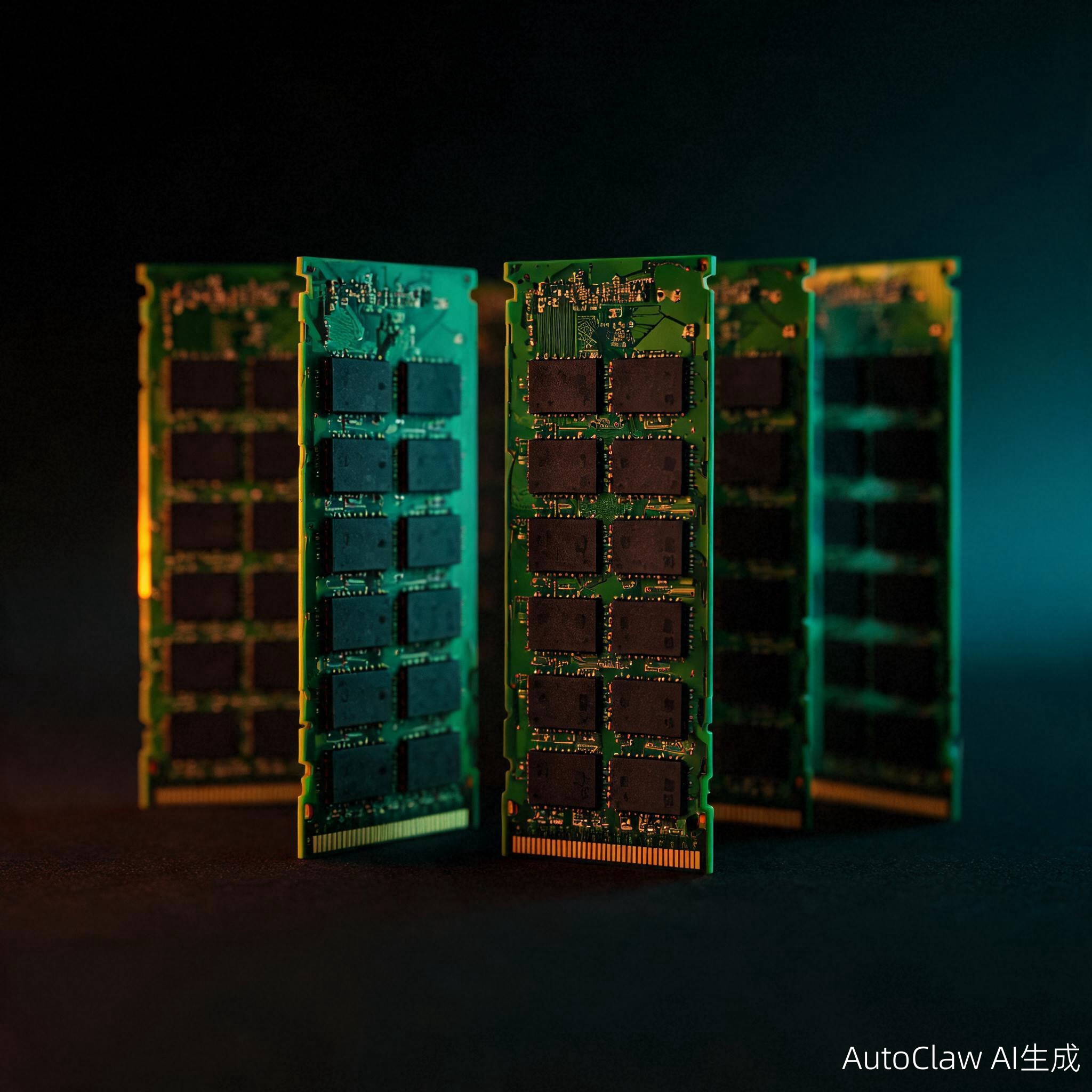
The root cause is a deliberate reallocation of wafer capacity toward high-bandwidth memory (HBM) and advanced DRAM for AI accelerators. HBM is produced on the same fabrication lines that make conventional DRAM, and because AI products carry far higher margins, manufacturers have redirected capacity accordingly. TrendForce estimates that AI applications could account for roughly 20 percent of global DRAM wafer consumption in 2026, and that share is expected to keep growing.

The consequences are visible in every corner of the industry. SK Hynix said in October 2025 that it had already sold out its entire 2026 production. When manufacturers do invest in new capacity, that output will not arrive in time to ease near-term pressure; industry analysts note that whatever wafer production is in place right now comes from investment decisions made three or four years ago, and new capacity is unlikely to make a meaningful difference before 2028.
TrendForce senior research vice president Avril Wu, who has tracked the memory sector for almost two decades, summarized the situation bluntly: this time really is different, and it is the craziest time the memory market has ever seen. Unlike the 2021-2022 shortage, which was driven by a broad demand shock and eventually resolved as capacity caught up, this squeeze is structural. Demand from AI infrastructure compounds every quarter, while legacy memory output keeps shrinking as lines are converted or retired.
The Numbers: How Bad Is It, Really?
The price data tells the story more clearly than any narrative. Memory chip prices surged about 50 percent in the final quarter of 2025, and Counterpoint Research forecast a further 40 to 50 percent rise by the end of the first quarter of 2026. The Register reported that conventional DRAM contract prices rose by up to 98 percent in Q1 2026 alone. Hardware startups report bill of materials inflation of 15 to 25 percent, and one supply partner advised customers to plan for 10 to 20 percent monthly DRAM price increases through the end of 2026.
The table below collects the most useful documented data points for planning purposes.
| Data point | Figure | Source | Date |
|---|---|---|---|
| High-end memory consumed by datacenters in 2026 | More than 70 percent | Industry analysts via Computing.co.uk | Jan 2026 |
| Memory chip price rise, Q4 2025 | About 50 percent | Counterpoint Research | Jan 2026 |
| Forecast further rise through Q1 2026 | 40 to 50 percent | Counterpoint Research | Jan 2026 |
| Conventional DRAM contract price rise, Q1 2026 | Up to 98 percent | The Register via Illuminious | Jul 2026 |
| AI share of global DRAM wafer consumption, 2026 | Roughly 20 percent | TrendForce via Illuminious | Jul 2026 |
| BOM cost inflation reported by hardware startups | 15 to 25 percent | Illuminious survey | Jul 2026 |
| IDC 2026 PC shipment forecast scenarios | Down 2.4 to 8.9 percent | IDC via Tom's Hardware | Dec 2025 |
| Expected PC acquisition cost increase, 2026 | 4 to 8 percent | IDC via Tom's Hardware | Dec 2025 |
| Enterprise PC price adjustments announced | Up to 15 percent | Dell and Lenovo via Tom's Hardware | Dec 2025 |
The knock-on effects extend well beyond the memory module itself. Memory is expected to account for up to 10 percent of the cost of most electronics, and as much as 30 percent of a smartphone's bill of materials. IDC has already cut its 2026 smartphone shipment forecast by 5 percent and its PC forecast by 9 percent, describing the situation as a permanent reallocation of supplier capacity toward AI datacenters. SSDs, graphics cards, and even hard drives have climbed sharply, with some consumer SSD models rising more than 50 percent in weeks and premium high-capacity hard drives doubling in price in some retail channels.
How Each Memory Class Is Affected
Not all memory is squeezed equally, and knowing where the pressure concentrates helps you prioritize negotiation and design work.
| Memory class | Primary uses | Availability pressure in 2026 | Buyer implication |
|---|---|---|---|
| DDR5 | PCs, servers, high-end embedded x86 and ARM | Severe; capacity shifting to HBM and server DDR5 | Lock contract pricing early; expect monthly increases on spot |
| DDR4 | Industrial, automotive, legacy embedded, networking | Extreme; production actively wound down as fabs favor newer nodes | Last-time-buy decisions are urgent; broker stock carries premium and risk |
| LPDDR5 / LPDDR5X | Smartphones, tablets, edge AI, battery-powered devices | High; mobile makers competing directly with edge AI designs | Design-in flexibility matters more than price negotiation |
| Consumer NAND / eMMC | Set-top boxes, appliances, IoT storage | High; SSD demand pulls wafers away from small-block NAND | Consider capacity right-sizing and SLC-style alternatives for code storage |
| Enterprise SSD NAND | Datacenter storage | Severe; hyperscalers buying forward | Consumer and industrial drives inherit the price rises |
| Legacy NOR flash / specialty memory | Code storage, MCUs, automotive clusters | Moderate; some relief as it is not HBM-competitive | Often the pragmatic substitute for small code and data storage |
The DDR4 situation deserves special attention. Cars, televisions, and many industrial products rely on this older generation, but chipmakers have scaled back or abandoned production of legacy components, funneling capacity toward the newer memory that AI systems require. Analysts warn the result could echo the production delays the automotive industry experienced during the pandemic. If your product still runs on DDR4, every week you delay a last-time-buy increases both price and the risk of encountering counterfeit stock.
Second Sources and Alternatives: What Can Actually Substitute
Memory substitution is harder than swapping a capacitor, because interfaces, footprints, and firmware all constrain the options. Still, several practical paths exist.
First, qualify pin-compatible parts from a second vendor wherever the interface standard allows. DDR4 and DDR5 are standardized JEDEC interfaces, so a module or component from a second manufacturer often drops in with firmware validation rather than a board respin. For LPDDR parts the ballout constraints are tighter, but several vendors offer compatible packages in common densities.
Second, reconsider your density and architecture assumptions. A design specified around a discontinued eMMC part can often move to a different density or a NAND plus controller architecture with modest firmware work. For code storage below about 128 megabytes, serial NOR flash remains widely available and mechanically simpler, and for the smallest data-holding requirements, FRAM offers effectively unlimited endurance at the cost of density.
Third, revisit memory sizing honestly. Many designs carry 20 to 30 percent more RAM than their real workload requires because the price difference used to be trivial. In 2026 that margin has a price tag. Right-sizing a DDR5 configuration from 8 gigabytes to 4 gigabytes, where the application genuinely permits it, can halve your exposure on the most inflation-prone line in the BOM.
Every substitution still requires validation. Memory is unforgiving of marginal timing or thermal assumptions, so budget engineering time for full test passes on any second source before you commit purchase orders.
Procurement Tactics That Work in an Allocation Market
The buyers keeping production lines running through this cycle share a few habits.
Plan forward, not just-in-time. Buffer stock programs that carry six months of forward coverage on critical memory parts have become standard practice among resilient hardware companies. The carrying cost of inventory is real, but it is currently far below the combined cost of price inflation and line-down risk.
Secure contract supply before relying on spot. Spot purchases in a market moving 10 to 20 percent per month are effectively a speculative position. Wherever possible, negotiate quarterly or semi-annual agreements with distributors, even at prices above historical norms, because the agreement caps your downside while spot exposure is unlimited.
Check live stock weekly, not quarterly. Distributor inventory on tight grades is thin, and a quote that was valid last month may no longer reflect real allocation. Teams that review live stock across multiple authorized channels each week catch allocation changes before they become production stops.
Diversify your channel mix deliberately. Authorized distributors should carry your baseline supply, but in an allocation market, open-market and broker channels hold the residual stock. Work with sourcing partners who verify provenance, because the open market in a shortage is where counterfeit parts concentrate, which brings us to the next section.
Communicate design flexibility to purchasing. A buyer who knows the design accepts two case sizes, three densities, or two vendors can act on opportunities the same day they appear. A buyer locked to one exact part number can only wait.

Counterfeit and Quality Risk: The Hidden Cost of Scarcity
Every major shortage produces a counterfeit wave, and the 2026 memory crisis is no exception. Refurbished, remarked, or outright fake DRAM and NAND modules circulate through open-market channels, often with plausible date codes and packaging. For consumer products the risk is warranty costs and returns. For industrial and automotive products, a failing counterfeit memory part is a field failure and a safety conversation.
Protect yourself with a verification discipline proportionate to the risk. Buy from authorized or franchised distributors whenever lead times allow. When open-market stock is unavoidable, require date code and lot traceability, and subject received parts to incoming inspection that includes X-ray imaging, decapsulation sampling on high-value lots, and full electrical testing rather than a simple continuity check. Reputable sourcing partners run exactly this kind of inspection flow and should be able to describe it in detail; a partner who cannot explain their counterfeit screening process is telling you something important.
Document your verification steps. In an incident, the difference between a contained quality event and a recall often comes down to whether you can demonstrate what was checked and when.
Outlook: Planning Assumptions Through 2027
Base your 2027 planning on three assumptions that the current evidence supports.
First, assume memory stays expensive and tight through 2027. Goldman Sachs has warned that the current DRAM spike is just the start, and industry observers expect the shortage cycle could persist through 2027 and beyond, because new fab capacity will not materially ease the market before 2028. Second, assume the shortage stays selective: memory, MCUs, and power ICs where AI demand consumes fab capacity are the pressure points, while many commodity analog and discrete parts remain reasonably available. Third, assume procurement strategy is now a core engineering discipline, not an afterthought. The companies weathering this cycle are the ones that designed for component flexibility early, qualified second sources before they needed them, and treated buffer stock as an engineering decision rather than a finance complaint.
The practical closing checklist for this quarter: audit every memory part in your BOM for second-source coverage, issue last-time-buy orders for any DDR4-dependent product still in your roadmap, negotiate what contract coverage you can before the next price round, and establish weekly stock checks on the ten memory line items that would stop your production if they slipped.
Frequently Asked Questions
Why are DRAM and NAND prices rising so fast in 2026?
AI datacenters are consuming the majority of new high-end memory output, with analysts estimating more than 70 percent of 2026 high-end memory production going to datacenters. Manufacturers have redirected wafer capacity toward higher-margin HBM and server memory, and SK Hynix has already sold out its 2026 production. Conventional DRAM contract prices rose by up to 98 percent in Q1 2026 as a result.
Is DDR4 still available for industrial and automotive designs?
Yes, but it is the tightest memory class and production is actively winding down. Chipmakers have scaled back or abandoned legacy memory to make room for AI-driven demand. If your product uses DDR4, treat a last-time-buy as urgent and expect broker-channel stock to carry significant premiums and counterfeit risk.
When will the memory shortage end?
Most analysts expect tight conditions to persist through 2027 because new capacity from investments announced in 2024 through 2026 will not meaningfully increase supply before 2028. Goldman Sachs has characterized the DRAM spike as just the start, and some observers believe the cycle could extend further if AI infrastructure spending continues at current levels.
Can I substitute LPDDR5X for DDR5 or vice versa in an existing design?
Not without a redesign. DDR5 uses a standard DIMM or component interface, while LPDDR5X uses a point-to-point ballout that is electrically and mechanically different. Treat memory substitutions as a design decision requiring board and firmware revalidation, not a purchasing swap. The practical substitutions are pin-compatible parts from a second vendor within the same memory class.
How much buffer stock of memory should I carry?
Resilient hardware companies have moved to roughly six months of forward coverage on critical memory parts. The right number depends on your production volume, cash position, and shelf-life constraints, but the current monthly price movements of 10 to 20 percent mean the carrying cost of inventory is generally far below the cost of spot-market exposure or a line-down event.
How do I avoid counterfeit memory chips when buying on the open market?
Prefer authorized distributors when lead times allow. When open-market stock is unavoidable, require date code and lot traceability, and run incoming inspection with X-ray imaging, decapsulation sampling on high-value lots, and full electrical testing. Work with sourcing partners who can describe their counterfeit screening process in concrete terms, and document every verification step.
Sources and Further Reading
- Tom's Hardware, "IDC expects average PC prices to jump by up to 8% in 2026 due to crushing memory shortages": https://www.tomshardware.com/tech-industry/idc-expects-average-pc-prices-to-jump-by-up-to-8-percent-in-2026-due-to-crushing-memory-shortages-some-vendors-already-selling-pre-builts-without-ram
- Computing, "Datacentre growth triggers global memory chip crunch": https://www.computing.co.uk/news/2026/datacentre/datacentre-growth-triggers-global-memory-chip-crunch
- Illuminious, "2026 Component Shortage Reality: DRAM Prices Surge as MCU Lead Times Stretch to 40 Weeks": https://www.illuminious.com/news/2026-component-shortage-dram-mcu
- DIGITIMES, "Memory capacity shortage sparks 2026 supply chain scramble, raising disruption risks": https://www.digitimes.com/news/a20251020PD216/memory-chips-dram-nand-flash-demand-supply-chain-2026.html
- Simplytronix, "The 2026 MLCC Shortage: Lead Times, Pricing, and Sourcing Guide" (for the parallel passive-component squeeze): https://simplytronix.com/blog/2026-mlcc-shortage-lead-times-pricing-sourcing-guide
