
Keywords: AEC-Q100, automotive IC qualification, AEC-Q100 temperature grades, automotive semiconductor reliability, PPAP automotive, car grade chips
Meta Description: What AEC-Q100 qualification actually covers, how temperature grades 0 to 4 differ, and the documents buyers should request before designating automotive ICs.
Every electronic component in a car lives in a hostile environment: temperatures swing from winter startups to sun-baked dashboards, vibration never stops, voltage transients ride the electrical system, and a field failure can trigger a recall measured in millions of units. AEC-Q100 is the qualification standard that separates parts genuinely built for that world from ordinary commercial silicon, and understanding what it does and does not guarantee has become essential knowledge for buyers, not just quality engineers.
This guide explains where AEC-Q100 came from, what stress tests it requires, how the temperature grades work, how it relates to the other AEC standards, and the practical verification steps procurement teams should take before designating a part as automotive-grade.
The topic matters more in 2026 than in any recent year. Automotive-grade parts sit at the sharp end of the ongoing allocation cycle: the same MCU families that carry AEC-Q100 qualification are the ones with the longest actual lead times, and the gap between genuine automotive-grade stock and commercial parts wearing an automotive label is exactly where counterfeit and misrepresentation risk concentrates. A buyer who understands the standard can read a supplier's claim critically, request the right evidence, and know when a premium price is buying real qualification versus marketing.
Where AEC-Q100 Comes From and What It Actually Is

AEC-Q100 is a stress test qualification established by the Automotive Electronics Council (AEC), an organization originally formed by Chrysler, Ford, and GM to establish common part qualification and system quality standards. The official document carries the title Stress Test Qualification for Integrated Circuits, and it defines a standardized battery of stress tests that an integrated circuit must pass before the manufacturer can claim automotive qualification.
The key word is qualification. AEC-Q100 is not a batch-by-batch inspection and not a functional specification. It is a design- and process-level qualification: the manufacturer demonstrates that devices built with a specific die revision, package, and production process survive the defined stress suite. When a vendor says a part is AEC-Q100 Grade 1 qualified, they are asserting that the qualification was run on that specific product and passed, which is why any change to die revision, package, or fab can require requalification, and why part change notifications matter so much in automotive supply chains.
One nuance worth internalizing: AEC-Q100 qualified silicon is genuinely high-reliability silicon, and designers of non-automotive products use that signal too. A component that has survived the automotive stress suite brings margin to industrial designs with long field lives, which is one reason automotive-grade parts appear in industrial and medical equipment even where the standard is not required.
The Temperature Grades: 0 Through 4
The most quoted feature of AEC-Q100 is its operating temperature grading. The standard defines five grades, numbered 0 through 4, and the number is usually the first thing a buyer checks.
| AEC-Q100 grade | Operating ambient temperature | Typical applications |
|---|---|---|
| Grade 0 | -40 to +150 degrees C | Engine compartment, near motor, turbo, exhaust sensing |
| Grade 1 | -40 to +125 degrees C | Underhood electronics, most powertrain and body zones |
| Grade 2 | -40 to +105 degrees C | Passenger compartment hot spots, some exterior modules |
| Grade 3 | -40 to +85 degrees C | Cabin electronics, infotainment, instrument clusters |
| Grade 4 | 0 to +70 degrees C | Protected, climate-controlled locations only |
Two practical points about grades. First, the grade describes the ambient temperature range the qualified device supports, but junction temperature inside the die runs hotter than ambient, so thermal design still has to keep the part within its envelope; a Grade 1 part bolted next to a heat source is not automatically fine. Second, grade is a floor, not a ceiling: many vendors qualify parts across multiple grades or add their own extended ranges, and the datasheet's specific qualification claim is what governs, not the assumption that all automotive parts are Grade 0.
What the Stress Suite Covers
AEC-Q100 qualification runs a defined matrix of stress tests across sample lots. The test families group into a handful of themes.
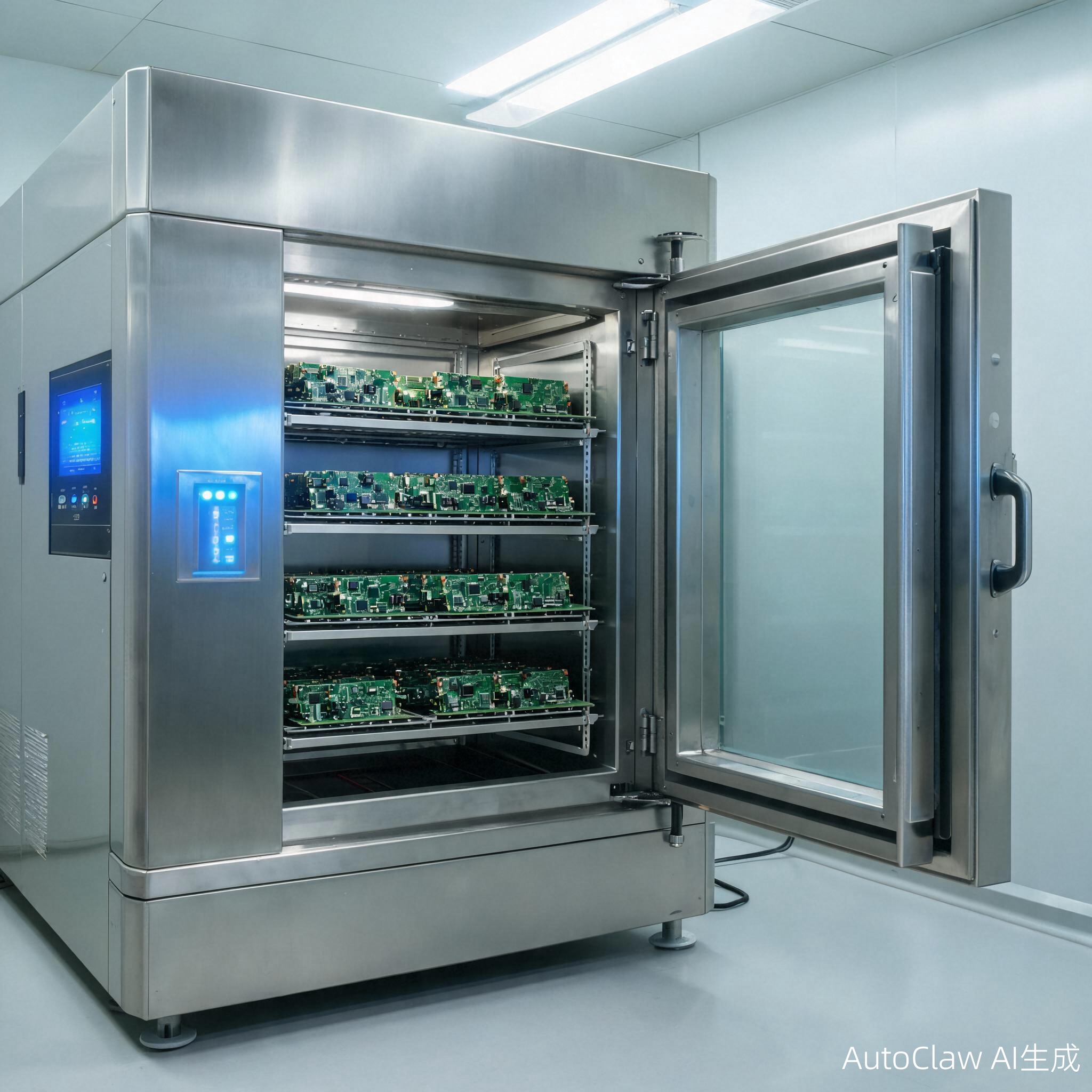
Accelerated life testing uses high-temperature operating life (HTOL) and early life failure rate testing to project field reliability over automotive lifetimes. Environmental stress uses temperature cycling, damp heat, and highly accelerated stress testing to shake out package, die-attach, and interconnect weaknesses. Electrical verification covers electrostatic discharge robustness per the human body model and charged device model families, latch-up susceptibility, and electrical distribution across process spread. Package integrity uses methods such as solderability, wire bond shear and pull, and physical dimension checks. Mechanical and thermo-mechanical stresses, including vibration-related methods for specific package families, round out the suite. Individual test documents carry their own AEC-Q1xx numbers, and the companion standards extend the system to adjacent component classes: AEC-Q101 for discrete semiconductors, AEC-Q200 for passive components, and AEC-Q103 for sensors and MEMS, with AEC-Q104 addressing multichip modules.
The table below maps the standards to component families.
| Standard | Component scope | Example parts |
|---|---|---|
| AEC-Q100 | Integrated circuits | MCUs, SoCs, power ICs, memory, sensors ICs |
| AEC-Q101 | Discrete semiconductors | MOSFETs, diodes, transistors, rectifiers |
| AEC-Q200 | Passive components | Resistors, capacitors (including MLCC), inductors |
| AEC-Q103 | Sensors and MEMS | MEMS microphones, pressure and inertial sensors |
| AEC-Q104 | Multichip modules | Complex integrated modules combining several die |
A complete automotive BOM touches all of these: an AEC-Q100 MCU means little if the AEC-Q101 MOSFET driving the actuator or the AEC-Q200 MLCC filtering its supply is commercial grade. Buyers auditing a supplier's automotive claim should check the standard cited for each component class, not accept a blanket automotive label.
The Paper Trail: Qualification, PPAP, and Change Control
In day-to-day automotive sourcing, AEC-Q100 is one link in a longer documentation chain, and knowing the chain is what makes supplier conversations efficient.
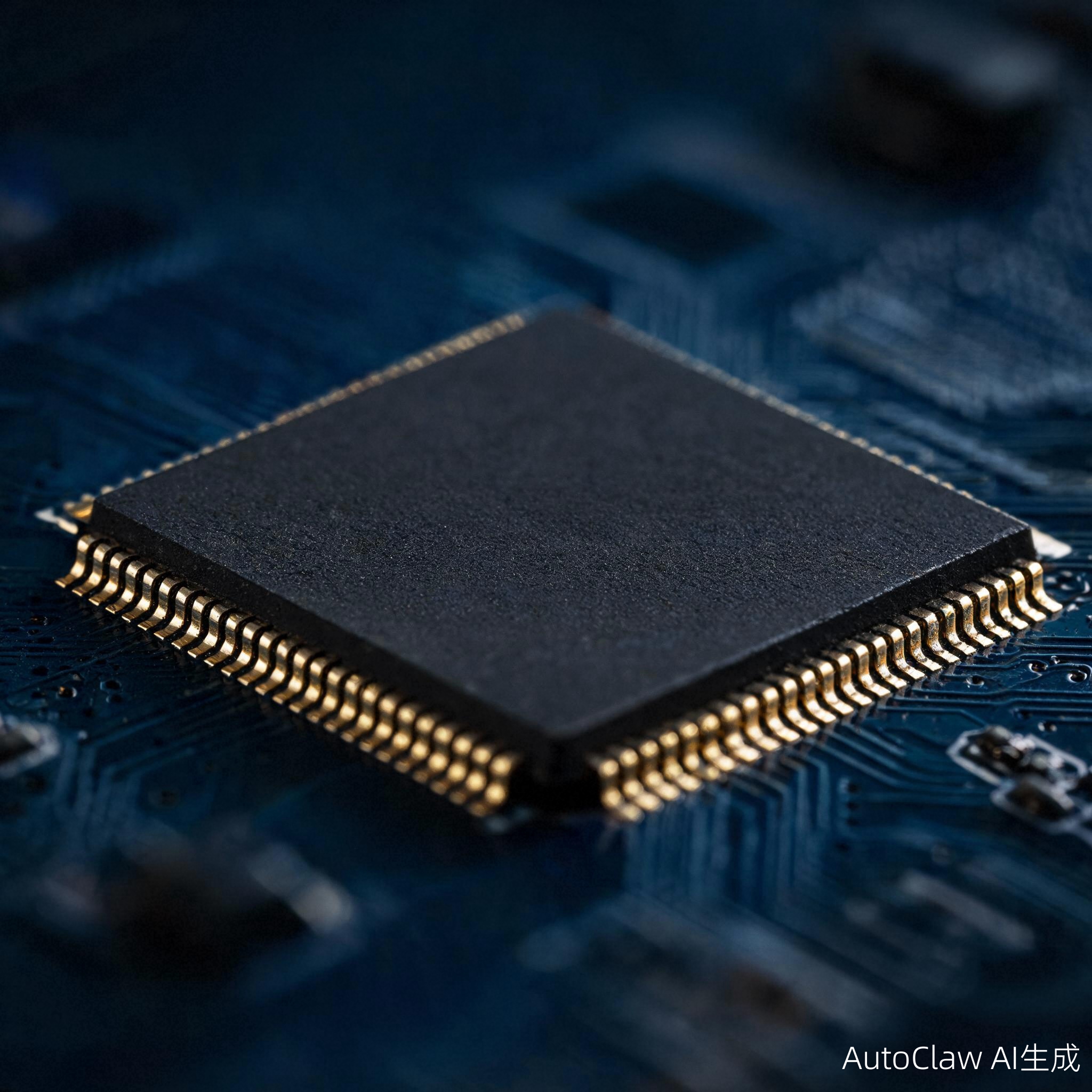
The chain typically starts with the qualification itself: the vendor's internal qualification report referencing the AEC-Q100 revision, the test documents applied, and the sample sizes used. Layered on top is production part approval, the automotive industry's mechanism for demonstrating that a specific manufacturing process, run at production scale, produces parts conforming to an agreed specification. PPAP-style submissions package dimensional results, material certifications, process capability data, and the qualification evidence behind them, and they are renewed whenever something significant changes. Change control closes the loop: product change notifications announce die revisions, fab or assembly-site transfers, material substitutions, and obsolescence decisions, each of which can ripple into the customer's own validation.
For a purchasing team, the practical takeaway is that an automotive claim should come with retrievable paper at three levels: qualification evidence for the product, production approval evidence for the process, and a documented change-notification agreement going forward. A vendor who can produce all three quickly is telling you something important about their automotive maturity. A vendor who can only produce a datasheet badge is telling you something else.
What AEC-Q100 Does Not Guarantee
The standard has boundaries that purchasing teams should understand before leaning on it.
AEC-Q100 is not functional safety. ISO 26262 governs functional safety for road vehicles, addressing systematic design processes, safety mechanisms, and ASIL classification at the system and item level; a part can be AEC-Q100 qualified and carry no safety certification at all, while ASIL-rated parts are typically also AEC-Q100 qualified. AEC-Q100 is also not a zero-defect guarantee: qualification demonstrates process capability on sampled lots at a point in time, which is why automotive customers layer incoming quality requirements, PPAP-style production part approval documentation, and ongoing change control on top. Finally, it is not a license to misapply: a Grade 1 part operating outside its thermal envelope fails the same as any other part, and qualification does not substitute for derating analysis.
Understanding these boundaries prevents the two most common purchasing mistakes: treating AEC-Q100 as a safety certification during supplier audits, and assuming qualification covers a different package or temperature point than the one actually tested.
The Buyer Verification Checklist
When a sourcing decision rests on an automotive claim, four verification steps catch most problems before they become field failures.
First, request the qualification evidence, not just the claim. Reputable vendors publish or provide qualification reports summarizing the stress tests, sample sizes, and results for the specific product and package. The claim should name the AEC-Q100 grade and ideally the qualification document revision. Cross-check the part's ordering options: many products exist in both commercial and automotive SMD versions, and the automotive grade may be a different part number with different pricing and lead time.
Second, confirm the exact temperature grade and package are covered. Qualification is package- and die-specific. A vendor may offer the same silicon in a commercial QFP and an automotive-qualified QFN, and only the latter carries the claim.
Third, lock the change-control conversation. Automotive parts live under stricter part change notification regimes: die shrinks, fab transfers, and bondout changes can all require notification or requalification. Establish how the vendor communicates PCNs and what notice period applies, because silent changes are how otherwise-qualified parts drift.
A short worked example shows why these steps earn their cost. Two distributors offer what looks like the same microcontroller: one at a commercial price with fast delivery, one noticeably more expensive with a 40-week quoted lead time. The datasheets look identical. The difference is real, though: the inexpensive part is the commercial SMD revision qualified only to Grade 3, while the expensive part is the automotive revision with full Grade 1 qualification, PPAP support, and PCN obligations. A design destined for an underhood module that consumes the commercial part on price alone has quietly voided its own reliability assumptions, and no amount of incoming inspection will repair a qualification gap.
Fourth, plan for allocation realities. Automotive-qualified MCU families from the major vendors have been among the longest-lead parts of the 2026 shortage cycle, with non-contract orders queuing behind long-term-agreement customers and automotive-grade discretes similarly constrained. Designating automotive parts where they are genuinely needed, and where the extended temperature or reliability margin earns its cost premium, keeps scarce allocation available for the products that require it.
Frequently Asked Questions
What is the difference between AEC-Q100 Grade 1 and Grade 0?
Grade 1 covers operating ambient temperatures from -40 to +125 degrees C, which suits most underhood and powertrain electronics. Grade 0 extends to +150 degrees C for the hottest locations such as engine-mounted or exhaust-adjacent sensing. Grade 0 parts are qualified for the same stress suite but must survive higher temperature stresses, and they carry a price and availability premium.
Does AEC-Q100 guarantee zero defects?
No. AEC-Q100 is a qualification standard: it demonstrates that a specific die, package, and process combination survived defined stress testing on sampled lots. It does not screen every production unit, and it does not replace incoming quality, PPAP documentation, or ongoing statistical process control. Layered quality systems exist precisely because qualification alone cannot guarantee zero defects.
How does AEC-Q100 relate to ISO 26262 and ASIL?
They address different layers. AEC-Q100 proves hardware reliability through stress testing; ISO 26262 governs functional safety, covering systematic development processes, safety mechanisms, and ASIL classification of safety goals. An ASIL-rated part will normally also be AEC-Q100 qualified, but AEC-Q100 qualification by itself carries no ASIL claim.
Can I use AEC-Q100 parts in industrial products?
Yes, and it is common practice. Automotive qualification implies robust temperature, environmental, and electrical stress capability that benefits any long-lifetime application. The trade-offs are price premium, longer lead times, and sometimes reduced feature breadth, so many industrial teams reserve automotive-grade parts for the highest-stress positions in the design.
What is the difference between AEC-Q100, AEC-Q101, and AEC-Q200?
They are companion standards for different component classes: Q100 for integrated circuits, Q101 for discrete semiconductors such as MOSFETs and diodes, and Q200 for passive components such as resistors, capacitors, and inductors. A full automotive BOM typically draws on several of these standards, so verify which one applies to each line item rather than accepting a generic automotive label.
Why are automotive-grade MCUs so much harder to source in 2026?
Automotive MCU families from the major vendors have been on partial allocation, with long-term-agreement customers consuming most committed wafer starts and new non-contract orders queuing behind them. Actual lead times for automotive-grade 32-bit MCUs have run well beyond quoted figures, which is why last-time-buy and second-source planning should start early for any automotive design still dependent on a single part number.
Sources and Further Reading
- Design & Reuse, "The Road to AEC-Q100 Qualification" (AEC origin and qualification overview): https://www.design-reuse.com/blog/56125-the-road-to-aec-q100-qualification
- Automotive Electronics Council, AEC-Q100-008A test document defining operating temperature grades (official PDF): http://www.aecouncil.com/Documents/AEC_Q100-008A.pdf
- IC-Online, "Automotive-Grade Components: AEC-Q100 Qualification Guide": https://www.ic-online.com/blog/post/automotive-grade-components-aec-q100-qualification-guide
- Cosolvic, "Semiconductor Lead Times 2026: Quoted vs Actual" (automotive MCU allocation data): https://cosolvic.com/ru/blog/semiconductor-lead-time-reality-2026-quoted-vs-actual
- Illuminious, "2026 Component Shortage Reality: DRAM Prices Surge as MCU Lead Times Stretch to 40 Weeks" (automotive-grade lead time context): https://www.illuminious.com/news/2026-component-shortage-dram-mcu
