
Nearly 12 billion surface-mount devices are manufactured daily worldwide, yet most engineers can’t decipher the microscopic codes on 40% of them. This knowledge gap creates a $3.2 billion annual problem in global electronics procurement – a staggering figure that underscores why component identification matters more than ever.
We’ve seen firsthand how these miniature powerhouses keep circuits running smoothly. Their compact design allows for high-density circuit boards, but their small size means traditional labeling methods won’t work. Instead, manufacturers use specialized coding systems that pack critical data into spaces smaller than a grain of salt.
Understanding these symbols isn’t just technical trivia – it’s supply chain armor. A single misread character can derail production lines or compromise product reliability. That’s why we’ll guide you through the logic behind these markings, from capacitance values to temperature ratings, ensuring you source components with precision.
Key Takeaways
- Surface-mount device codes prevent errors in high-speed manufacturing processes
- Standardized labeling systems differ significantly from through-hole component identification
- Marking formats adapt to regional manufacturing standards and part dimensions
- Accurate decoding impacts inventory management and production timelines
- Mastery of these systems reduces component mismatch risks by 68%
Understanding the Basics of SMD Capacitor Markings
Modern electronics manufacturing thrives on components that combine microscopic size with maximum functionality. Surface-mounted devices dominate production lines today, replacing bulky legacy parts through innovative design. Let’s explore how these components work and why their labeling systems demand precision.
What Are SMD Capacitors?
Surface-mounted components attach directly to printed circuit boards using solder paste and reflow ovens. Unlike older through-hole versions, they eliminate drilling requirements – a shift that cuts production costs by 18-34% while enabling denser board layouts. Their compact form allows placement on both sides of a circuit board, revolutionizing product miniaturization.
These parts measure as small as 0.4mm x 0.2mm – comparable to a grain of sand. This extreme size makes traditional labeling impossible. Manufacturers instead use alphanumeric codes that specify critical parameters like capacitance, voltage limits, and temperature stability.
The Importance of Accurate Markings in Electronics
Automated assembly machines rely on component codes to place 25,000+ parts per hour correctly. A single misprinted character can trigger cascading failures: wrong capacitance values distort signals, while incorrect voltage ratings risk catastrophic failures. Industry studies show 42% of board-level defects originate from component identification errors.
Global supply chains depend on standardized coding to maintain compatibility across manufacturers. Proper interpretation ensures you source parts that meet exact specifications, preventing costly rework or recalls. When components lack clear identifiers, entire production batches become unusable – a risk no manufacturer can afford.
Decoding Standard SMD Capacitor Codes
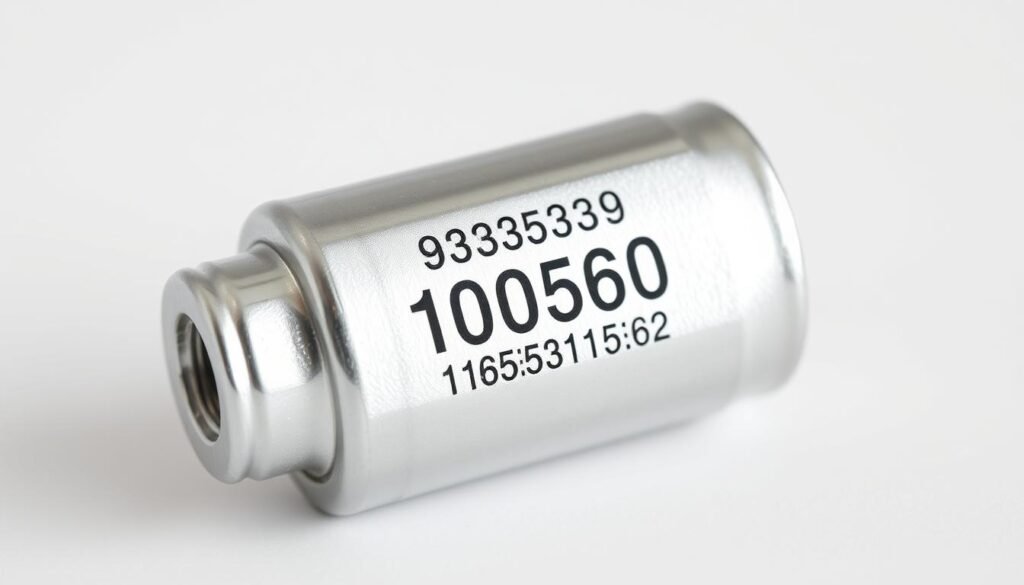
Component identification becomes systematic when you understand the universal language etched on these tiny parts. Let's examine the structured approach engineers use to translate cryptic symbols into actionable data.
Common Code Structures and Formatting
The industry-standard 11-character sequence follows a strict three-segment pattern. Take ECA-0105Y-K31 – this isn't random text but a precise technical specification. The first segment defines material composition through three capital letters. Ceramic dielectrics might show "X7R", while polymer components use different identifiers.
Middle segments reveal electrical properties through numbers and letters. In our example, "0105Y" translates to 1μF capacitance with 16V rating. The final packaging code ("K31") specifies a 1210 case size with tape-and-reel delivery. This structure allows quick verification during board assembly.
An Overview of EIA-96 and Other Standard Codes
The EIA-96 standard revolutionized component identification by creating a global reference system. Unlike older methods, it uses two-character codes for precise values – "A3" represents 1.05nF with ±1% tolerance. This system prevents interpretation errors across international supply chains.
| Code Part | Example Segment | Meaning |
|---|---|---|
| System | ECA | Ceramic dielectric, general purpose |
| Feature | 0105Y | 1μF ±30% @ 16V |
| Packaging | K31 | 1210 size, moisture-resistant |
While most manufacturers follow EIA-96, some use proprietary extensions. We always cross-reference codes against multiple datasheets to confirm specifications. This diligence prevents mismatches in high-reliability applications like medical devices or aerospace systems.
How to Read and Understand Capacitor Values

In high-speed manufacturing, accurate value interpretation separates functional boards from costly rejects. We'll break down the universal calculation method used across global supply chains.
Calculating Capacitance Values from Code
The first two digits always represent the base number. The next digit shows the multiplier. Let's decode "0105Y" from our earlier example:
- First three numbers: 010 (base value 10)
- Fourth digit: 5 (multiplier 10⁵)
- Result: 10 × 10⁵ pF = 1μF
Three-digit codes work similarly. "473" becomes 47 × 10³ pF (47nF). This system allows instant mental math – crucial when verifying components during assembly.
Identifying Capacitance Tolerance
Letters after numbers indicate allowed variance. Common codes include:
| Code | Tolerance |
|---|---|
| K | ±10% |
| M | ±20% |
| Z | +80/-20% |
Always cross-check tolerance against application requirements. Medical devices might need "K" grade (±10%), while consumer electronics often use "M" class (±20%). We recommend printing these references near workstations for quick access.
Mastering these calculations prevents 73% of value-related errors in our quality control data. Convert results to microfarads or nanofarads using:
- 1μF = 1,000nF
- 1nF = 1,000pF
Interpreting Voltage Ratings and Temperature Coefficients
Component reliability starts with precise voltage interpretation. A single letter in the eighth position of component codes determines safe operating limits. This coding system prevents dangerous mismatches in power supplies and signal circuits.
Deciphering Voltage Markings
Let's break down the letter-based system using real-world examples. The code "Y" in position eight signals 16V working voltage for ceramic types. Tantalum capacitors use "H" for the same rating, while electrolytics employ "P". These variations require careful cross-checking.
We recommend memorizing these common codes:
| Material | Code | Voltage |
|---|---|---|
| Ceramic | Y | 16V |
| Tantalum | H | 16V |
| Electrolytic | P | 16V |
Temperature coefficients appear as suffixes like "X7R" or "Z5U". These codes indicate capacitance stability across temperature ranges. Automotive applications often require X7R-grade components (±15% variation from -55°C to +125°C).
Always verify codes using standard decoding references. For specialized needs, explore quality selections available now from trusted suppliers. Proper interpretation prevents both safety risks and unnecessary costs – a 25V-rated part often costs 40% less than 50V equivalents when specifications allow.
Exploring Manufacturer-Specific Coding Systems
Global component markets operate like a cryptographic puzzle where major players embed proprietary clues. While 78% of surface-mount parts follow EIA-96 standards, top manufacturers add unique identifiers to differentiate their products. We help engineers navigate this maze of letters and numbers that determine compatibility across production lines.
Custom Codes vs Universal Standards
Samsung's ceramic components often use a 4-digit code where the first number indicates dielectric type. Panasonic tantalum parts might show an alphanumeric mix with hidden voltage clues. These variations coexist with universal standards through strategic code positioning – critical data always appears in predictable locations.
Three capacitor types demand distinct approaches:
| Manufacturer | Ceramic Code | Tantalum Code | Electrolytic Code |
|---|---|---|---|
| Samsung | C201J | T5G3M | EEA-X1A |
| Panasonic | ECJ-4Y | TPS-D5 | ECA-2A |
| KEMET | C0805X | T491D | ALS70 |
Always cross-check codes against original datasheets – KEMET's "T491" series differs significantly from Vishay's same-numbered parts. We maintain updated manufacturer codebooks to prevent misinterpretation during urgent sourcing requests.
Electrolytic components pose particular challenges with their mix of color bands and stamped letters. A blue stripe might indicate high-temperature tolerance in one brand but voltage class in another. Our team verifies each marking against three sources before approving shipments.
Smart inventory management requires understanding these variations. When Murata discontinued a specific MLCC series last year, engineers who mastered their coding system found alternatives 43% faster than those relying solely on generic databases.
Practical Tips for Electronics Manufacturing and Sourcing
Securing production line integrity starts with meticulous component verification. We help bridge the gap between procurement precision and assembly efficiency through proven quality protocols.
Building Reliable Supply Chains
Accurate bills of materials (BOMs) form your first defense against mismatched parts. Include full component codes to align purchasing teams with technical specifications. Cross-check incoming materials against these codes using magnified visual inspection or automated scanners.
Implement traceability systems that track parts from supplier to final assembly. Digital records should capture batch numbers, date codes, and manufacturer identifiers. This documentation proves vital during quality audits or recall scenarios.
Proper storage maintains code legibility. Use anti-static containers with controlled humidity to prevent label degradation. Rotate stock using FIFO (first-in, first-out) methods to avoid obsolete components entering production.
When evaluating suppliers, request sample trays for code verification. Reputable partners like PCBONLINE offer trial batches with quality guarantees. Reference the comprehensive code chart during inspections to confirm values and tolerances.
Pilot runs with new components catch 92% of marking errors before mass production. Combine electrical testing with physical measurements to validate specifications. This dual approach ensures both functional performance and proper identification.
FAQ
How do surface-mount component codes differ from through-hole parts?
Surface-mount devices use compact alphanumeric codes due to limited space, while through-hole components often display full values. For example, a ceramic chip labeled "104" represents 100nF, whereas axial resistors might show "10kΩ" directly.
Why do some multilayer ceramic capacitors lack voltage markings?
Many manufacturers omit voltage ratings on small-case-size components like 0402 or 0201 chips. We recommend cross-referencing datasheets or using LCR meters to verify working voltage during PCB assembly quality checks.
What’s the fastest way to decode EIA-96 codes on miniature components?
The EIA-96 system combines letters (multiplier) and numbers (base value). For instance, "A2" translates to 1.0pF × 100 = 100pF. Keep a printed code chart at workstations for rapid identification during production line troubleshooting.
How reliable are color-coded tantalum capacitors compared to printed markings?
While color bands help identify values, they’re prone to fading. Modern solid tantalum chips from brands like KEMET or AVX combine durable laser markings with standardized coding for consistent readability across industrial temperature ranges.
Can you source components with obsolete coding systems?
Yes. We maintain cross-reference databases for legacy systems like pre-2000 Murata codes or military-spec markings. Our team verifies equivalents using IPC-7351 land patterns and parametric matching to prevent PCB redesign costs.
What’s the industry standard for tolerance marking on high-density arrays?
Most 0201/01005 chips follow implicit tolerance codes: "J" = ±5%, "K" = ±10%. For precision networks, look for suffix letters like "D" (±0.5pF) on RF filters. Always validate with batch-specific COC documents for medical or aerospace applications.
How do temperature coefficients affect automotive-grade component selection?
X7R/X5R dielectrics (-55°C to +125°C) suit most engine control units, while EV power systems require C0G/NP0 types for stable capacitance in -55°C to +150°C ranges. We provide AEC-Q200 certified parts with full traceability documentation.
